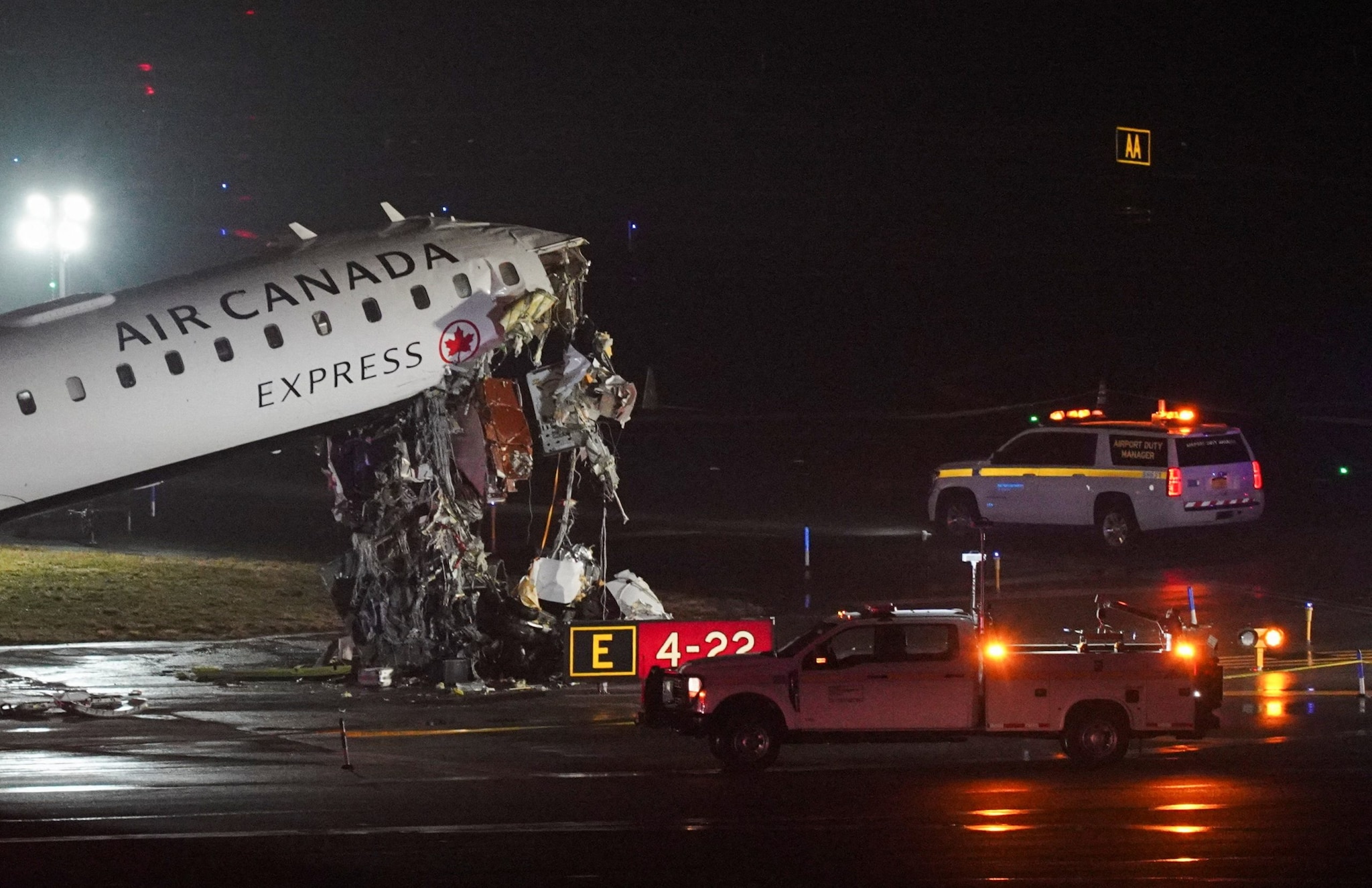
The metal tube is a miracle of engineering, a pressurized sanctuary hurtling through the stratosphere at five hundred miles per hour. Inside, the air smells faintly of recycled coffee and antiseptic wipes. You lean your head against the plastic window casing, watching the sun set over a carpet of clouds that looks solid enough to walk on. It is the most mundane, most extraordinary experience of the modern age. We have become so good at defying gravity that we have forgotten how much the earth wants us back.
But occasionally, the miracle breaks.
When we talk about aviation disasters, we tend to speak in the language of investigators and insurers. We talk about "hull losses," "flight data recorders," and "controlled flight into terrain." We categorize them by year or by body count, turning human lives into a ledger of cold, hard statistics. But a plane crash is not a number. It is a sudden, violent interruption of a thousand different stories. It is the birthday gift in the overhead bin that will never be opened. It is the unread text message blinking on a phone buried in the mud of a remote mountainside.
To understand the worst air crashes of recent years is to look past the charred debris and see the invisible stakes of our global connectivity.
The Ghost in the Machine
Consider the Boeing 737 MAX. In the span of just five months, two brand-new aircraft—Lion Air Flight 610 and Ethiopian Airlines Flight 302—plunged into the earth shortly after takeoff. 346 people vanished.
The tragedy of the MAX wasn't just a mechanical failure. It was a failure of transparency. A piece of software called MCAS, designed to keep the plane from stalling, was fighting the pilots. Imagine sitting in a cockpit, pulling back on the controls with every ounce of your strength, while the plane’s own brain insists on diving toward the ground. The pilots didn't even know the system existed.
The horror of those final minutes is unbearable to contemplate. In the Ethiopian crash of 2019, the pilots followed every emergency protocol in the manual. They flipped the switches. They followed the checklists. It didn't matter. The machine had its own logic, a digital ghost born from a desire to rush a product to market without retraining pilots. We often think of technology as our protector, but here, it became an adversary.
This is the true cost of corporate shortcuts. When we prioritize "seamless" transitions and "cost-effective" upgrades over the fundamental physics of flight, we gamble with the lives of people who just wanted to get home for the holidays.
The Silence of the Sea
Sometimes, the disaster isn't a scream; it's a silence.
In 2014, Malaysia Airlines Flight 370 simply stopped existing. It didn't crash on radar. It didn't send a distress signal. It turned around, flew back across the peninsula, and drifted into the vast, lonely expanse of the Southern Indian Ocean. To this day, we don't know why.
For the families of the 239 people on board, the lack of a "worst crash" designation is its own kind of torture. Without a wreck, there is no closure. There is only a permanent, agonizing question mark. This event changed the way we track aircraft, forcing the industry to realize that in a world of GPS and constant connectivity, a Boeing 777 can still be swallowed by the shadows.
We like to believe we have conquered the map. MH370 reminded us that the ocean is still a graveyard of secrets. It shifted the narrative from "how did this happen?" to "how can we not know?" It was a humbling moment for a species that thinks it has mapped every inch of the globe.
The Fire in the Sky
Then there are the crashes that aren't accidents at all.
Just months after MH370 vanished, Malaysia Airlines Flight 17 was cruising over Eastern Ukraine. It was a commercial flight, full of vacationers and world-renowned scientists heading to an AIDS conference in Melbourne. In an instant, a Russian-made Buk missile turned a summer flight into a rain of debris over a sunflower field.
298 lives. Gone.
This is the intersection of geopolitics and gravity. When we fly, we trust that the invisible borders on our maps will be respected by the weapons on the ground. MH17 shattered that trust. It proved that a family from the Netherlands or a student from Malaysia could become collateral damage in a war they had nothing to do with. The image of investigators searching through the wreckage while armed militants stood guard is a haunting reminder that the "friendly skies" are only as safe as the people beneath them.
The Fragility of the Human Element
If the 737 MAX was a failure of software and MH17 was a failure of humanity, then Germanwings Flight 9524 was a failure of the soul.
In 2015, a co-pilot waited for the captain to leave the cockpit for a bathroom break, then locked the door and set the autopilot to descend. He didn't say a word as the plane drifted toward the French Alps. The passengers' screams are audible on the cockpit voice recorder only in the final seconds.
150 people died because one man was suffering in a way the system failed to detect.
We spend billions on titanium engines and carbon-fiber wings. We run simulations for bird strikes and engine fires. But how do we audit the human heart? The Germanwings disaster forced the aviation world to look in the mirror. It started a grueling conversation about mental health, pilot privacy, and the terrifying reality that the person flying your plane is just as vulnerable to darkness as anyone else.
It wasn't a "technical glitch." It was a reminder that behind every dial and lever is a human being, and if that human breaks, the machine is useless.
The Persistence of the Ledger
We look at these events—the 2023 Nepal crash, the China Eastern plunge in 2022—and we try to find a pattern. We want to believe that flying is getting safer, and statistically, it is. You are more likely to be struck by lightning while winning the lottery than to die in a commercial air crash.
But statistics are cold comfort when you are the one holding the ticket.
The industry learns from every drop of blood. Every crash investigation results in a "tombstone manual"—a set of regulations written because people died. The reason you have to put your seat upright and your tray table away isn't because the flight attendants are being picky; it's because someone, somewhere, died because they couldn't evacuate fast enough.
We pay for our safety with the lives of those who came before us.
Every time a plane lands safely, it is a victory of a million tiny parts and a thousand hard-learned lessons. We have mastered the art of moving through the air, but we have not mastered the art of the "zero." There will always be a risk. There will always be the possibility that the math doesn't add up.
But we keep flying. We keep boarding the metal tubes and leaning our heads against the plastic windows. We do it because the alternative—staying grounded, staying separated, staying afraid—is a slower kind of death.
The next time you hear the engines roar and feel the wheels leave the tarmac, don't just think about the destination. Think about the legacy of those who didn't make it. Think about the engineers who spent sleepless nights redesigning sensors, the pilots who trained until their movements were instinct, and the families who turned their grief into advocacy.
The air is thin, the speed is incredible, and the stakes are everything we hold dear. We are suspended by nothing but physics and the hope that we have finally learned enough.
The cabin lights dim for takeoff. The safety briefing ends. The plane begins its long, determined sprint toward the sky, carrying its heavy cargo of dreams, debts, and ordinary lives, defying the Earth one more time.