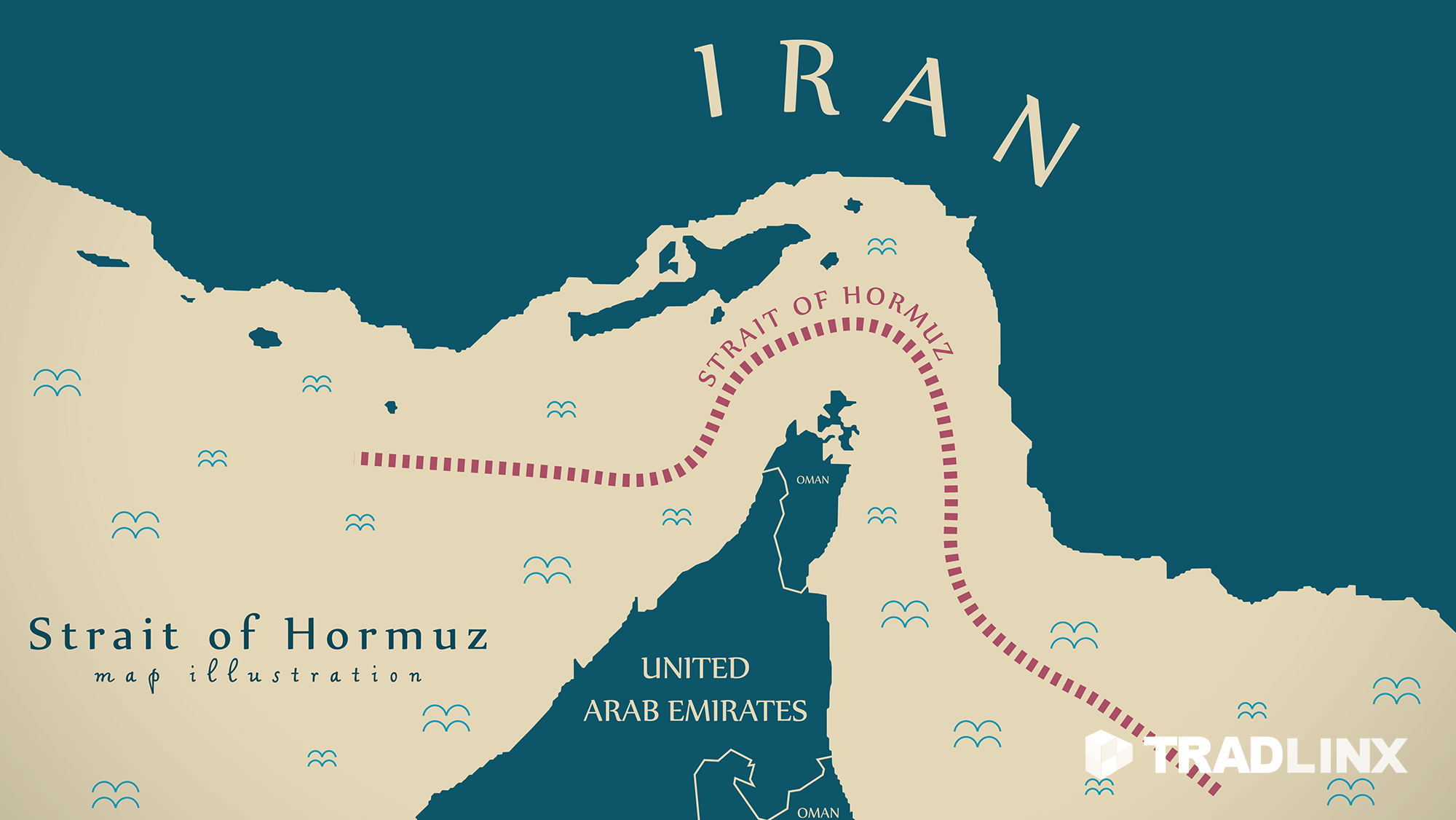
Think of the world's energy supply as a single, massive artery. Now imagine that 25% of all seaborne oil and 20% of the world's liquefied natural gas (LNG) has to squeeze through a gap only 21 miles wide at its narrowest point. That is the Strait of Hormuz. When Iran's leadership quipped that "Hormuz isn't social media, you can’t block it back," they weren't just being cheeky. They were stating a cold, hard physical reality that keeps global economists awake at night.
You can ban an account on X or block a domain on a server. You can't "delete" a geographic chokepoint without crashing the global economy into a brick wall. While the US and its allies have spent decades trying to "contain" Iran through digital and financial sanctions, the physical geography of the Persian Gulf gives Tehran a "kill switch" for the world's energy markets that no firewall can stop. For a closer look into this area, we recommend: this related article.
The Physicality of Power
Geopolitics in 2026 has become increasingly abstract, fought with code and currency. But Hormuz is stubbornly physical. If you're looking at a map, you'll see the shipping lanes are tiny. The actual navigable channels for giant tankers are only about two miles wide in each direction, separated by a two-mile buffer zone.
Most of these channels sit within Omani and Iranian territorial waters. Iran knows that it doesn't need a superior navy to cause chaos. It just needs to make the area "un-insurable." The moment a single sea mine is detected or a drone strikes a tanker, insurance premiums for every vessel in the Gulf skyrocket. Ship owners won't risk a $200 million hull, and suddenly, the 20 million barrels of oil that flow through there daily stay stuck in the sand. For broader information on this development, extensive coverage can be read on TIME.
Why the US Blockade Strategy Hits a Wall
President Trump recently signaled a shift toward a military blockade of Iranian ports, essentially trying to flip the script. The logic is simple: if Iran threatens to close the Strait, the US will close Iran’s access to the world. But here's the catch—Iran’s economy is already "blocked" by years of sanctions. They've lived in a bunker for a decade. The rest of the world? We live in a glass house.
- The Asian Dependency: Roughly 80% of the crude passing through Hormuz goes to Asia. China, India, Japan, and South Korea are the primary lifelines. If the Strait closes, these economies don't just slow down; they stop.
- The LNG Nightmare: While oil can sometimes be diverted through pipelines (like Saudi Arabia’s East-West Petroline), LNG is different. Qatar, the world’s second-largest LNG exporter, has no way to get its gas out except through the Strait. If you like heating your home or running a factory in Europe or Asia, you need that water open.
- The Insurance Spike: Even if the US Navy "protects" the lanes, they can't protect the cost. Commercial shipping is driven by profit. If the risk is too high, the ships don't move, regardless of how many destroyers are patrolling.
The Illusion of Pipeline Bypasses
You'll often hear talking heads say we can just "bypass" the Strait. It's a nice thought, but the math doesn't check out. Saudi Arabia and the UAE have pipelines that can carry oil to the Red Sea or the Gulf of Oman, but their combined spare capacity is only about 3.5 to 5 million barrels per day.
Remember that 20 million barrels move through the Strait daily. Doing the quick math shows a 15-million-barrel-per-day deficit. That’s not a gap you "bridge" with a few extra trucks. That’s a global depression waiting to happen. For countries like Kuwait, Qatar, and Iraq, there is no Plan B. They are effectively 100% dependent on that narrow strip of water.
Tactical Realities on the Water
Iran’s military strategy isn't about winning a ship-to-ship battle with a US carrier strike group. It’s about "swarming." They use hundreds of fast, small boats armed with anti-ship missiles and mines. It's asymmetrical warfare at its most effective.
- Smart Mines: Modern mines aren't just floating balls with spikes. They can be programmed to ignore certain signatures and target others.
- Drone Swarms: Cheap, expendable drones can overwhelm sophisticated defense systems through sheer numbers.
- Coastal Batteries: Iran’s rugged coastline is a natural fortress for mobile missile launchers that are incredibly hard to hit before they fire.
What Happens if the "Block" Button Is Pressed
If the rhetoric turns into a full-scale closure, Brent Crude wouldn't just go up a few dollars. Analysts at Goldman Sachs and the IEA have warned of prices potentially doubling overnight. We’re talking $150 to $200 per barrel.
At that price, the "cheeky" social media jokes from Tehran stop being funny and start looking like a prophecy. The US can dominate the digital "landscape" and the financial "realm," but it cannot move the tectonic plates of the Middle East.
If you're watching the headlines, don't look at the tweets. Look at the tanker tracking data and the insurance rates in London. That’s where the real war is being fought. The next step for any savvy observer is to watch the "risk premium" on oil futures. If that starts climbing, it means the market has realized that you can't block geography. You can only survive it.