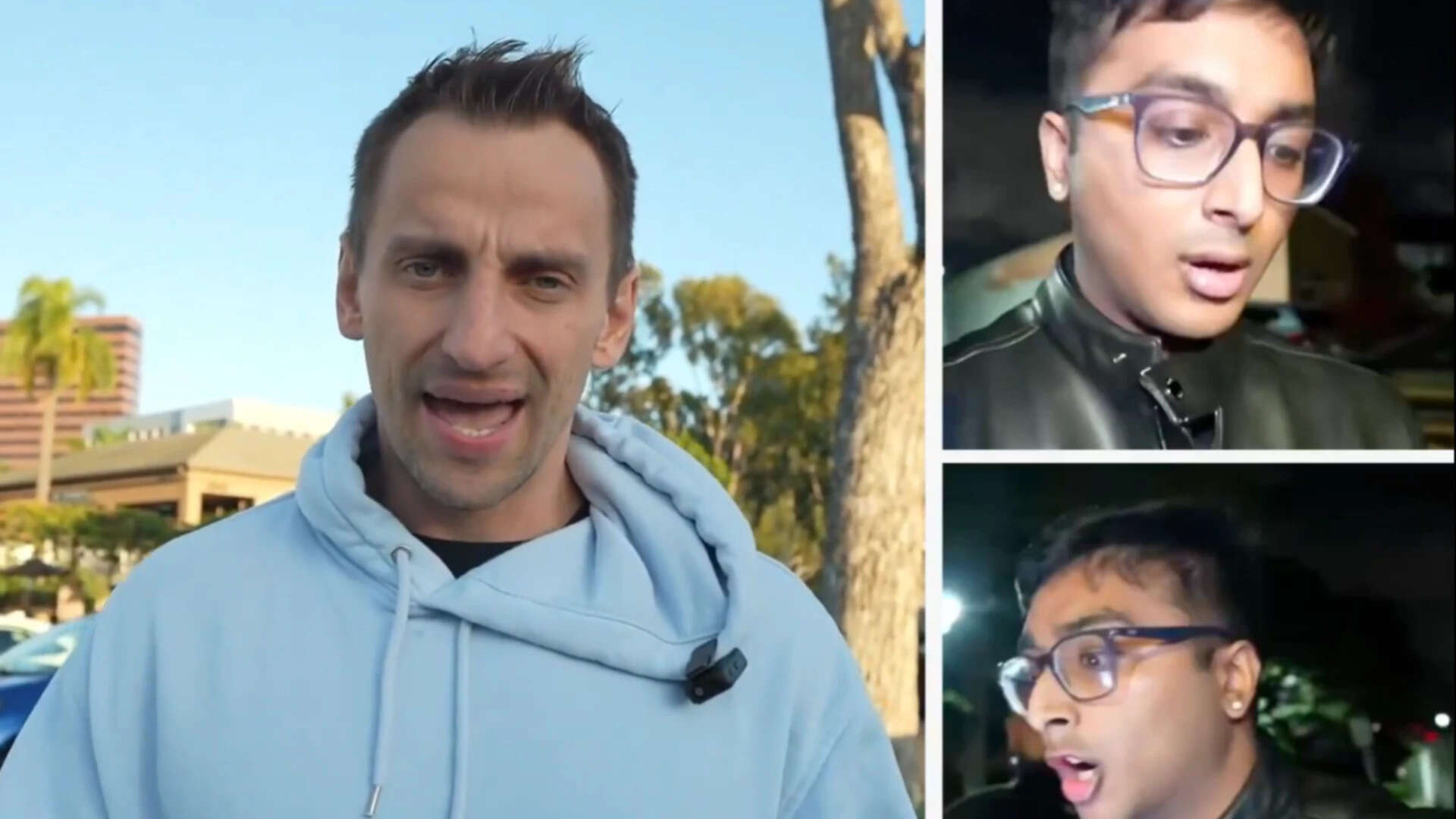
The rapid democratization of investigative content on social media platforms has created a structural defect in the information economy: the decoupling of reach from accountability. When a content creator with a massive digital footprint issues an unverified accusation, they trigger a cascade of social and economic consequences that operate faster than any legal or platform-based corrective measure. The case of the Indian man wrongly identified as a predator by a high-profile YouTuber serves as a primary case study for analyzing the systemic failure of decentralized verification and the asymmetric risk profile of modern digital visibility.
The Mechanism of Viral Misidentification
The breakdown of accuracy in digital vigilantism follows a predictable sequence of structural failures. Rather than viewing these as simple "mistakes," they should be categorized as a failure of the Verification-Incentive Alignment.
- Selection Bias in Content Sourcing: Creators often prioritize high-valence emotional triggers over evidentiary depth to satisfy platform algorithms that reward engagement.
- The Information Vacuum: When a creator presents a partial truth, the audience fills the gaps with cognitive biases, specifically the halo effect (trusting the creator's intent) and the horn effect (demonizing the accused based on physical or cultural markers).
- Algorithmic Amplification: Platforms distribute content based on velocity. A false accusation that generates 100,000 shares in one hour creates a "truth-claim" that becomes entrenched before the accused can even identify the source of the allegation.
This process transforms a private individual into a public target without the due process safeguards found in traditional journalism or legal systems. The victim in this instance—an ordinary man going about his life—was subjected to a global trial where the jury was an unmoderated comment section.
The Cost Function of Reputation Damage
To understand the severity of these events, we must quantify the damage beyond "hurt feelings." Reputation is a tangible asset that governs economic mobility and physical safety. The fallout for the wrongly accused individual can be mapped through three distinct layers of impact.
Immediate Physical and Psychological Threat
The transition from digital accusation to physical danger is instantaneous. Doxing—the release of private information—functions as an informal "bounty" system. Even if the original creator does not call for violence, the sheer volume of the audience ensures a statistical probability that radicalized individuals will attempt real-world confrontation. The victim reported significant psychological distress and fear for his life, which represents a total loss of personal security.
Permanent Digital Footprint
In the current search engine optimization (SEO) environment, an accusation is often more "sticky" than a retraction. When a name is indexed alongside the word "pedophile," that association enters the persistent metadata of the person's life. Future employers, landlords, or community members conducting routine background checks may encounter the accusation first. Even if a retraction exists, the cognitive bias known as the Continued Influence Effect ensures that the original negative impression lingers in the subconscious of the reader.
Socio-Economic Displacement
For individuals in specific cultural contexts, the social stigma of such an accusation leads to immediate ostracization. This is not merely a social inconvenience; it is an economic blockade. If a person is shunned by their community, their ability to conduct business, secure employment, or access local resources is compromised. The "world" of the victim, as he described it, effectively collapsed because the social contracts governing his life were unilaterally terminated by a digital mob.
The Asymmetry of Accountability
A fundamental imbalance exists between the accuser (the influencer) and the accused (the private citizen). This is an Asymmetric Risk Model where the influencer gains all the rewards of engagement with almost no risk, while the private citizen bears all the risk with zero potential gain.
- Incentive to Accuse: Influencers operate in an attention economy where "exposing" others is a high-yield content strategy. High engagement translates to direct revenue through ad-sense and sponsorships.
- Zero-Cost Retraction: If an influencer is proven wrong, they typically issue a "clarification" or delete the video. By that point, the revenue has been captured, and the audience has moved on. The "cost" to the influencer is negligible compared to the total destruction of the victim's life.
- Institutional Inertia: Platforms like YouTube or X (formerly Twitter) are structurally hesitant to intervene in these disputes because they benefit from the traffic generated by the controversy. Their moderation tools are designed for broad copyright or "community standards" violations, not for the granular, rapid-response verification required to stop a targeted defamation campaign in real-time.
Structural Deficiencies in Platform Moderation
Current platform policies treat "misinformation" as a general category (e.g., medical or political) rather than a targeted tool of interpersonal destruction. This creates several bottlenecks in the pursuit of justice for the wrongly accused.
The first limitation is the Response Latency. By the time a report is filed, reviewed, and acted upon, the damage is often irreversible. The second limitation is the Lack of Restorative Mandates. Platforms do not force an equivalent reach for retractions. If a defamatory video reaches 5 million people, the platform does not ensure that the subsequent apology or correction reaches those same 5 million. This results in a "fragmented truth" where a significant portion of the audience never learns of the victim's innocence.
The third bottleneck is the Anonymity Shield. While anonymity is a vital tool for whistleblowers and activists, it allows for the "laundering" of false claims. A primary creator can source a lie from an anonymous tip, shielding themselves from direct liability while still profiting from the spread of the falsehood.
The Legal and Ethical Liability Gap
The existing legal frameworks, particularly Section 230 of the Communications Decency Act in the United States and similar protections globally, provide a "safe harbor" for platforms. However, the legal liability for the individual creator is often difficult to enforce across international borders.
In this case, an Indian citizen seeking justice against a Western-based YouTuber faces a jurisdictional nightmare. The legal costs of a defamation suit often exceed the potential recovery, and the time required for a verdict—years, in most cases—does not help the victim who needs immediate exoneration. This creates a Lawless Zone where digital creators can operate as judge, jury, and executioner with functional immunity.
Rebuilding the Verification Architecture
To prevent the recurrence of such systemic failures, the strategy must shift from reactive moderation to proactive structural requirements. This involves a fundamental change in how high-reach accounts are governed.
Reach-Based Accountability Thresholds
Accounts over a certain follower threshold should be held to higher standards of "due diligence" similar to professional news organizations. If a creator with 10 million followers makes a criminal allegation, the platform should require a verification mark or a "holding period" for the content to be vetted before it hits the algorithmic fast track.
Algorithmic Reciprocity
If a platform's algorithm amplified a false claim, it must be programmatically required to amplify the correction to the exact same audience segments. This is a technical solution to a cognitive problem, ensuring that the debunking follows the path of the viral lie.
Decentralized Fact-Checking with Teeth
Community Notes and similar crowdsourced tools are a step forward, but they are currently too slow and lack punitive consequences for the creator. A strategic improvement would be to link repeated "Significant Error" flags to a creator’s monetization capability, creating a direct financial incentive for accuracy.
The Strategic Path Forward
The current state of digital vigilantism is unsustainable. As deepfakes and AI-generated misinformation become more sophisticated, the risk of "wrongful digital conviction" will scale exponentially. The individual at the center of this story is a harbinger of a future where anyone's identity can be weaponized for content.
The strategic play for regulators and platforms is to implement a Verified Accusation Protocol. Under this framework, any content involving criminal allegations against a private citizen would be automatically de-prioritized by the algorithm until specific metadata (police reports, multiple-source verification, or a mandatory waiting period) is provided. This would slow down the "viral rush to judgment" and re-introduce a friction point where truth can catch up to fiction.
Failure to address this will result in a "chilling effect" on public life. If the cost of being in public is the risk of a career-ending, life-shattering false accusation by a professional "exposer," then the public square will become a place of extreme risk rather than a space for discourse. The objective must be to re-internalize the costs of defamation for the creator, ensuring that the pursuit of "clicks" never outweighs the fundamental right to an accurate reputation.