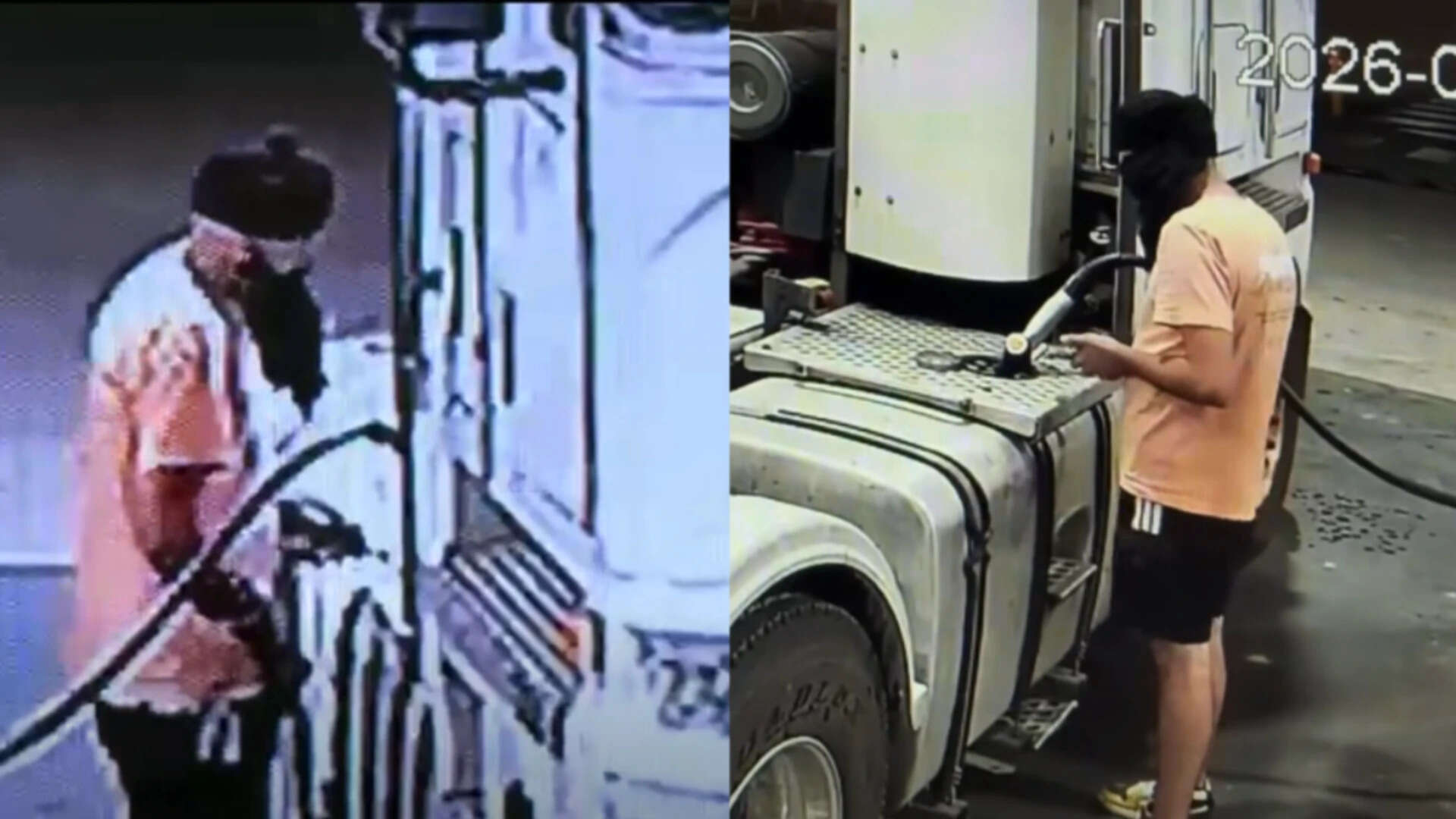
The theft of $3,000 worth of diesel from a family-operated Sydney transport firm reveals a critical vulnerability in the cost-structure of small-to-medium enterprises (SMEs). This is not a simple case of petty larceny; it is a breakdown in the High-Trust Operational Model that underpins the logistics industry. When a contractor or employee converts a company’s primary variable cost—fuel—into personal liquidity, they exploit a specific technical gap between bulk procurement and asset consumption.
The Three Pillars of Fuel Theft Vulnerability
To understand why a truck driver can successfully misappropriate $3,000 in fuel without immediate detection, one must examine the intersection of physical access, digital accounting lags, and the commoditization of diesel.
1. The Disconnect in Telematics and Fuel Card Integration
Most transport businesses operate on a reconciliation lag. Fuel cards are swiped at the pump, but the data often takes 24 to 48 hours to sync with the vehicle's GPS and Odometer readings. This "Latency Window" allows a driver to fill not only the primary tanks but also external containers or secondary vehicles. The theft becomes visible only when a fleet manager performs a manual audit of Liters Per Kilometer (L/100km). If the vehicle is rated for 45L/100km and suddenly spikes to 65L/100km, the theft is confirmed—but the capital is already gone.
2. The Liquid Asset Problem
Diesel is a "blind commodity." Unlike branded retail goods, it carries no serial numbers or tracking markers once it leaves the nozzle. This creates a high-velocity secondary market. In the Sydney industrial context, stolen fuel is often sold at a 30% to 50% discount to other independent operators or used to power private machinery. The $3,000 figure cited in the Sydney case represents roughly 1,500 to 1,800 liters of diesel (depending on current NSW terminal gate prices). This volume suggests a systematic extraction over multiple sessions or a high-capacity unauthorized transfer during a single long-haul route.
3. The Erosion of the Family-Business Premium
Family-run firms often substitute expensive automated surveillance with "Relational Monitoring." They rely on the loyalty of long-term staff. When this social contract breaks, the business lacks the hard-coded technical barriers—such as Fuel Neck Anti-Siphon Devices or Real-Time Fuel Level Monitoring (CAN-bus integration)—found in Tier-1 logistics corporations.
The Cost Function of Fuel Misappropriation
Fuel typically accounts for 30% to 35% of a transport company’s total operating expenses. A theft of $3,000 does not simply represent a $3,000 loss; it represents a catastrophic hit to the net profit margin.
Consider a firm operating at a 5% net margin. To recover the $3,000 lost to theft, the business must generate $60,000 in new revenue just to reach the previous break-even point. This creates a Debt-Weight Effect where the stolen fuel effectively cancels out the profit from weeks of operational labor.
The Mechanism of the Theft
There are three primary methods by which this specific Sydney incident likely occurred:
- The "Side-Tank" Maneuver: Filling unapproved containers while the fuel card is active for the primary vehicle.
- Card Skimming or Sharing: Using a company-issued card to fuel a third-party vehicle in exchange for cash.
- The Siphon Back-Flow: Extracting fuel directly from the truck’s tanks in a remote location after a legitimate fill-up.
Each of these methods relies on the assumption that the "Fuel Burn Rate" will not be scrutinized against the "Manifest Weight." A heavier load requires more fuel; a driver can mask theft by claiming the load was heavier or the traffic was more congested than reality.
Structural Failures in Perimeter Defense
The Sydney incident occurred within the context of a family-run depot. This highlights a failure in Physical Asset Management.
The first limitation is the reliance on CCTV as a deterrent rather than a preventative measure. CCTV is reactive; it records the crime but does not stop the pump. High-security environments utilize RFID-Tagging where the pump will only dispense fuel if it detects a specific transponder attached to the vehicle's fuel neck. This binds the fuel to the asset, eliminating the human variable.
The second limitation is the lack of Real-Time Variance Alerts. Modern fleet management software can trigger an automated SMS to the owner the moment a fuel transaction occurs that exceeds the known capacity of the vehicle’s tank. If a truck has a 600-liter capacity and the card is swiped for 800 liters, the system should instantly lock the card. In the absence of this, the driver has total autonomy over the company's credit line.
The Psychological Profile of the Opportunistic Insider
In forensic accounting, the Fraud Triangle consists of Pressure, Opportunity, and Rationalization.
- Pressure: Often financial instability or external debt.
- Opportunity: The realization that the business owner does not check the "fuel-to-mileage" ratio daily.
- Rationalization: The belief that "the company is doing well" or "I am underpaid," which de-escalates the perceived immorality of the act.
In the Sydney case, the driver likely viewed the fuel as a "victimless" extraction from a larger operational flow. However, for a family business, this creates a liquidity squeeze that can lead to missed payroll or delayed maintenance on the fleet, increasing the risk of mechanical failure or accidents.
Hardening the Business Against Inventory Shrinkage
To move beyond the vulnerability of the Sydney firm, operators must treat fuel as high-value inventory rather than an overhead expense. This requires shifting from a "Trust, but Verify" model to a "Systematized Verification" model.
- Implementation of Ultrasonic Fuel Sensors: These sensors provide ±0.5% accuracy of the fuel level in the tank at all times. They detect "Rapid Drop Events" (siphoning) even when the ignition is off, sending an immediate alert to a mobile device.
- Geo-Fencing Fuel Transactions: Restricting fuel card usage to specific GPS coordinates. If a card is swiped at a station where the truck is not physically located, the transaction is declined.
- Mandatory Odometer Entry: Requiring drivers to enter precise odometer readings at every fill-up. While this can be falsified, it creates a paper trail that simplifies the audit process and makes the "Rationalization" of the crime more difficult for the perpetrator.
The Regulatory and Legal Bottleneck
While the police have made an arrest in the Sydney case, the recovery of funds is statistically unlikely. Stolen fuel is consumed almost immediately. The legal system focuses on the punitive aspect—charging the 43-year-old driver with "Larceny"—but this does not address the systemic loss to the business.
The insurance industry also presents a hurdle. Many standard commercial policies have high deductibles for "Employee Dishonesty" or "Inventory Shrinkage," often exceeding the $3,000 value of the theft. This leaves the SME to absorb the loss entirely.
Strategic Operational Shift
The immediate action for any fleet operator is to conduct a Historical Fuel Audit. Compare the last six months of fuel invoices against the telematics-derived mileage. Any variance exceeding 3% that cannot be explained by seasonal weather or specific route topography should be flagged as a potential "Internal Leak."
The goal is to increase the Perceived Risk of Detection. Once a driver knows that the L/100km is tracked weekly and compared against industry benchmarks, the "Opportunity" side of the Fraud Triangle is neutralized. Security is not found in the lock on the fuel cap, but in the visibility of the data.
Eliminate the manual reconciliation process. Transition to an integrated API where fuel card data is pushed directly into the fleet management software. This closes the "Latency Window" and ensures that if $3,000 worth of fuel is missing, the owner knows within minutes, not weeks. The only way to protect a family-run business in a commoditized industry is to adopt the data-rigor of a multinational conglomerate. Audit the flow, or lose the profit.