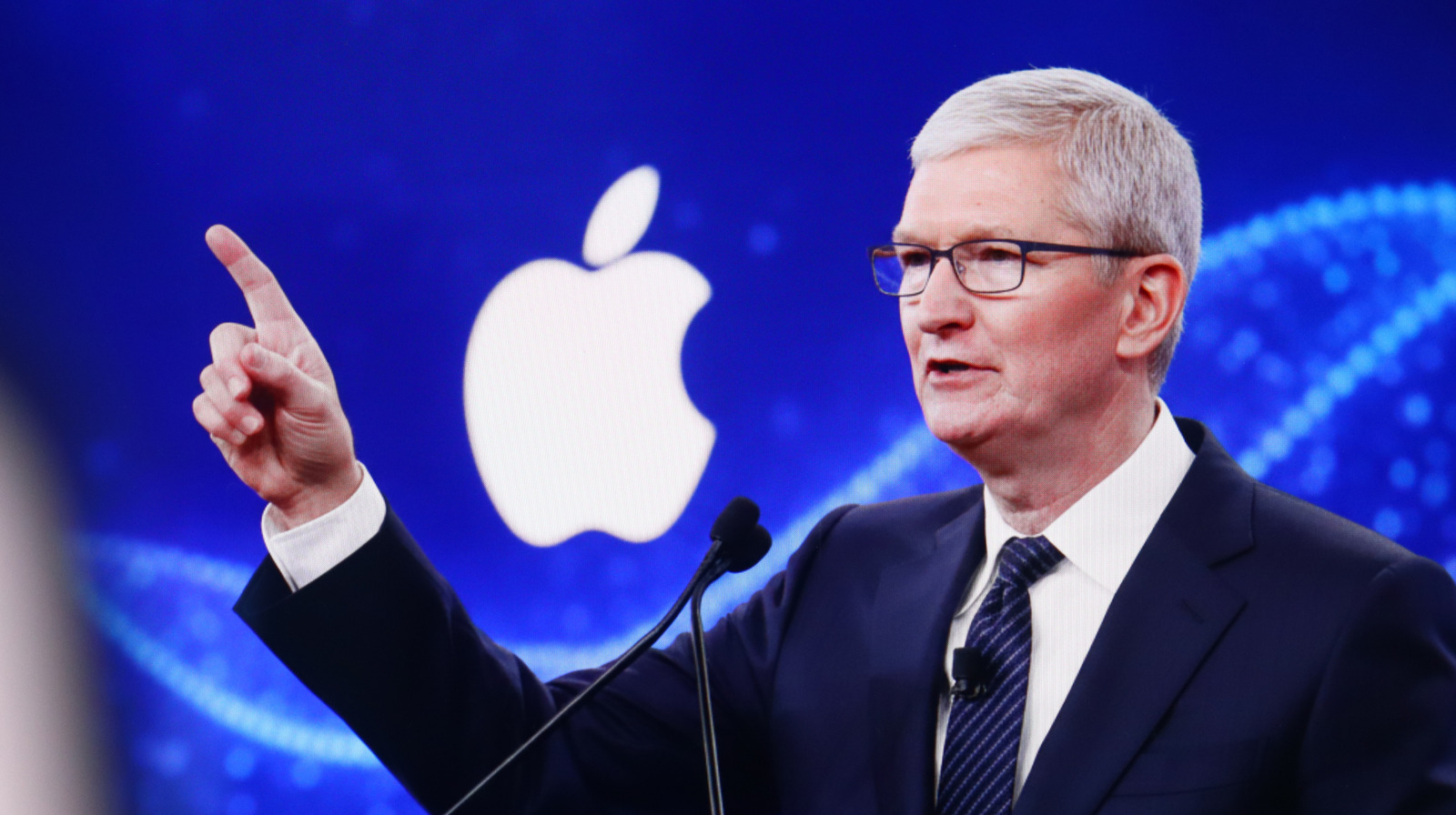
Panic is a hell of a drug for investors. When the news broke on April 20, 2026, that Tim Cook was finally handing the keys to Apple Park over to John Ternus, the immediate reaction followed a predictable, tired script. People started looking for the exits. The "canary in the coal mine" narrative started bubbling up, suggesting that if the man who built the $4 trillion empire is leaving, the whole tech sector must be teetering on the edge of a cliff.
It’s a sensationalist take that ignores how modern tech giants actually function.
Cook isn't running for the hills because the bubble is about to burst. He’s executing a transition that’s been in the works for a decade. If you're selling your tech portfolio because a 65-year-old executive is moving to an Executive Chairman role, you're fundamentally misunderstanding why these companies win. Apple isn't a fragile startup held together by one man’s charisma anymore. It’s a massive, self-sustaining machine.
The John Ternus Era Is About Products Not Operations
For years, the knock on Tim Cook was that he was an "ops guy," not a "product guy." He was the genius who fixed the supply chain, optimized the margins, and turned the iPhone into the greatest cash-printing press in history. But he wasn't Steve Jobs.
John Ternus, the incoming CEO, changes that vibe.
Ternus has been the Senior Vice President of Hardware Engineering since 2021. He’s the guy behind the silicon transition that made Macs relevant again. He’s been the steady hand guiding the iPhone’s evolution and the risky bet on Vision Pro. By picking Ternus, Apple's board is signaling a shift back to a product-first culture.
- Engineering DNA: Ternus is a mechanical engineer by trade. He speaks the language of the labs, not just the spreadsheets.
- Continuity: He’s been at the company for over 20 years. He’s not an outsider coming in to "disrupt" a culture that already works.
- The AI Pivot: Ternus is taking over right as Apple struggles to catch up with Google and OpenAI in the generative AI space. His background in hardware-software integration is exactly what Apple needs to make "Apple Intelligence" feel like a feature rather than a desperate add-on.
The transition doesn't look like a retreat. It looks like a specialized tool being swapped for a different specialized tool. Cook’s operational mastery is baked into the company's DNA now. Ternus is there to make sure the hardware doesn't get stale while the world moves toward AI-powered wearables and foldable tech.
Why the Canary Narrative Fails the Math Test
If Tim Cook’s departure were a warning sign for the rest of big tech, we’d see cracks in the fundamentals. We don't.
In Q1 2026, Apple posted a record $143.8 billion in revenue. That’s not a company in decline. Their services business—the high-margin stuff like iCloud, Music, and the App Store—is pulling in over $30 billion a quarter with gross margins hovering around 76.5%.
The "canary in the coal mine" idea suggests that the leaders of these companies see a macro-economic disaster coming that we don't. But look at the landscape. Microsoft is fully integrated into the enterprise AI stack. Google still owns the gateway to the internet. Amazon’s AWS is the backbone of the digital world. These aren't speculative growth stocks from the 2000 dot-com era. They are the new utilities.
Cook’s move to Executive Chairman means he’s still in the room. He’s going to be the "Chief Diplomat," handling the increasingly messy relationship between Cupertino and the White House. With trade tensions and tariff threats constantly looming, having Cook’s steady hand on the political tiller while Ternus runs the product teams is actually a de-risking move, not a red flag.
The Real Risk Isn't Succession
If you want to worry about tech stocks, stop obsessing over who is sitting in the corner office. The real risks are structural.
The App Store's 30% "Apple Tax" is under fire from regulators globally. That’s a real threat to the bottom line. The pace of AI innovation is so fast that even a company with $50 billion in quarterly operating cash flow can get caught flat-footed. These are the things that keep investors up at night, not the fact that a CEO is retiring after a legendary 15-year run.
Look at the historical context. People said the same thing when Bill Gates left Microsoft. They said it when Jeff Bezos stepped back from Amazon. In both cases, the companies grew larger and more dominant. The institutional momentum of a $4 trillion company is an incredible force. It doesn't just stop because the name on the door changes.
What You Should Actually Do With Your Portfolio
Don't panic-sell on leadership news. Market volatility following a CEO announcement is usually just noise created by algorithmic trading and short-term speculators.
- Watch the margins, not the headlines: If Apple’s service margins start to dip or iPhone lead times shrink significantly, that’s a reason to re-evaluate. A leadership change isn't.
- Focus on the AI integration: The success of the "iPhone 18" cycle later this year will tell you more about the stock's future than Tim Cook’s retirement date. If Ternus can't make AI feel essential, then the "canary" might actually be the hardware cycle itself.
- Ignore the "Era" talk: Analysts love talking about the "End of the Cook Era." It makes for great TV. In reality, the "Cook Era" was about building a platform. The "Ternus Era" will be about what happens on that platform.
Tim Cook isn't leaving because the party is over. He’s leaving because his job—turning Apple into the most stable, profitable business on the planet—is done. He’s handing over a polished, high-performance engine. It’s up to Ternus to decide where to drive it, but the engine itself isn't about to stall. Keep your eye on the product roadmap and the regulatory filings. Everything else is just theatre.