Everyone loves a prophet after the fire has already burned the house down.
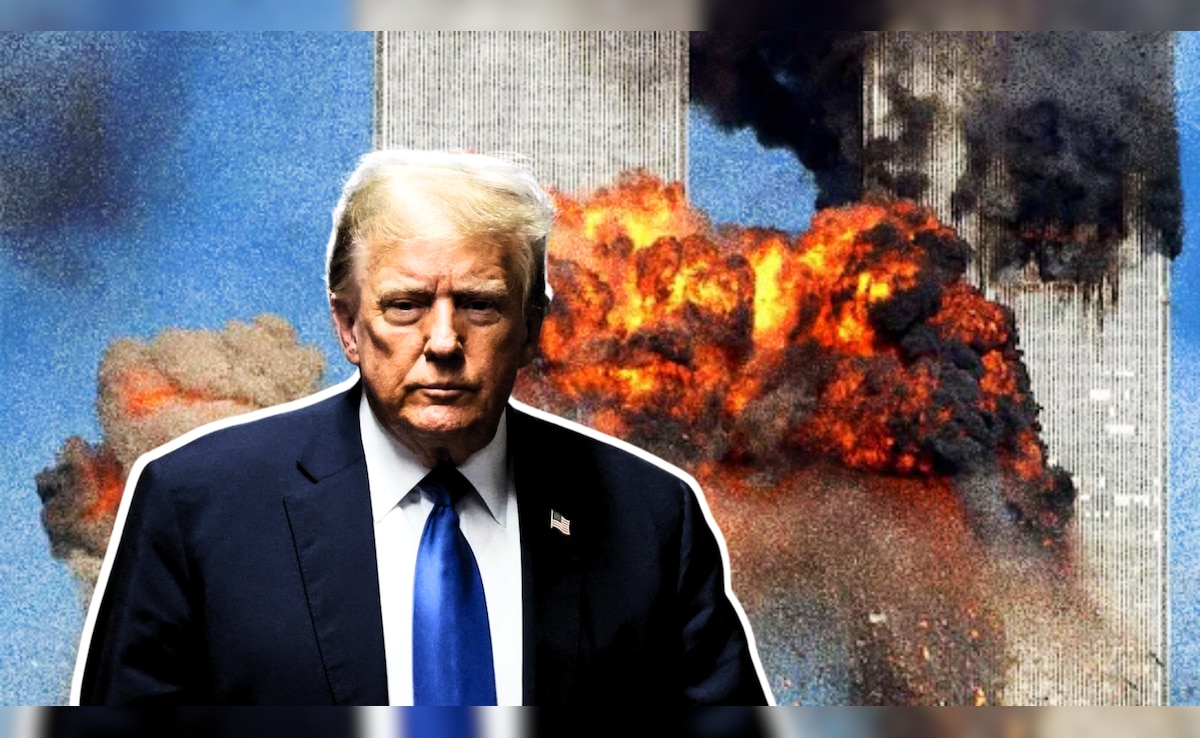
The media remains obsessed with a specific passage from Donald Trump’s 2000 book, The America We Deserve. In it, he mentions Osama bin Laden. He mentions the threat of terrorism. Because the towers fell nineteen months later, the "lazy consensus" has split into two equally boring camps: those who claim he’s a visionary who predicted 9/11, and the fact-checkers who frantically point out that bin Laden was already a known entity.
Both sides are missing the point. Both sides are playing a rigged game of hindsight bias that makes us less safe today.
The "truth" isn't about whether a real estate mogul saw a plane hitting a building. The truth is about the signal-to-noise ratio. In 2000, bin Laden wasn't an obscure figure; he was a primary focus of the intelligence community. Predicting "terrorism" in the 21st century is like predicting "volatility" in the stock market. It’s a statistical certainty, not a prophetic insight.
If we keep rewarding people for vague "predictions" that only look specific in the rearview mirror, we remain blind to the structural failures that actually cause disasters.
The Myth of the Lone Visionary
We have a psychological addiction to the "Great Man" theory of history. We want to believe that one person—whether a politician, a CEO, or a rogue analyst—saw the "black swan" coming while everyone else was sleeping.
This narrative is a comfort blanket. It suggests that if we just find the right leader, we can avoid the next catastrophe.
In reality, the failure of 9/11 wasn't a lack of prediction. It was a failure of aggregation. The information existed. It was scattered across the FBI, the CIA, and the NSA. This is what intelligence experts call "siloing."
When Trump wrote about bin Laden in 2000, he was reflecting the zeitgeist of the Sunday morning talk shows. Bin Laden had already bombed two U.S. embassies in Africa in 1998. The USS Cole was attacked in October 2000. To say you "predicted" bin Laden was a threat in 2000 is like saying you "predicted" AI would be a big deal in 2024.
Why Fact-Checkers Are Part of the Problem
The standard media response to these claims is the "fact-check." They provide a timeline. They show that bin Laden was on the FBI's Most Wanted list. They conclude that the prediction wasn't unique.
This is technically correct but intellectually bankrupt.
By focusing on the accuracy of the prediction, they validate the idea that predicting the future is the goal. It isn't. The goal is risk mitigation.
I’ve seen boards of directors waste months analyzing "predictive models" for market crashes. They look for the one variable that will tip them off. They want a crystal ball. They should be looking at their balance sheets. If your company—or your country—is so fragile that one specific event destroys it, the "prediction" of that event is irrelevant. Your fragility is the problem.
The Architecture of Fragility
Most people think 9/11 changed everything. It didn't. It just exposed what was already broken.
The aviation security system was a theater of the absurd long before 2001. The intelligence community was a collection of fiefdoms that refused to share data. The policy of "passive cooperation" with hijackers was a relic of the 1970s.
When we argue about who "predicted" the event, we ignore the structural vulnerabilities that allowed the event to be so effective.
Imagine a scenario where a bridge collapses. After it falls, a local resident claims they "predicted" it because they saw a crack a year ago. The city council argues that everyone knew there were cracks. They spend years debating who saw the crack first.
Meanwhile, they never check the other twenty bridges built with the same faulty steel.
Stop Hunting for Black Swans
Nassim Taleb coined the term "Black Swan" to describe events that are unpredictable, have a massive impact, and are explained away with hindsight.
The 9/11 attacks are often cited as the ultimate Black Swan. But were they?
- The 1993 World Trade Center bombing showed the target.
- The "Bojinka plot" in 1995 showed the method (using planes as weapons).
- The 1998 fatwa showed the intent.
This wasn't an unpredictable event. It was a "Grey Rhino"—a highly probable, high-impact threat that we ignored because addressing it was politically and bureaucratically expensive.
We are doing the same thing today with sovereign debt, cyber-warfare, and crumbling power grids. We aren't looking for the structural rot; we’re waiting for a "visionary" to tell us exactly when the collapse will happen so we can blame them or praise them afterward.
The High Cost of Post-Hoc Genius
The danger of the "I predicted it" narrative is that it incentivizes vague pessimism.
If you are a pundit or a politician, the smartest move you can make is to predict ten different disasters. When one inevitably happens, you point to your old tweet or book chapter. You become a "genius." People forget the nine things you got wrong.
This is the "Broken Clock" strategy. It’s great for building a brand; it’s catastrophic for making decisions.
In my time advising executive teams, the most dangerous person in the room is the one who was "right" for the wrong reasons. They guessed a market dip and now they think they can see the wind. They ignore the math in favor of their "gut," and they eventually lead the ship into an iceberg.
How to Actually See the Next Crisis
If you want to move beyond the shallow debate of who said what in 2000, you have to change your metrics.
- Ignore the "Who": It doesn't matter if it's Trump, Clinton, or a YouTuber. Predictions are cheap.
- Look for Redundancy, Not Efficiency: The U.S. intelligence system was "efficient" at its specific tasks, but it had no redundancy in information sharing. Our current supply chains are "efficient" (just-in-time), which makes them incredibly fragile.
- Audit the Premise: The premise of the 9/11 debate is: "Could we have known?" The better question is: "Why were we so vulnerable to what we already knew?"
The obsession with 9/11 predictions is a distraction from the reality that we are currently ignoring a dozen "Grey Rhinos" because they don't fit into a punchy headline or a political "gotcha" moment.
We are currently building a world that is more interconnected and more fragile than it was in 2001. We are relying on complex systems that no single person fully understands. And when the next system-wide failure occurs, we will spend another twenty years arguing about which politician mentioned it in a footnote of their memoir.
Stop looking for the prophet. Start looking at the foundations.
If the foundation is cracked, you don't need a prediction to know it's going to fall. You just need to look down.
The "truth" about 9/11 predictions isn't that Trump was a genius or that he was a liar. It’s that we are all so desperate for a narrative that we’d rather argue about ghosts than fix the machines we’re currently trapped inside.
Fix the machine or get out of the way.
The next crisis won't be a "Black Swan" you didn't see coming. It will be the thing you’re looking at right now, convinced it’s someone else’s job to worry about.