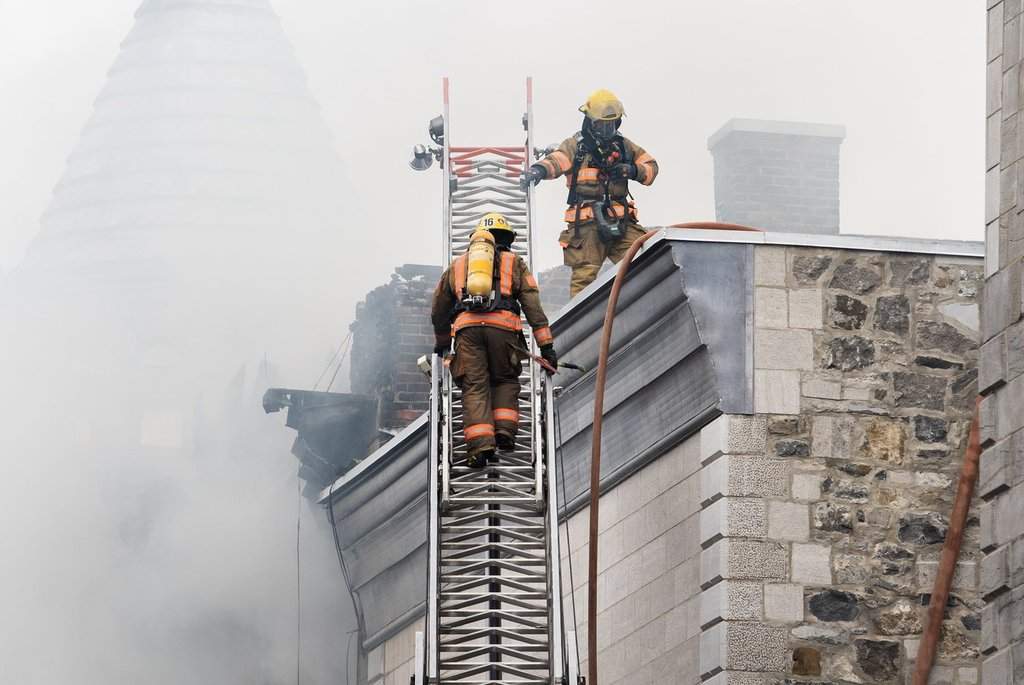
Seven people died in a windowless deathtrap while the city slept. Two years have passed since the smoke cleared from the Place d'Youville rubble, yet the families of those victims are still waiting for a single handcuffs-to-wrist moment. It’s frustrating. It’s agonizing. For anyone following the glacial pace of the Montreal police (SPVM) and the provincial prosecutors, it’s starting to feel like a masterclass in bureaucratic delay.
The March 16, 2023, blaze wasn't just a tragic accident. It was a wake-up call about illegal short-term rentals, heritage building safety, and the "grey zones" of urban law enforcement. But while the city promised a crackdown, the legal system has moved with the urgency of a Sunday stroll. You'd think seven bodies would move the needle faster. It hasn't.
The evidence mountain and the silence of the DPCP
The Montreal police handed over their massive investigation file to the Director of Criminal and Penal Prosecutions (DPCP) quite a while ago. We're talking about thousands of pages, forensic reports, and witness statements. Yet, we're sitting here in 2026 and the prosecutor’s office is still "evaluating."
What are they waiting for? In a typical criminal case, you need to prove intent or extreme negligence. Here, the complexity lies in the layers of responsibility. You have the building owner, Emile Benamor. You have the operators of the illegal Airbnbs. You have the city inspectors who supposedly visited the site years prior. When everyone points a finger at someone else, the prosecutors get nervous. They don't want to file charges and lose in court. But that caution feels like a betrayal to the families of Ania Maazouz, Dania Zafar, and the five others who never made it out.
The SPVM eventually reclassified this as a criminal investigation after finding traces of accelerants. That's a fancy way of saying they suspect arson. If someone lit that match, finding them is one thing; proving who hired them or why the building was a tinderbox is another. The silence from the DPCP isn't just a legal procedure anymore. It’s a void.
Why the arson angle complicates everything
When the news broke that the fire was "of criminal origin," the narrative shifted. It wasn't just about a faulty space heater or old wiring. It became a hunt for a perpetrator. However, the arson label actually gives the building owner a bit of a legal shield in the court of public opinion. If a criminal sets your house on fire, are you responsible for the lack of fire escapes?
Legally, yes, you can still be. But it muddies the waters. Criminal negligence causing death requires a "marked departure" from the standard of care a reasonable person would provide. If the building had no windows in certain rooms—which it did—and no functioning fire alarms—which witnesses claim—the arsonist is only part of the story. The building itself was the weapon.
I've seen these cases drag on before. In complex arson investigations, the police often wait for someone to "flip." They're looking for the low-level guy to rat out the person who ordered the job. If that person doesn't exist, or if the trail has gone cold in the digital footprints of encrypted apps, the case stalls. Two years is a long time for a trail to stay warm.
The Airbnb problem hasn't gone away
Let's talk about the elephant in the room. This building was packed with illegal short-term rentals. At the time, Quebec law required a permit number for any Airbnb listing. This building didn't have them, or it used fake ones. Since the fire, the provincial government passed Bill 25, which puts the squeeze on platforms to verify those numbers.
But walk through Old Montreal today. Is it actually safer? The tragedy forced a massive spike in inspections, but the "whack-a-mole" nature of illegal rentals continues. Landlords are savvy. They move to different platforms or use private Telegram groups. The systemic failure that allowed 35 Place d'Youville to operate as a ghost hotel is still a threat in dozens of other heritage buildings across the city.
The city of Montreal likes to talk about their "squad" of inspectors. Honestly, it's a drop in the bucket. When you have a housing crisis and the lure of easy tourist cash, safety takes a backseat to profit. The Place d'Youville fire should have been the end of "vague" enforcement. Instead, it’s become a case study in how long it takes to hold the powerful accountable.
Justice for the families shouldn't be a luxury
The families have filed a class-action lawsuit seeking over $22 million. That’s moving through the civil courts, which is usually faster than the criminal side, but it doesn't offer the same closure. Money doesn't replace a daughter or a friend. They want to see someone in a suit standing in front of a judge in a criminal court.
There’s a specific kind of pain in seeing the site of the fire every day. The building is still there, a hollowed-out shell wrapped in scaffolding and mesh. It’s a scar on the face of the city. Every time a tourist walks by and takes a photo of the "quaint" Old Montreal streets, they’re walking past a graveyard that still hasn't seen a day of reckoning.
We need to stop accepting "it's a complex case" as a valid excuse for a two-year delay. If this were a high-profile shooting in a wealthy suburb, the pressure would be unbearable. Because the victims were mostly young people and visitors, the public attention drifts. We can't let it.
What needs to happen right now
If you live in a heritage building or frequent short-term rentals, you can't wait for the DPCP to find its backbone. You have to be your own advocate.
- Check for two points of egress in every rental you book. If there’s only one way out and no fire escape, leave.
- Demand to see the fire inspection certificate for your apartment building. In Montreal, these are public records.
- Pressure your local MNA (Member of the National Assembly) about the progress of the Place d'Youville file. Public pressure is often the only thing that moves a dormant prosecutor.
The Montreal fire was a failure of the system at every level—from the owner to the platform to the city inspectors. Waiting another year for "evaluation" is an insult. The facts are there. The bodies are gone. It’s time to call it what it is and lay the charges. If the evidence isn't there after 730 days, then the investigation itself is the failure.
Check your smoke detectors today. Don't assume the building you're sleeping in is up to code just because it's beautiful. Old Montreal is a maze of wood and stone, and without accountability, the next tragedy is just a short circuit away.