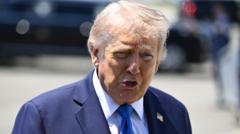
The cancellation of a high-stakes diplomatic mission to Islamabad has sent shockwaves through global energy markets and left the Biden-era leftovers of the State Department scrambling. President Donald Trump abruptly called off the trip of senior envoys Jared Kushner and Steve Witkoff to Pakistan, where they were slated to meet Iranian officials in a desperate attempt to end the 50-day-old conflict that has choked the world’s oil supply. Trump’s stated reason—that the travel was "too much work" and a waste of time because the U.S. holds "all the cards"—masks a far more complex reality of a military blockade that is currently strangling the Iranian economy and an administration that views diplomacy as a tool of total surrender rather than mutual compromise.
By pulling the plug on the Islamabad talks, the White House has effectively signaled that it prefers the slow, grinding pressure of Operation Epic Fury over the uncertainty of the negotiating table. This isn't just about travel schedules; it is about a fundamental shift in how Washington handles regional pariahs. While Pakistani Prime Minister Shehbaz Sharif attempted to position his nation as the ultimate neutral ground, the Trump administration’s refusal to show up confirms that the U.S. is no longer interested in the "Omani model" of quiet, incremental de-escalation.
The Blockade vs The Briefcase
The conflict has moved far beyond rhetoric. For eight weeks, a U.S.-led naval blockade has effectively shuttered Iranian ports, creating a bottleneck that has spiked global oil prices and pushed U.S. inflation to a two-year high. Defense Secretary Pete Hegseth has been clear: the blockade stays until the Iranian "shadow fleet" is dismantled and enrichment ceases entirely.
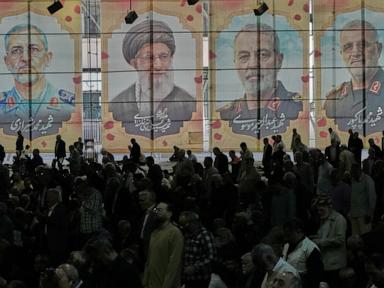
Inside the halls of power in Tehran, the pressure is manifesting as "tremendous infighting," according to Trump’s social media dispatches. While Iranian Foreign Minister Abbas Araghchi spent the weekend in Islamabad presenting a "workable framework" to Pakistani officials, his words fell on deaf ears in Washington. The Iranian offer reportedly included a freeze on nuclear enrichment and a cessation of support for regional proxies like the Houthis and Hezbollah. However, for an administration that demands the complete dismantling of Iran's nuclear infrastructure, "a freeze" is a non-starter.
The U.S. strategy appears to be a calculated gamble on internal Iranian collapse. By maintaining the blockade and walking away from talks, the administration is betting that the economic pain will force the Iranian leadership—already reeling from infrastructure failures and domestic protests—to return to the table with a total surrender. It is a high-stakes play that ignores the potential for a desperate counter-strike in the Strait of Hormuz.
Pakistan as the Sidelined Broker
Pakistan’s role in this drama cannot be overstated. Islamabad has spent months carefully cultivating a relationship with the Trump inner circle, hoping to leverage its proximity to Iran into a position of indispensable regional mediator. For the Pakistani military and civilian leadership, hosting these talks was supposed to be a "coming out party" that would prove their value to a second Trump term.
Instead, they were left holding the bag. Araghchi arrived in Islamabad, met with Field Marshal Asim Munir, and departed for Oman without ever seeing an American face. The optics are devastating for Pakistani diplomacy. It suggests that while they can provide the room, they cannot guarantee the guests.
The Cost of No-Show Diplomacy
The immediate fallout of the canceled trip was felt in the pits of the New York Mercantile Exchange. Brent crude futures reacted with a sharp uptick as traders realized that the "Islamabad Breakthrough" was a mirage.
- Oil Prices: A sustained blockade means the 20% of the world’s oil that flows through the Strait of Hormuz remains at risk.
- Shipping Rates: Insurance premiums for tankers in the Arabian Sea have reached record highs.
- Domestic Inflation: In the U.S., the cost of gasoline is becoming a political liability that even a "maximum pressure" advocate like Trump cannot ignore forever.
The Shadow of the 2028 Clock
There is a cynical but pervasive theory among veteran diplomats that the administration’s refusal to negotiate is driven by the domestic political calendar. Trump’s "we have all the cards" mantra plays well to a base that is weary of "endless wars" but supportive of "winning." By framing diplomacy as a waste of taxpayer money and envoy time, the administration maintains its "tough guy" image while the military does the heavy lifting of economic strangulation.
However, the Iranian leadership is not a monolith. While Trump mocks their "infighting," the reality is that the more the U.S. leans into a blockade, the more the hardliners in Tehran gain ground. President Masoud Pezeshkian’s recent phone call to Islamabad, in which he refused to enter "imposed negotiations" under threat, shows that the Iranian side is equally prepared to dig in.
The Islamabad summit was intended to be the start of a three-step de-escalation plan. Now, it stands as a monument to the death of traditional diplomacy in the new era of American foreign policy. The " Islamabad framework" is dead before it was even printed.
The Leverage Myth
The administration’s claim that it holds all the cards is a potent narrative, but it ignores the wild card of regional instability. If the blockade continues to choke the Iranian economy without a diplomatic off-ramp, the risk of a "black swan" event—an attack on a major Saudi oil facility or a direct clash in the Persian Gulf—increases exponentially.
The U.S. may have the naval might to close a port, but it does not have the power to control the desperation of a regime with its back against the wall. By walking away from Pakistan, the envoys didn't just save a flight; they may have closed the last window for a controlled end to the war. The next time the U.S. and Iran "talk," it likely won't be through a mediator in Islamabad, but through the roar of hardware in the Strait.