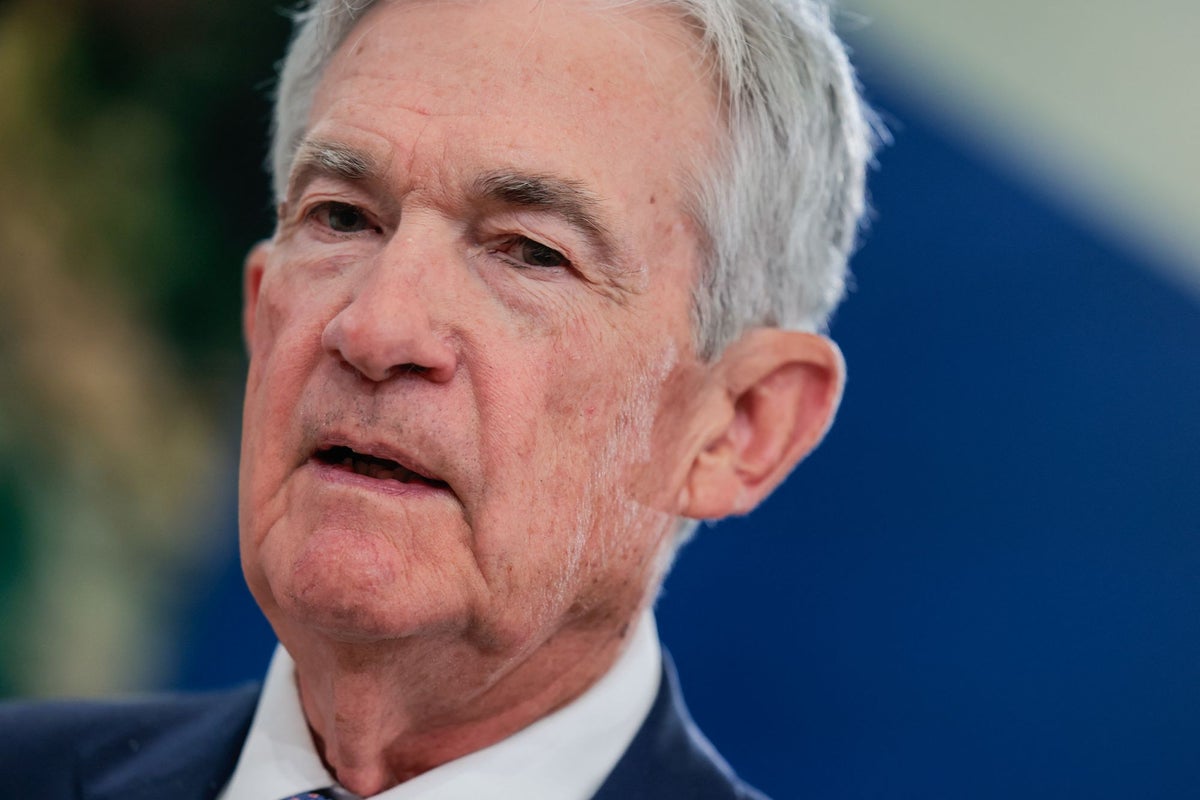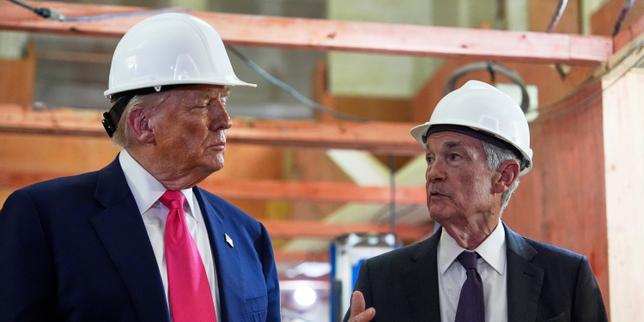
The Department of Justice finally blinked. On April 24, 2026, the long-running criminal probe into Federal Reserve Chair Jerome Powell was abruptly shuttered, marking the end of a high-stakes game of chicken between the White House and the world’s most powerful central banker.
For months, the investigation into the $2.5 billion renovation of the Fed’s Eccles Building served as a thin veil for a much larger objective: the total political subjugation of American monetary policy. By dropping the case, the administration isn’t admitting defeat so much as it is clearing the wreckage from a botched maneuver. The move is a calculated tactical retreat designed to save the confirmation of Kevin Warsh, the president’s hand-picked successor, whose path to the chairmanship had been effectively blocked by the very scandal the White House helped ignite.
The Renovation Ruse
The investigation, led by U.S. Attorney Jeanine Pirro, was never really about marble countertops or construction overruns. It was a blunt instrument. Throughout early 2026, the administration leveraged the threat of criminal charges to pressure Powell into aggressive interest rate cuts—cuts the Fed chair resisted in the face of persistent inflationary pressures.
Powell didn't just refuse to cut; he dug in. In an unprecedented video response earlier this month, he characterized the probe as a "pretext" for political interference. This wasn't the usual dry, coded language of a central banker. It was a declaration of war. Powell signaled that he would not only finish his term as chair, which ends on May 15, but that he would exercise his legal right to remain on the Board of Governors until 2028 to ensure the institution's independence wasn't traded for a plea deal.
The legal strategy began to crumble in March when U.S. District Judge James Boasberg quashed subpoenas issued to the Fed, noting that prosecutors had produced "essentially zero evidence" of a crime. When federal agents attempted an unannounced "site visit" to the Fed’s headquarters and were turned away by security, the optics shifted from an investigation to a harassment campaign.
The Warsh Obstacle
The primary driver for the DOJ’s sudden withdrawal wasn't a sudden respect for the law; it was the reality of Senate mathematics.
Kevin Warsh, the former Fed governor and current nominee to replace Powell, found himself caught in the crossfire. A key group of moderate Republican senators, led by Thom Tillis of North Carolina, made it clear that no vote would take place while a "frivolous" criminal probe hung over the sitting chair. The administration faced a humiliating stalemate:
- They couldn't fire Powell "for cause" without a conviction or a smoking gun.
- They couldn't confirm Warsh while the investigation was active.
- Powell refused to resign as a governor, meaning even if Warsh took the chair, Powell would remain a voting member with a direct line to the media and the markets.
By punting the "investigation" to the Fed’s own Inspector General, the DOJ is attempting to "launder" the controversy. It allows the administration to claim they are still "getting to the bottom of the waste," while removing the immediate legal friction that was paralyzing the confirmation process.
A Dangerous Precedent for the Dollar
This retreat does not signal a return to the status quo. The damage to the Fed’s perceived independence is already baked into the market. Investors have spent the last quarter watching the Justice Department be used as a tool of monetary policy—a move more common in emerging markets than in the world’s reserve currency.
While the "Powell probe" is over, the broader battle for the Fed remains active. The Supreme Court is currently weighing a case involving Governor Lisa Cook, whom the president attempted to fire last year. That ruling, expected in June, will determine if a president can remove a Fed governor at will. If the court rules in favor of the White House, the DOJ’s withdrawal today will be seen as a minor footnote. The president wouldn't need a criminal probe to oust a dissenter; he would only need a pen.
The Institutional Cost
Jerome Powell has effectively won this round, but the victory is pyrrhic. He will likely step down as chair on May 15, leaving behind an institution that is more polarized and scrutinized than at any point in its 113-year history.
The strategy of "governance by investigation" has failed to move the needle on interest rates, but it has succeeded in creating a blueprint for future interference. If the administration can’t get the rates they want through the FOMC, they have shown they are willing to send the FBI to the Eccles Building.
The DOJ’s closure of the case isn't an olive branch. It’s a clearing of the decks for the next phase of the struggle, which shifts from the courtroom back to the Senate floor. The confirmation of Kevin Warsh is now a virtual certainty, but he will inherit a Fed that is no longer seen as the "adult in the room," but rather as a prize to be won.
The independence of the central bank didn't die with this investigation, but it spent the last four months in intensive care.