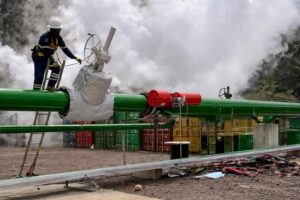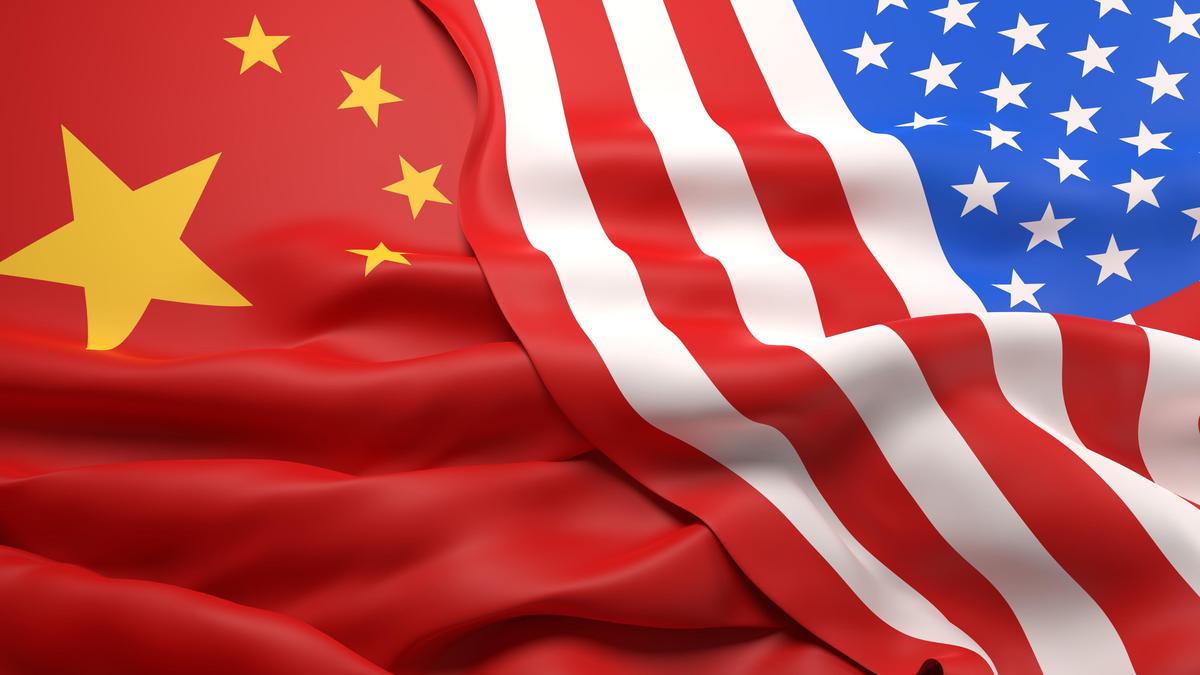
The Chinese government has issued a sharp rebuke against recent American sanctions targeting oil refinery operations, marking another escalation in the economic friction between the two superpowers. Beijing argues that these unilateral measures interfere with sovereign trade rights and threaten global energy stability. While the United States frames these restrictions as a necessary tool to curb the financing of hostile regimes or illicit activities, China views them as a blunt instrument of geopolitical coercion designed to stifle its industrial growth and energy security. This clash highlights the widening gulf between Western security priorities and Eastern economic expansion.
Energy is the lifeblood of the Chinese industrial machine. Any move that disrupts the flow of crude or the capacity to process it is seen not just as a policy disagreement, but as an existential threat to domestic stability.
The Mechanics of Economic Warfare
Sanctions on refining capacity are rarely about the oil itself. They are about the financial and technical architecture that allows a nation to convert raw materials into usable fuel and economic power. By blacklisting specific refineries or the entities that provide them with insurance and shipping services, the U.S. Treasury Department effectively cuts off these facilities from the dollar-denominated global financial system.
China’s Ministry of Foreign Affairs has characterized these moves as "long-arm jurisdiction." The term reflects a deep-seated resentment toward the way American domestic law is projected onto international commerce. For a major refinery in a province like Shandong, being placed on a restricted list means that international banks will no longer process their payments, and technology providers will cease maintenance on critical hardware. The ripple effect is immediate.
Critics of the American strategy suggest that these measures are increasingly losing their bite. As the West tightens its grip on traditional financial channels, China has been forced to build its own. We are seeing the rapid maturation of the CIPS (Cross-Border Interbank Payment System) and an increased reliance on "dark fleets"—tankers that operate outside the purview of Western maritime authorities. This bifurcation of the global energy market creates a shadow economy where transparency is non-existent and risks are high.
The Problem of Independent Refineries
Much of the recent tension centers on China’s "teapots." These are small, independent refineries that operate outside the direct control of state-owned giants like Sinopec or PetroChina. Because these smaller players are often more agile and less concerned with international reputation, they have become the primary destination for sanctioned crude from nations like Iran or Russia.
The U.S. gamble is that by squeezing these independent operators, they can choke off the revenue streams of their primary targets. However, the teapots have proven remarkably resilient. They often deal in local currencies or through small regional banks that have no exposure to the American market, making them virtually immune to traditional financial pressure. This creates a cat-and-mouse game where new shell companies are formed as quickly as old ones are sanctioned.
The Collateral Damage of Energy Protectionism
Washington’s use of sanctions often carries the stated goal of promoting global security, but the secondary effects on energy prices are difficult to ignore. When a major refinery is sidelined or its supply chain is disrupted, the global balance of supply and demand shifts. Markets hate uncertainty.
The immediate result is a "risk premium" added to the price of every barrel of oil traded globally. While the U.S. may achieve a short-term diplomatic goal, the long-term consequence is higher costs for consumers in Europe, Southeast Asia, and even within its own borders. China frequently points to this as evidence that American policy is inherently destabilizing.
Moreover, these sanctions are driving a permanent shift in global trade alliances. China is no longer just a buyer; it is a financier and an infrastructure builder. By investing in refinery projects across the Middle East and Central Asia, Beijing is creating a "sanction-proof" energy corridor. This isn't just about moving oil; it is about exporting Chinese standards, Chinese hardware, and Chinese financial systems.
Technology and the Maintenance Gap
One area where sanctions do cause genuine pain is in high-end refining technology. Modern refineries rely on complex catalysts and software systems often patented by American or European firms. When sanctions hit, these facilities cannot simply swap out a part for a local equivalent.
- Catalytic Cracking Units: These are the heart of a refinery, and the specialized chemicals required for their operation are often controlled by Western monopolies.
- Process Control Software: Modern refining is a digital endeavor. Losing access to updates or remote support can lead to significant safety risks and efficiency drops.
- Heavy Equipment: Large-scale compressors and specialized valves are not easily replicated in the short term.
Beijing is pouring billions into domestic R&D to close this gap. The goal is total self-reliance in the "downstream" sector, ensuring that no future American administration can flip a switch and darken a Chinese city or stall its transport networks. This drive for "indigenous innovation" is accelerating, turning a trade dispute into a decade-long technological arms race.
The Sovereign Rights Argument
China’s defense of its refining industry is grounded in the principle of non-interference. From Beijing’s perspective, who they buy oil from and how they process it is a matter of domestic policy, not international law. They view the American habit of policing global trade as an outdated relic of a unipolar world.
This rhetoric resonates with many nations in the Global South. Countries that feel pressured to choose sides in the U.S.-China rivalry often see China’s defiance as a template for their own autonomy. By standing up for its refineries, China is also positioning itself as the leader of a new, multipolar economic order where the U.S. Treasury Department is no longer the ultimate arbiter of who can do business with whom.
The U.S. argues that trade cannot be divorced from ethics or security. If a refinery is processing oil that funds a war effort or a nuclear program, Washington believes it has a moral and strategic obligation to intervene. This is a fundamental clash of worldviews: one that prioritizes the inviolability of commerce and another that treats trade as a primary theater of national security.
The Illusion of Total Control
There is a growing sense among industry analysts that the era of "easy sanctions" is over. In the past, the threat of being cut off from the dollar was enough to bring most nations to the table. Today, the world is too interconnected, and the alternatives are too numerous.
When the U.S. targets a Chinese refinery, it often triggers a complex series of workarounds. The oil is rebranded. The payments are cleared through third-party intermediaries in Dubai or Singapore. The shipping insurance is provided by a domestic Chinese entity. The refinery continues to operate, albeit at a slightly higher cost, and the American influence over the situation actually diminishes because they lose visibility into the transactions.
The irony of the current situation is that aggressive sanctions may be the very thing that finally ends the dominance of the petrodollar. By forcing the world’s largest oil importer to find ways to pay for energy without using the U.S. currency, the American government is inadvertently accelerating the decline of its most powerful economic weapon.
The Strategic Bottleneck
Refineries are essentially massive, stationary targets. Unlike a tanker that can change its flag or a bank account that can be moved with a keystroke, a refinery is a multi-billion dollar investment that stays in one place for forty years. This makes them the perfect focal point for geopolitical tension.
China knows that its dependence on imported crude is its greatest "Achilles' heel." This is why they are not just protesting the sanctions; they are diversifying their entire energy mix at a breakneck pace. Every electric vehicle on a street in Shanghai and every wind turbine in the Gobi Desert is a hedge against the U.S. Treasury.
The conflict over oil refineries is a proxy for a much larger struggle over who will define the rules of global engagement in the 21st century. It is a contest between the established power of the financial status quo and the rising power of industrial scale.
As this standoff continues, the global energy market will become more fragmented, more opaque, and significantly more expensive. The certainty that once underpinned international trade is dissolving, replaced by a world where every transaction is a potential battlefield. Companies and nations must now decide if they will navigate the existing system or join the effort to build a new one from the ground up. The refinery is no longer just a place where fuel is made; it is a fortress in a cold war that is rapidly heating up.
Stop thinking of these sanctions as isolated policy moves and start seeing them as the opening volleys of a systemic divorce. Beijing has made it clear that it will not back down, and Washington shows no sign of relaxing its pressure. The stage is set for a protracted struggle that will reshape the industrial map of the world, regardless of who wins the immediate argument over a few barrels of oil.