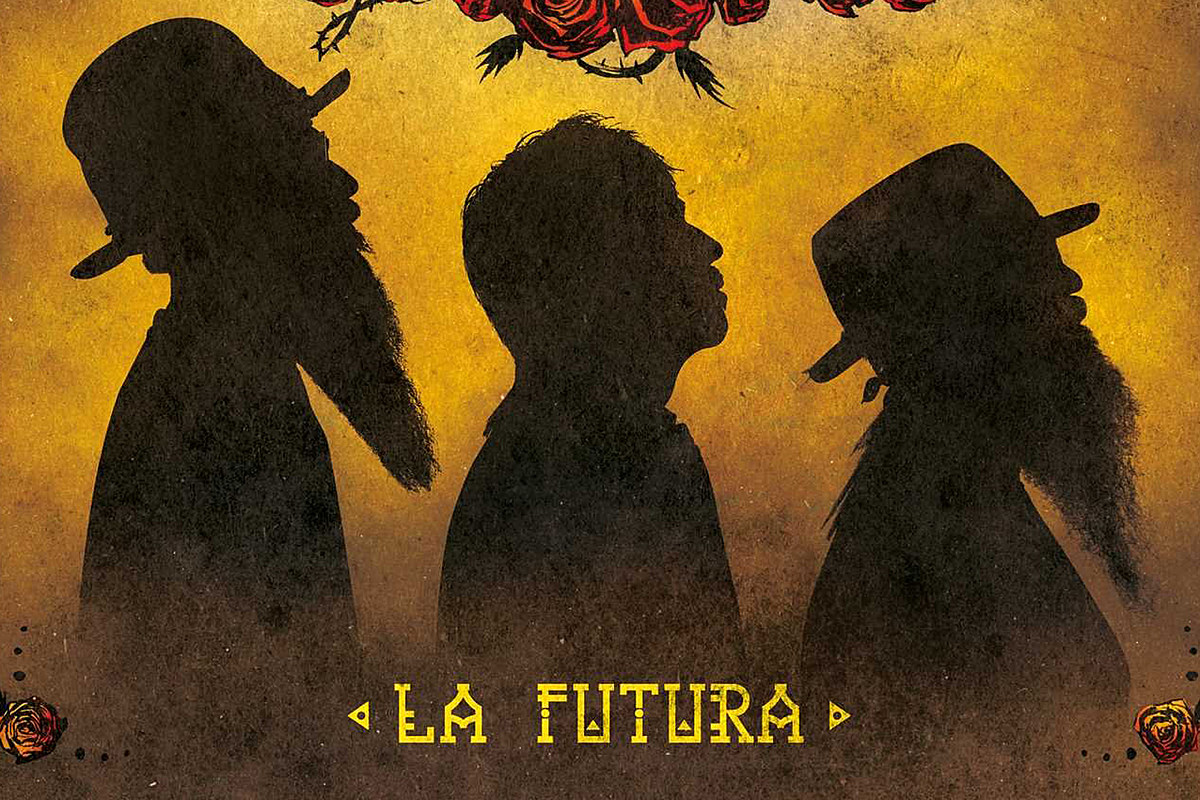
It took nine years. Nine long, dusty years of silence from the studio before the world finally got its hands on ZZ Top La Futura. By the time 2012 rolled around, a lot of people had basically written off "That Little Ol' Band From Texas" as a heritage act. You know the vibe—guys who just tour the state fair circuit playing "Legs" and "Sharp Dressed Man" until the sun goes down. But then this record dropped, and it wasn't just another album. It was a statement. Honestly, it might be the grittiest thing they ever put to tape.
The Rick Rubin Factor
You can't talk about this album without talking about Rick Rubin. He’s the guy who famous for stripping legacy artists back to their skeletal remains—think Johnny Cash or Black Sabbath. He did the same thing here. He basically told Billy Gibbons, Dusty Hill, and Frank Beard to stop trying to be "modern" and just be ZZ Top again.
The recording process wasn't some quick weekend session. It was a four-year slog. They started tinkering in 2008 and didn't finish until 2012. Billy Gibbons later admitted that Rubin’s "it’s good, but you can do better" mantra was exhausting. Imagine being in your 60s, having sold millions of records, and some guy in a beard is telling you to sing the same line for two hours straight.
But it worked.
The album has this thick, swampy atmosphere that feels like it was recorded in a basement filled with humid Texas air and cigarette smoke. It doesn’t have that shiny, over-produced 80s gloss. It’s heavy. It’s ugly in the best way possible.
That Houston Hip-Hop Connection
The weirdest, coolest thing about ZZ Top La Futura is the opening track. "I Gotsta Get Paid" sounds like a classic ZZ Top boogie, but the lyrics are actually a reimagining of a 1990s Houston rap song called "25 Lighters" by DJ DMD, Lil' Keke, and Fat Pat.
Think about that.
A blues-rock band in their 40th year of existence covering local hip-hop and making it sound like a Delta blues standard. It’s genius. It’s the kind of move only Billy Gibbons could pull off with a straight face. He took a song about selling lighters (which were actually used to store crack) and turned it into a fuzzy, distorted guitar anthem.
Breaking Down the Sound
If you’re looking for the "Eliminator" era synths, you’re in the wrong place. This record is all about the "grit is good" philosophy.
- Chartreuse: This one is a direct descendant of "Tush." It’s a 12-bar blues shuffle that feels like a Cadillac speeding down a dirt road.
- Consumption: A grinding, mechanical riff that sounds like an engine trying to start in the middle of a thunderstorm.
- Over You: A rare moment of vulnerability. Gibbons’ voice sounds like it’s been dragged through gravel, and on this ballad, it actually breaks a little. It’s probably the most honest vocal performance of his entire career.
- Heartache in Blue: This track features some killer harmonica work by James Harman. It’s pure, unadulterated roadhouse blues.
The album only has ten tracks (twelve if you got the Best Buy deluxe version), and that brevity is its strength. There’s no filler. It’s 39 minutes of pure Texas mud.
The Last of the Three
There’s a bit of sadness attached to this record now. ZZ Top La Futura ended up being the final studio album released during bassist Dusty Hill’s lifetime. He passed away in 2021, and while the band is still touring with their long-time tech Elwood Francis on bass, this album stands as the final chapter of the original trio’s studio legacy.
When you listen to the interplay between Dusty and Frank Beard on tracks like "Big Shiny Nine," you can hear that "sixth sense" Billy always talks about. They weren't just a rhythm section; they were a single machine.
Is It Their Best?
Is it better than Tres Hombres? Probably not. That’s a high bar. But it’s definitely the best thing they did since the early 80s. Critics at the time, like the folks over at The Guardian and Rolling Stone, generally agreed that it was a massive "return to form."
It peaked at number 6 on the Billboard 200, which is pretty wild for a blues-rock band in 2012. People were clearly hungry for something that sounded real. No drum machines. No pitch correction. Just three guys who knew exactly who they were.
How to Experience La Futura Today
If you really want to "get" this album, don't just stream it on crappy phone speakers.
- Find the Vinyl: The production is mastered very loud (typical Rick Rubin "Loudness War" stuff), but on a decent turntable, the low end of Dusty’s bass really thumps.
- Listen to "25 Lighters" First: Go find the original rap track on YouTube. Then listen to "I Gotsta Get Paid." It’ll make you appreciate the songwriting gymnastics Billy performed to bridge those two worlds.
- Check out the Texicali EP: If you want a shorter burst, the first four tracks of the album were actually released as an EP called Texicali a few months before the full record. It’s the "all killer, no filler" version of the experience.
ZZ Top proved with this record that you don't have to "evolve" by chasing trends. You evolve by digging deeper into the ground you already stand on. ZZ Top La Futura isn't just an old band recapturing glory; it’s a masterclass in how to age with your boots on and your sunglasses tight.