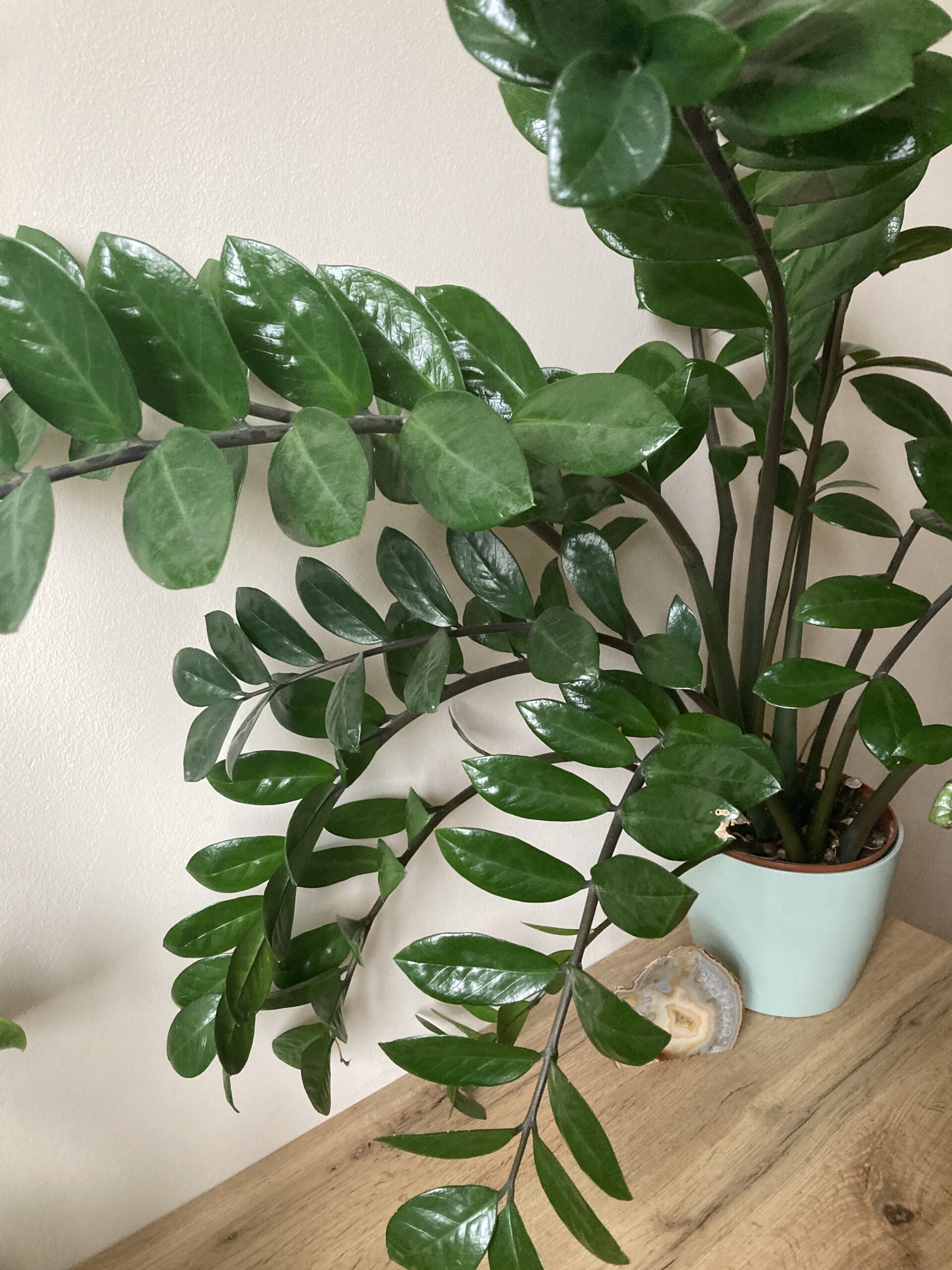
You've probably seen it. It’s that plant with the waxy, green leaves that look almost too perfect to be real, usually tucked into a dark corner of a dentist's office or a trendy coffee shop. People call it the ZZ plant, but its scientific name is a mouthful: Zamioculcas zamiifolia. Honestly, it looks like something a set designer would build for a sci-fi movie about a lush, alien planet. But it’s very real, and it’s basically the biological equivalent of a tank.
If you’re wondering what is a ZZ plant, think of it as the ultimate "lazy gardener" hack. Native to the dry grasslands and forests of Eastern Africa—think Kenya and South Africa—this plant evolved to survive in some pretty brutal conditions. It doesn't just tolerate neglect; it practically thrives on it. It’s a tropical perennial, but unlike those finicky fiddle leaf figs that drop leaves if you look at them wrong, the ZZ is built for survival.
The secret is in the roots. If you were to dig one up, you’d see these thick, potato-like things called rhizomes. These are basically water storage tanks. When it rains in Africa, the ZZ soaks up everything it can and stores it in those bulbs. Then, when the drought hits, it just sips on its reserves. This is exactly why you can go on a three-week vacation, forget you even own a plant, and come back to find it looking exactly the same.
Why the ZZ Plant Is the King of Low Light
Most plants crave the sun. They’ll stretch and get all "leggy" if they don't get enough light. The ZZ plant is different. While it definitely grows faster in bright, indirect light, it’s one of the few species that can survive in windowless offices with nothing but fluorescent bulbs.
NASA once did a famous Clean Air Study back in the late 80s, and while they focused on plants like snake plants and peace lilies, modern research from the University of Copenhagen suggests the ZZ plant is also effective at removing volatile organic compounds like benzene and toluene from the air. It’s working for you while you ignore it.
But let's be real about the "low light" thing. Low light doesn't mean no light. If you put it in a literal closet, it will eventually die, but it’ll take a long time to do it. It’s a slow grower anyway. You might only see a few new stalks a year. These stalks emerge from the soil as tight, lime-green spikes before unfurling into those iconic, dark green leaflets. It’s a cool process to watch, though it requires some patience.
Watering Mistakes Everyone Makes
Here is the thing: you are more likely to kill a ZZ plant by loving it too much than by neglecting it.
Overwatering is the number one killer. Because of those potato-rhizomes we talked about, the plant is constantly holding onto water. If you keep the soil soggy, those rhizomes will rot. They’ll turn into a mushy, stinky mess, and by the time the leaves start turning yellow, it might be too late to save the "heart" of the plant.
How do you avoid this? Wait until the soil is bone dry. All the way down. Stick your finger in there. If you feel any moisture at all, walk away. In most homes, this means watering maybe once every three or four weeks. In the winter? You might go two months without touching it. It sounds wrong, but for a ZZ plant, it’s just right.
Varieties You Might Actually Find
For a long time, there was just the standard green version. But lately, collectors have been obsessing over a few specific types:
- Raven ZZ: This one is stunning. The new growth starts out bright green, but as the leaves mature, they turn a deep, smoky purple-black. It looks incredible in a white ceramic pot.
- Zenzi: This is a dwarf variety. It stays small and has leaves that are tucked much closer together on the stems. It’s perfect for bookshelves.
- Zamicro: Basically just a slightly smaller version of the standard plant, though it’s harder to find than the Zenzi.
- Variegated ZZ: These are the "holy grail" for plant nerds. They have splashes of white or yellow on the leaves. Be warned: they are expensive. We’re talking hundreds of dollars for a small cutting because they grow so slowly and are hard to propagate.
Safety and the "Toxic" Reputation
You’ll often hear that the ZZ plant is poisonous. There was even a weird internet rumor a few years back that it caused cancer. To be clear: it does not cause cancer. That was a total myth.
However, it does contain calcium oxalate crystals. This is common in many houseplants, like Philodendrons. If a cat, dog, or curious toddler chews on the leaves, those microscopic crystals will cause immediate irritation. Think stinging, swelling of the mouth, and maybe some stomach upset.
It’s not usually "call the morgue" levels of toxic, but it’s definitely "call the vet" levels of uncomfortable. If you have pets that like to munch on greenery, keep the ZZ on a high shelf. Also, some people with sensitive skin get a slight rash from the sap, so wearing gloves when you repot it isn't a bad idea.
How to Make Your ZZ Thrive
If you want your plant to do more than just "survive," there are a few pro tips. First, use a well-draining potting mix. A standard cactus or succulent mix works great because it has extra perlite or sand to let water move through quickly.
Don't worry about humidity. Most tropical plants need a humidifier, but the ZZ is fine with the dry air in our homes. As for fertilizer, you can give it a balanced liquid fertilizer maybe twice a year—once in the spring and once in the summer. That’s it. Anything more is overkill.
One thing people forget is cleaning the leaves. Because they are so waxy and wide, they collect dust like a Swiffer. Dust blocks sunlight and prevents the plant from "breathing" (photosynthesis). Every month or so, take a damp cloth and gently wipe down each leaf. It’ll make the plant look shiny and keep it healthy.
Propagating Your Own Jungle
If you want more plants for free, you can actually grow a new ZZ plant from a single leaf. It’s a test of patience, though. You pull a leaf off, stick it in some soil, and wait. And wait. And wait some more.
It can take up to nine months for a tiny rhizome to form at the base of that leaf. It’s much faster to propagate by division. When the plant gets too big for its pot, you just take it out, pull the rhizomes apart into two or three clumps, and repot them separately. Instant gifts for friends.
Common Problems to Watch For
Even though they are tough, they aren't invincible. If the leaves are turning yellow, you’re probably overwatering. If they are turning brown and crispy, you might actually be under-watering (yes, it’s possible) or the sun is hitting them too directly and scorching the leaves.
If the stems are leaning or falling over, the plant is likely searching for light. Move it a few feet closer to a window, and it should stabilize. Sometimes, the stems just get heavy and need a little stake for support.
Practical Steps for Your New ZZ Plant
- Check the pot: Ensure it has drainage holes. If it’s in a decorative pot without holes, keep it in the plastic nursery liner and take it to the sink to water it.
- Pick the spot: Find a place with indirect light. A North-facing window is perfect, but a corner 10 feet away from a South window also works.
- The Finger Test: Only water when the soil feels like a desert. If you're in doubt, wait another week.
- Wipe the leaves: Use a soft, damp cloth once a month to remove dust and maintain that signature shine.
- Repot rarely: These plants actually like being a bit crowded. Only move to a larger pot every 2-3 years, or when the rhizomes are literally pressing against the sides of the container.
The ZZ plant is a rare example of a living thing that asks for almost nothing and gives back a lot of aesthetic value. Whether you're a serial plant killer or a seasoned collector, it’s a staple for a reason. Just give it some space, a little water every now and then, and let it do its thing.