You’re standing in the allergy aisle at Walgreens, staring at the blue and white boxes. Your head feels like a balloon, your nose is a faucet, and you just want something that actually works. You see Zyrtec. Then you see the tag for Zyrtec-D, but the shelf is empty. Or maybe there’s just a little card telling you to go to the pharmacy counter. It's kinda frustrating, right?
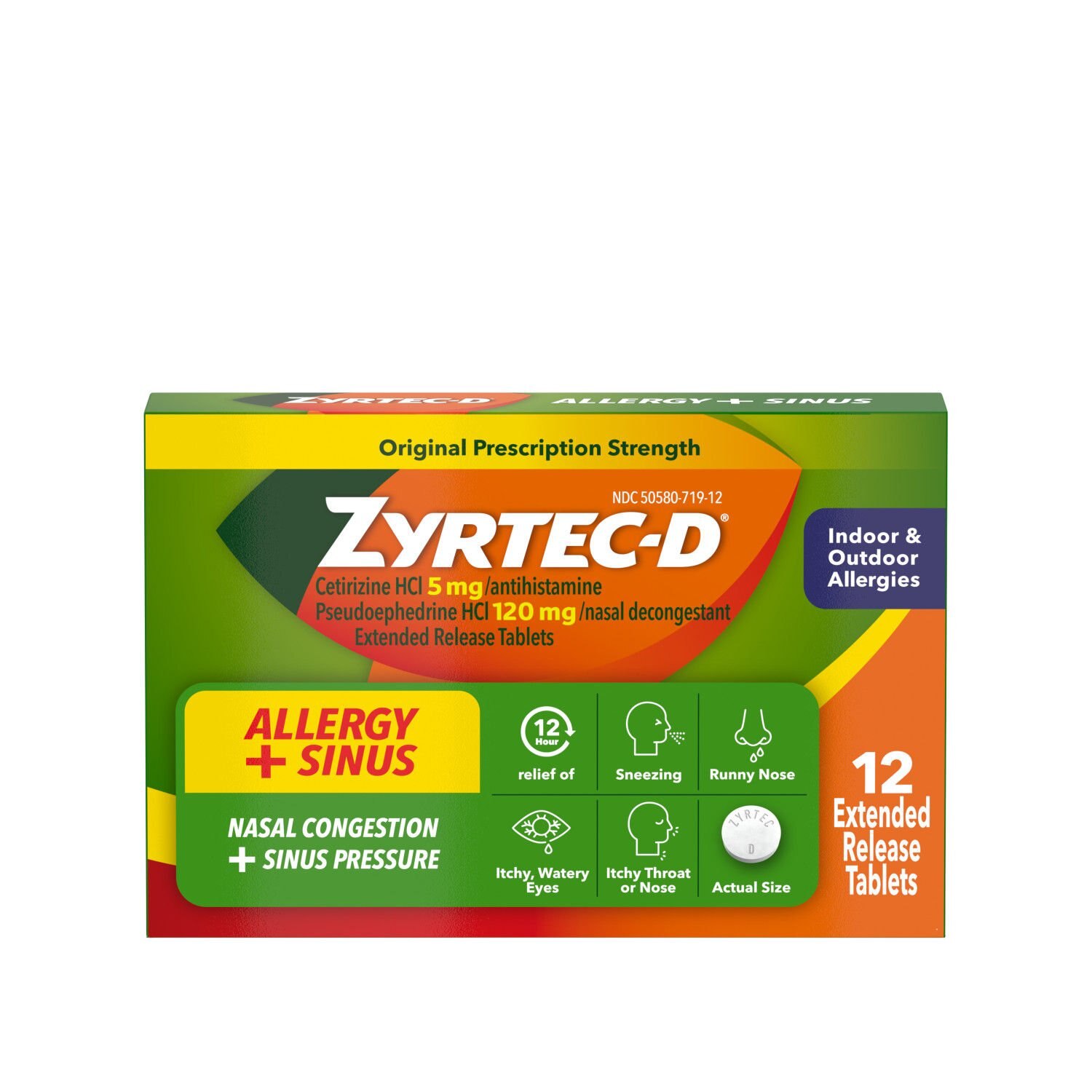
Honestly, buying Zyrtec D at Walgreens isn't as simple as grabbing a bag of chips. Because it contains pseudoephedrine—the "D" stands for decongestant—it’s regulated by federal law. You can't just throw it in your physical or digital cart and check out like a normal human. There are rules, ID checks, and some medical nuances that most people completely miss until they’re already at the register.
Why You Have to Go to the Back Counter
If you’re looking for the heavy-hitter version that clears out sinus pressure, you have to talk to the pharmacist. This isn't because you need a prescription. You don't. But since 2006, the Combat Methamphetamine Epidemic Act has kept pseudoephedrine behind the counter to prevent people from using it for... well, things that aren't allergy relief.
Walgreens keeps their stock of Zyrtec-D tucked away in the pharmacy department. You walk up, show a valid government-issued photo ID, and they scan it. They also track how much you buy. Federal law limits you to 3.6 grams per day and 9 grams per 30-day period. For a standard box of Zyrtec-D 12-hour tablets, that usually means you can’t just stockpile months of the stuff in one go.
Pro Tip: If the pharmacy is closed but the main store is open, you’re out of luck. The front-end cashiers literally cannot sell it to you. Check the pharmacy hours on the Walgreens app before you drive over at 11 PM.
What’s Actually Inside the Pill?
It’s a two-in-one punch. Basically, you’re getting 5 mg of Cetirizine HCl and 120 mg of Pseudoephedrine HCl. The Cetirizine is the antihistamine—it stops the itching and sneezing. The Pseudoephedrine is the decongestant that shrinks the swollen tissues in your nose so you can actually breathe through it again.
Regular Zyrtec doesn't have that second part. If you just have a runny nose, regular is fine. But if your face feels like it’s in a vice grip? That’s when you need the "D."
- Cetirizine: Blocks histamines. Works for about 24 hours usually, but in the "D" combo, it's often formulated for 12-hour doses.
- Pseudoephedrine: The stimulant. It narrows blood vessels in the nasal passages.
- Extended Release: These tablets are designed to leak medicine into your system slowly. Whatever you do, don't crush or chew them. You'll dump 12 hours of medicine into your bloodstream at once, which is a recipe for a very bad time.
The Price Reality at Walgreens
Let’s talk money. Buying name-brand Zyrtec D at Walgreens can be pricey. As of early 2026, a 24-count box usually hovers around the $25 to $30 range, though prices fluctuate based on your zip code.
You’ve got a few ways to hack the price:
- The myWalgreens App: There is almost always a $4 or $10 "Clip to Card" coupon waiting in the app.
- Generic Variations: Walgreens has their own version, usually labeled "Wal-Zyr D." It has the exact same active ingredients and generally costs 20-30% less.
- GoodRx: People forget you can use GoodRx on over-the-counter (OTC) meds that are behind the counter. Sometimes the "prescription" price for the generic is cheaper than the sticker price.
Who Should Probably Skip It?
This isn't for everyone. Because pseudoephedrine is a stimulant, it can make your heart race. If you have high blood pressure, heart disease, or thyroid issues, the pharmacist might warn you off.
It’s also known for causing "insomnia-lite." If you take a dose at 8 PM, don't be surprised if you're staring at the ceiling at 2 AM. Most experts suggest taking your last dose of the day a few hours before you actually want to sleep. And honestly, it can make you feel a bit "wired" or jittery.
If you have kidney or liver disease, the Mayo Clinic and other experts suggest talking to a doctor first because your body might not clear the cetirizine out as fast as it should.
Navigating the Walgreens Pharmacy Experience
When you get to the counter, the tech will ask for your ID. They’ll usually ask if you’ve had it before. They have to log the sale in a system called NPLEx, which tracks pseudoephedrine sales across different retailers. If you bought a box at CVS yesterday and try to get another one at Walgreens today, the system might actually "red flag" the sale if you're over the limit.
It’s a bit of a hassle, but for most people with severe sinus congestion, it’s the only thing that actually moves the needle.
Actionable Next Steps:
- Check Availability: Open the Walgreens app and search for "Zyrtec-D." It will tell you if it's "In Stock" at your specific location, though you still have to buy it in person.
- Clip Your Coupons: Look for the "Monthly Savings Book" or the digital coupons in the app before you head to the register.
- Grab a Generic: If you want the same relief for less, look for the "Walgreens Allergy & Congestion" (Wal-Zyr D) box behind the counter instead of the name brand.
- Check the Clock: Ensure the pharmacy department specifically is open, not just the general store, as they are the only ones authorized to handle the transaction and ID verification.