Everyone remembers the petals. You know the ones. They’re crushed, tucked into a pocket, and then, miraculously, they reappear. It’s the ultimate "aha" moment in cinema. When George Bailey reaches into his watch pocket and finds those flimsy bits of a flower, we all lose it. Honestly, Zuzu Bailey is the heartbeat of It’s a Wonderful Life, even if she’s only on screen for a fraction of the runtime.
She isn't just a plot device. She's the catalyst.
Most people watch the movie every Christmas and see a cute kid in a nightgown. But if you look closer at how Karolyn Grimes played the role, there’s a weirdly specific weight to her performance. She was only six years old. Think about that. Most six-year-olds can barely remember their lines, yet she managed to anchor the emotional climax of the greatest holiday movie ever made.
The Girl Behind the Petals
Karolyn Grimes didn't just stumble into Bedford Falls. By the time Frank Capra cast her, she was already a bit of a pro. She’d worked with legends. But Zuzu? That was different. It’s the role that followed her for the next eighty years.
Funny thing is, Karolyn didn’t even see the movie until she was nearly 40. Can you imagine? Being part of a global cultural touchstone and just... not watching it? She lived a whole life—highs, lows, tragic losses—before she sat down to see what all the fuss was about. Maybe that’s why she speaks about the film with such grounded perspective today. She isn't just a former child star; she’s a fan of the message, just like us.
The name "Zuzu" actually came from a ginger snap. Seriously. Zu Zu Ginger Snaps were a thing back in the early 20th century. In the script, it's a throwaway reference that stuck. It sounds whimsical, almost like something out of a dream, which fits the surreal, snowy atmosphere of the film’s final act.
Why Zuzu Bailey in It's a Wonderful Life Matters More Than You Think
George Bailey is a man on the edge. He’s ready to jump. He thinks the world is better off without him. It’s a dark premise for a "family" movie.
But then there's the head cold.
Zuzu comes home from school with a flower she won. She didn't button her coat because she didn't want to crush it. She gets sick. George, stressed out and falling apart, yells at her teacher. He yells at his family. It’s a brutal scene. But it’s Zuzu’s innocence—her literal physical vulnerability—that sets the stakes. If George isn't there, who protects the Zuzus of the world?
The "Look, Daddy" Moment
When George returns from his "unborn" nightmare, he's frantic. He’s hugging his kids, crying, screaming like a madman because he’s just so happy to exist. And then Zuzu delivers the line.
"Look, Daddy! Teacher says, every time a bell rings, an angel gets his wings."
It’s iconic. It’s also technically a bit of folk theology that Capra cooked up, but who cares? It works. It provides the "proof" that Clarence got his wings. It bridges the gap between the gritty reality of a bank run and the supernatural grace of the ending.
The Reality of Filming a Masterpiece
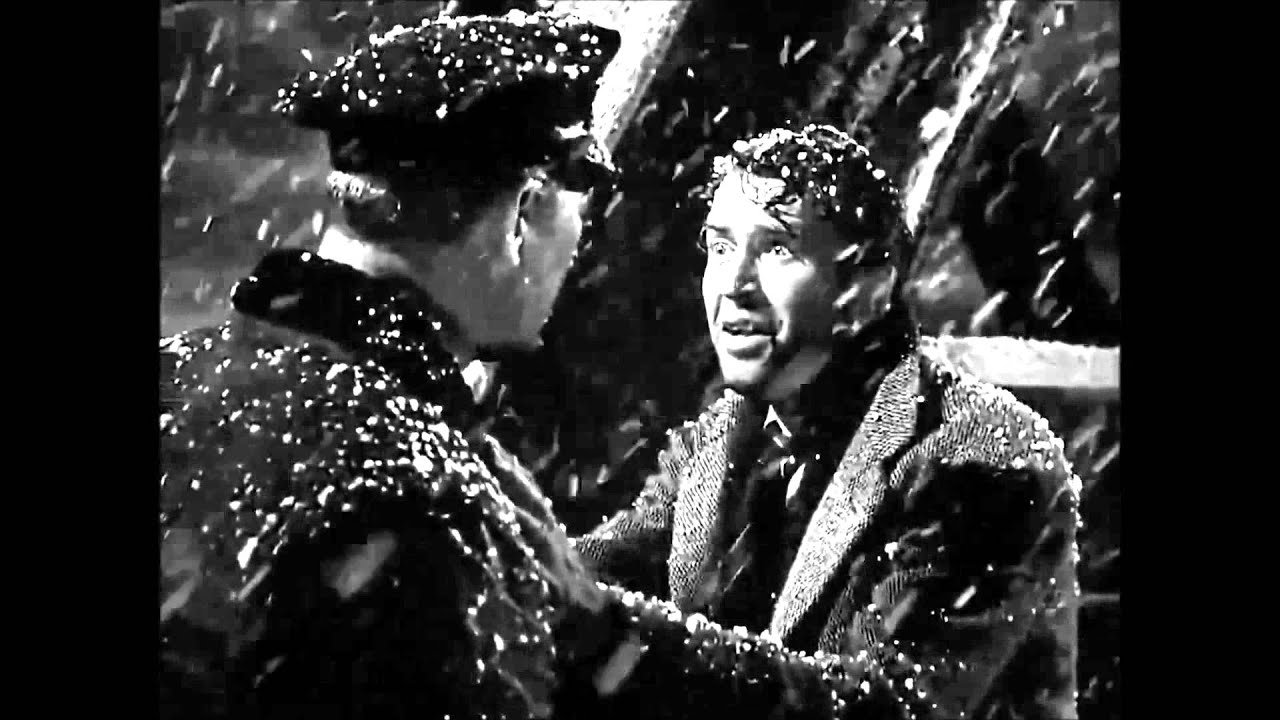
It wasn't all Christmas cheer on set. They filmed the "snow" scenes in the middle of a California heatwave. It was over 90 degrees. That snow? It wasn't real. It was a mix of foamite (the stuff in fire extinguishers) and soap and water.
Jimmy Stewart was legendary for being kind to the kids. Karolyn has often told stories about how he’d mess around with them between takes. But when the cameras rolled, he was intense. In the scene where he’s tucking her into bed, he’s actually "hiding" the petals for her. That sleight of hand was real. He wanted her reaction to be genuine.
- The Flower: It was a rose.
- The Coat: She forgot to button it, leading to the "symbolic" illness.
- The Impact: That small mistake changed the course of George’s life.
Sometimes we overlook how much pressure is on a child actor in those moments. If she doesn't sell the sincerity of that flower, the whole "pocket" reveal later feels cheap. It doesn't. It feels like a lifeline.
The Legacy of the Petals
Karolyn Grimes’ life hasn't been a Hollywood fairy tale. She lost her parents young. She lost a child. She went through a lot of darkness, much like George Bailey did.
But she became the unofficial ambassador for the film. She travels the country, meeting fans, signing autographs, and reminding people that "no man is a failure who has friends." She’s lived the movie’s message in a way most of the other cast members didn't have the chance to.
People often ask her if she gets tired of talking about a movie she made in 1946. Her answer is usually some version of "no." She sees the light it brings people. She sees how Zuzu represents the "small things" that make life worth living. A flower. A bell. A hug from a kid who doesn't care about the building and loan.
What Most People Miss
There’s a subtle bit of acting when George is at the bridge, pleading to live again. He’s checking his pockets. He’s desperate. He isn't looking for money or his ID. He’s looking for the petals.
The petals are the bridge between the nightmare and reality. They are the physical evidence of love. In a world where everything was stripped away—his wife didn't know him, his mother turned him away—those dead, dried-up pieces of a rose were the only thing that proved he belonged.
Actionable Insights for the Modern Viewer
If you're sitting down to watch the film this year, don't just treat it as background noise while you wrap presents. Look for the Zuzu moments.
- Watch the eyes. Notice how Karolyn Grimes looks at Jimmy Stewart. There’s a total lack of guile there. It makes George’s later breakdown feel even more earned.
- Listen for the bell. It’s not just at the end. Bells happen throughout the movie. See if you can spot them before the final scene.
- Internalize the "Zuzu Principle." What is your "flower"? What is the small, seemingly insignificant thing in your life that actually anchors you to reality when things get messy?
- Visit the museum. If you're ever in Seneca Falls, New York (the real-life inspiration for Bedford Falls), there is an entire museum dedicated to the movie. Karolyn is often involved with their events.
The story of Zuzu isn't just about a kid in a movie. It’s about the idea that the smallest members of a community often carry the most profound truths. George saved the town, sure. But Zuzu saved George’s spirit by giving him something to care about when he had nothing left to give.
Next time you hear a bell ring, don't just roll your eyes at the cliché. Think about a six-year-old girl in 1946, standing on a set in the California heat, telling us all that there’s something bigger than our problems. That’s the real magic of Zuzu Bailey. That’s why we’re still talking about her eighty years later.
Stop waiting for a big sign that your life matters. Look in your pockets. The "petals" are usually already there, waiting to be found.
Source References:
- Grimes, K. (various interviews). "Zuzu Bailey's It's a Wonderful Life Cookbook" and public appearances.
- Capra, F. (1971). "The Name Above the Title: An Autobiography."
- The It's a Wonderful Life Museum, Seneca Falls, NY.
Check your local listings or streaming platforms like Amazon Prime or Plex, where the film usually rotates during the winter months. If you want the full experience, find the 4K restoration; the detail on those tiny rose petals is actually incredible.---