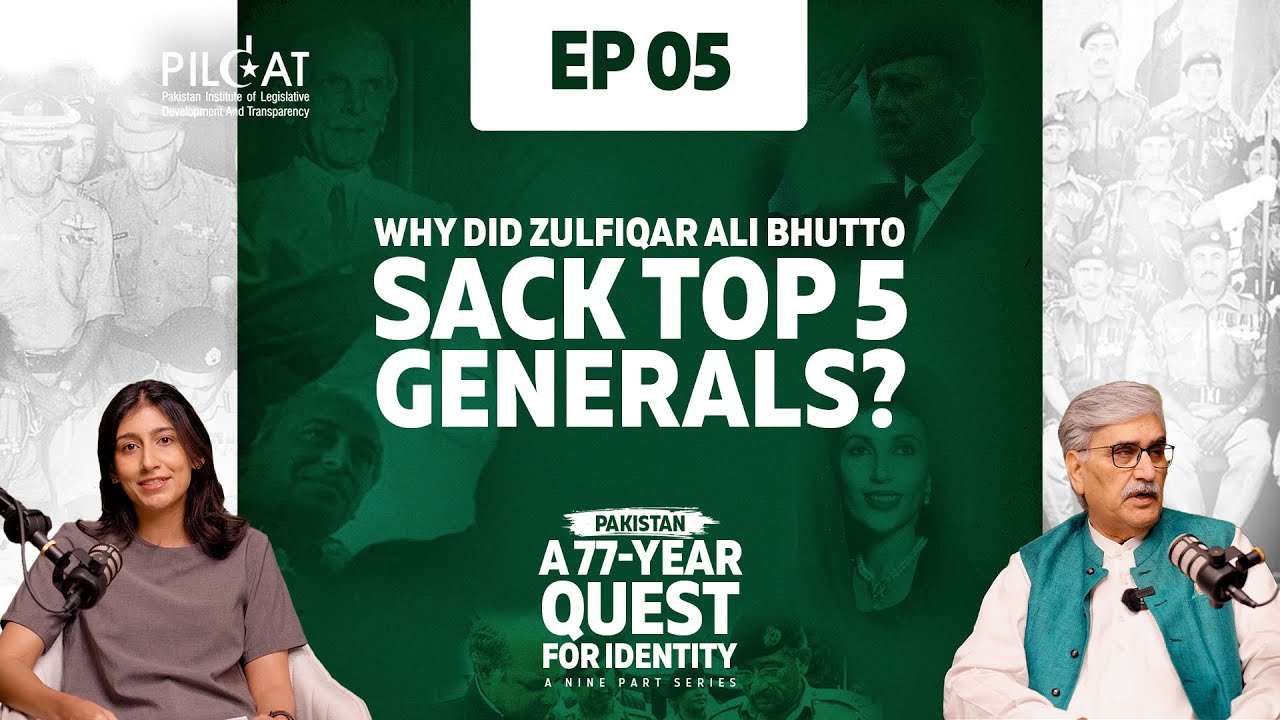
When you walk through the streets of Larkana or talk to an old-school political activist in Lahore, the name Zulfiqar Ali Bhutto still hits like a lightning bolt. For some, he is the Shaheed—the martyr who gave a voice to the voiceless. For others, he’s the man who broke Pakistan in half and ruined the economy with a single stroke of a pen.
Honestly, it’s rare to find someone who doesn’t have a heated opinion on him. Even today, decades after his execution in 1979, the ghost of Bhutto haunts every election cycle and every debate about the "establishment."
The Myth of the "People's Leader" vs. the Reality
The common narrative is that Bhutto was a simple champion of the poor. You've heard the slogan: Roti, Kapra, aur Makaan (Food, Cloth, and Shelter). It was brilliant marketing.
Before the Pakistan People's Party (PPP) was founded in 1967, politics was a game for the elite, the generals, and the wealthy landowners. Bhutto changed that. He made the average laborer feel like they actually mattered. He had this magnetic charisma that could move millions.
But there’s a paradox here. He was an aristocrat to his core. Born into a wealthy landowning family in Sindh, educated at Berkeley and Oxford, he was as elite as they come. People often forget that he didn't start as a rebel; he was the golden boy of Pakistan’s first military dictator, Ayub Khan. He served as a minister for years before realizing that the wind was blowing toward populism.
The 1971 Disaster: Was it Bhutto's Fault?
This is where the history books get messy. In 1970, Pakistan held its first fair general elections. Sheikh Mujibur Rahman’s Awami League won big in East Pakistan, giving him the right to form the government. Bhutto’s PPP dominated West Pakistan.
The legend goes that Bhutto refused to sit on the opposition benches. He famously (or infamously) allegedly said, "Idhar hum, udhar tum" (Us here, you there). Critics say his refusal to share power with the Bengalis directly led to the civil war and the eventual creation of Bangladesh.
However, his supporters argue that the military was never going to hand over power anyway. They see Bhutto as the man who had to "pick up the pieces" after the military lost the 1971 war. When he took over as President in late 1971, the country was broken, 93,000 soldiers were prisoners of war in India, and the national morale was in the gutter.
The Shimla Agreement: A Diplomatic Masterstroke
Think about the pressure. You’re a leader of a defeated nation. Your soldiers are in your enemy's jails. You have to meet Indira Gandhi in Shimla to negotiate.
Bhutto somehow managed to get the soldiers back and reclaim occupied territory without giving up Pakistan's stance on Kashmir. He played a weak hand with total confidence. This is probably why even his harshest critics admit he was a genius at foreign policy.
What most people get wrong about Shimla:
- It wasn't a "sell-out."
- It actually kept the Kashmir issue alive while securing a much-needed peace.
- It allowed Pakistan a decade of stability to rebuild.
The Nuclear Program and the 1973 Constitution
If you ask a Pakistani nationalist why Zulfiqar Ali Bhutto matters, they’ll point to two things.
First, the 1973 Constitution. Before this, Pakistan was a mess of temporary laws and martial law orders. Bhutto managed to get all political parties—even the religious ones—to agree on a single document. It’s still the law of the land today. It’s the reason Pakistan is a parliamentary democracy on paper, even when the reality gets a bit shaky.
Second, the "Islamic Bomb." After India tested a nuclear device in 1974, Bhutto famously said Pakistanis would "eat grass" if they had to, but they would build their own bomb. He started the program that eventually made Pakistan a nuclear power. He saw it as the only way to ensure the country wouldn't be bullied again.
Why his Economic Policy Failed
Socialism sounds great on a campaign poster. In practice? It was a disaster for Pakistan’s industry. Bhutto nationalized everything—banks, schools, flour mills, even small ginning factories.
The idea was to take power away from the "22 families" who controlled the wealth. In reality, it just created a massive, inefficient bureaucracy. Corruption spiked. Production dropped. The middle class, which should have been his biggest ally, turned against him because their businesses were being snatched by the state.
The Trial and the "Judicial Murder"
By 1977, the honeymoon was over. The opposition accused him of rigging the elections. Riots broke out. Then came General Zia-ul-Haq, the man Bhutto had promoted to Army Chief over several seniors because he thought Zia was "meek."
Zia staged a coup, arrested Bhutto, and put him on trial for the murder of a political rival's father. The trial was a circus. In 2024, the Supreme Court of Pakistan finally admitted that Bhutto did not receive a fair trial. It’s widely considered a "judicial murder"—a way for the military to get rid of a civilian leader who was too big for his boots.
He was hanged in April 1979. He refused to ask for mercy. That final act of defiance is what turned him into a legend.
Actionable Insights: Understanding the Legacy
If you’re trying to understand modern Pakistan, you have to look at the "Bhutto Factor" through these lenses:
- Political Identity: The PPP still runs on his name. If you're looking at Sindh’s politics, the Bhutto legacy is the primary currency.
- Civil-Military Relations: The 1977 coup set the template for how the military interacts with civilian governments. Studying his downfall explains why Pakistani prime ministers rarely finish their five-year terms.
- Constitutional Law: To understand why certain laws exist in Pakistan today—including some of the more controversial religious laws—you have to look at the concessions Bhutto made to the right-wing to keep his power.
- Nuclear Strategy: Pakistan’s "minimum credible deterrence" policy started with him. Any analysis of South Asian security needs to start at the 1972 Multan meeting where he challenged scientists to build the bomb.
The best way to learn more is to read "If I Am Assassinated," the book Bhutto wrote from his prison cell. It’s a raw, biased, but incredibly insightful look into the mind of a man who knew his time was up. Also, check out the recent 2024 Supreme Court of Pakistan opinion on the presidential reference regarding his trial for a modern legal perspective on his execution.