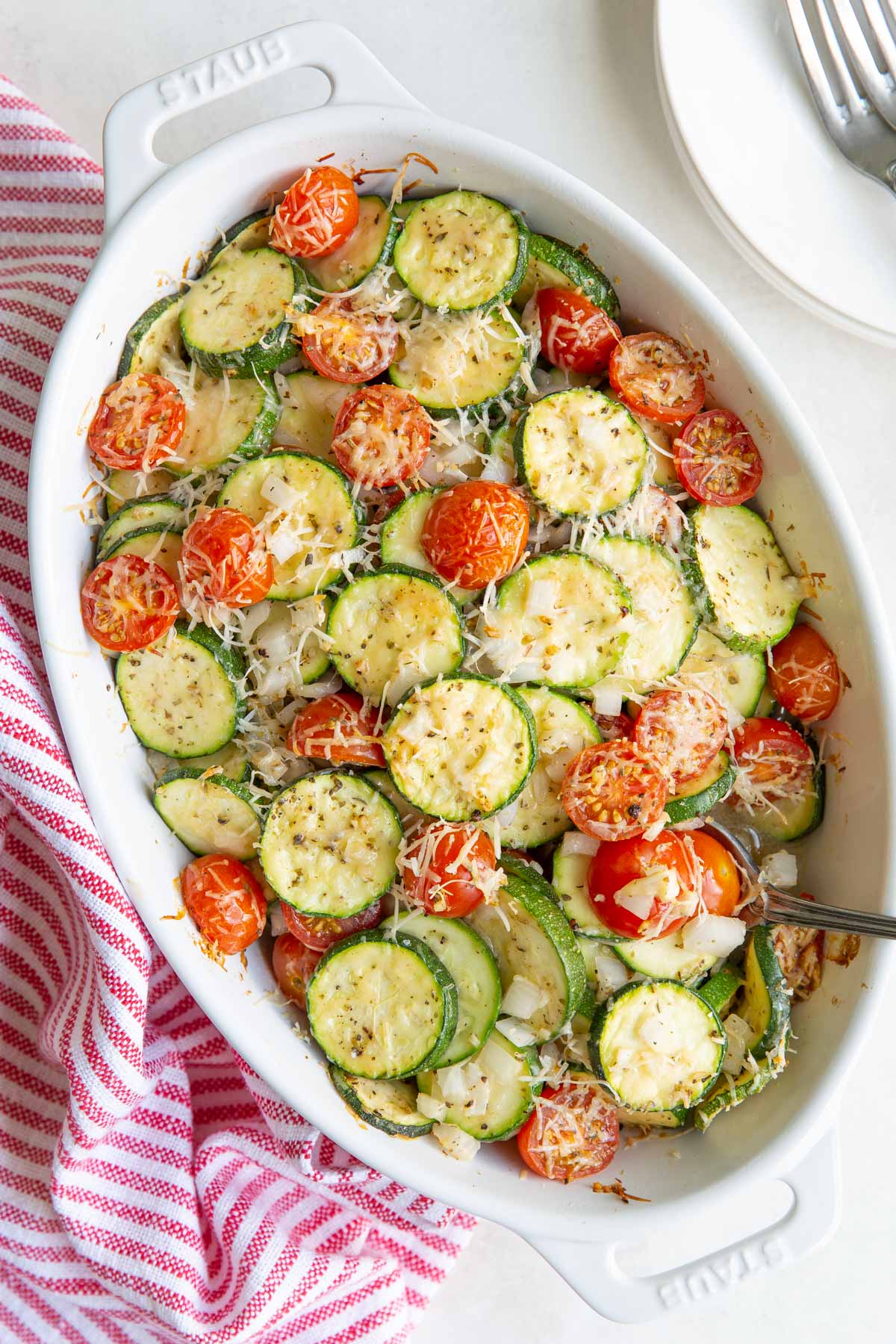
You’ve probably seen it. That soggy, gray pile of vegetables at a mediocre buffet. It’s depressing. Honestly, most people think zucchini with tomatoes and onions is just filler food—a cheap way to take up space on a plate. But they’re wrong. When you actually understand the chemistry of these three specific ingredients, it stops being a "side dish" and starts being the reason you actually enjoy dinner.
I’ve spent years tinkering with Mediterranean and Levantine cooking. The secret isn't a secret at all. It’s moisture management. Zucchini is basically a sponge made of water. Tomatoes are acidic water bombs. Onions are sulfurous flavor bases that turn into sugar when you apply heat. If you just throw them in a pan together, you get soup. Nobody wants vegetable soup when they were promised a sauté.
The Science of Sautéing Zucchini with Tomatoes and Onions
Let's talk about cell walls. Zucchini (Cucurbita pepo) is about 95% water. That is a staggering amount of liquid. If you salt it too early, the osmosis pulls all that water out into the pan, and suddenly you’re boiling your dinner. To get that perfect, slightly charred exterior while keeping the center tender-crisp, you need high heat and a wide pan.
Crowding is the enemy. If you have a 10-inch skillet and you dump three sliced zucchinis in there, you’ve created a steam chamber. Use a bigger pan. Or cook in batches.
The onions come first. Always. But don't just "soften" them. You want them to reach that translucent stage where the sharp bite disappears. This is where the Maillard reaction begins. As the natural sugars in the onion caramelize, they create a savory foundation that the bland zucchini desperately needs. If you skip this step, the whole dish tastes like nothing.
Why Tomatoes Change Everything
Tomatoes aren't just there for color. They provide the acidity. According to various culinary studies and the basic principles of food science, acid balances fat. If you’re using a good amount of olive oil—and you should be—the lycopene-rich tomatoes cut through that richness.
But here is the catch: the type of tomato matters.
- Roma tomatoes are the gold standard here because they have less "goop" (the locular gel) and more meat.
- Cherry tomatoes are great if you want little bursts of sweetness; they hold their shape better under high heat.
- Beefsteak tomatoes are a disaster in this specific dish. They have too much water and will turn your sauté into a mushy mess within three minutes.
The Regional Variations You’re Probably Missing
In Italy, this combination is often the base for concia or a simple contorno. They might throw in some mint. Yes, mint. It sounds weird until you try it. The coolness of the herb against the warm, earthy zucchini is a game-changer.
In the Middle East, specifically in Lebanon or Syria, you’ll find variations of musaqa’a (not to be confused with the Greek moussaka). This version of zucchini with tomatoes and onions often leans heavily on olive oil—nearly poaching the vegetables in it—and adds chickpeas for protein. They call it "the poor man’s feast." It’s vegan, it’s cheap, and it’s incredibly nutrient-dense.
Then there’s the French approach. Ratatouille is essentially this trio with eggplant and bell peppers added to the mix. But honestly? Sometimes the eggplant just muddies the flavor. Keeping it to the "Big Three" allows the zucchini to actually shine instead of being a background player.
The Nutrition Fact Sheet
Let's look at what's actually happening for your body when you eat this.
- Vitamin C: Tomatoes are famous for it, but zucchini has a surprising amount too.
- Potassium: Essential for heart health. You get a massive dose here.
- Antioxidants: Cooking tomatoes actually makes the lycopene more "bioavailable," meaning your body can absorb it better than if you ate them raw.
- Low Calorie, High Volume: You can eat a literal mountain of this and feel full without the heavy caloric load of pasta or potatoes.
Common Mistakes That Ruin the Dish
Stop peeling the zucchini. Just stop. The skin is where the fiber lives, and more importantly, it’s the structural integrity of the vegetable. If you peel it, the zucchini will collapse.
Also, the onions. People undercook them. If your onions are still crunchy when you add the tomatoes, they will stay crunchy forever because the acid in the tomatoes slows down the breakdown of the onion's pectin. Get those onions soft and golden before anything else hits the pan.
Seasoning is another pitfall. You need more salt than you think. Zucchini is a flavor vacuum. But don't just use table salt. Use a coarse sea salt or kosher salt. The larger grains draw out moisture more effectively and give you better control.
The "Secret" Ingredient: Garlic and Heat
While the core is zucchini with tomatoes and onions, garlic is the silent partner. But don't add it with the onions. It’ll burn and turn bitter before the onions are even halfway done. Add the garlic in the last 60 seconds of the onion sauté.
And if you want to be bold? Add red pepper flakes. The heat wakes up the sweetness of the onions and the acidity of the tomatoes. It’s not about making it "spicy," it’s about making the flavors "pop."
Advanced Techniques: The Roasted Method vs. The Stovetop
Most people default to the skillet. It’s fast. It’s easy. But if you have 30 minutes, roasting is superior.
When you roast these vegetables at 425°F (220°C), the water evaporates more efficiently. The onions get crispy edges. The tomatoes blister and concentrate their sugars. The zucchini gets those dark brown spots that taste like heaven.
Just toss them all in a bowl with plenty of oil, salt, and maybe some dried oregano. Spread them out on a sheet pan. Don't let them touch. If they touch, they steam. If they have space, they roast. It's the simplest rule in cooking, yet the one most people ignore.
Practical Steps to Mastering This Dish
If you want to move beyond the recipe and actually understand the craft, start by experimenting with the cuts.
- Half-moons for the zucchini give you a good ratio of skin to flesh.
- Wedges for the tomatoes help them stay intact.
- Vertical slices for the onions (root to tip) help them keep their shape better than horizontal rings.
Once you’ve mastered the basic sauté of zucchini with tomatoes and onions, you can start "upgrading" it. A splash of balsamic vinegar at the very end adds a deep, complex sweetness. A handful of crumbled feta cheese adds salt and creaminess. Or, if you want to keep it strictly plant-based, a sprinkle of toasted pine nuts adds a much-needed crunch.
Keep your heat medium-high. Watch the moisture. Don't be afraid of a little char.
Actionable Takeaways for Your Next Meal
- Select the right zucchini: Smaller ones have fewer seeds and less water. Go for the ones that are about the size of a flashlight, not a baseball bat.
- Salt timing: If sautéing, salt at the very end to prevent sogginess. If roasting, salt at the beginning to help browning.
- The "Aroma Test": Your kitchen should smell like sweet onions before the zucchini ever enters the pan. If it doesn't, keep cooking those onions.
- Leftovers: This dish actually tastes better the next day. The flavors meld, and the zucchini soaks up the tomato juice. It’s incredible cold or at room temperature, almost like a salad.
- Storage: Store in glass containers rather than plastic. The acidity of the tomatoes can sometimes react with cheaper plastics, and glass keeps the flavors "cleaner."
Experiment with the ratios. Some people like it tomato-heavy; others want the onion to lead. There’s no wrong answer, only personal preference. This isn't just a recipe; it's a template for a better way to eat.