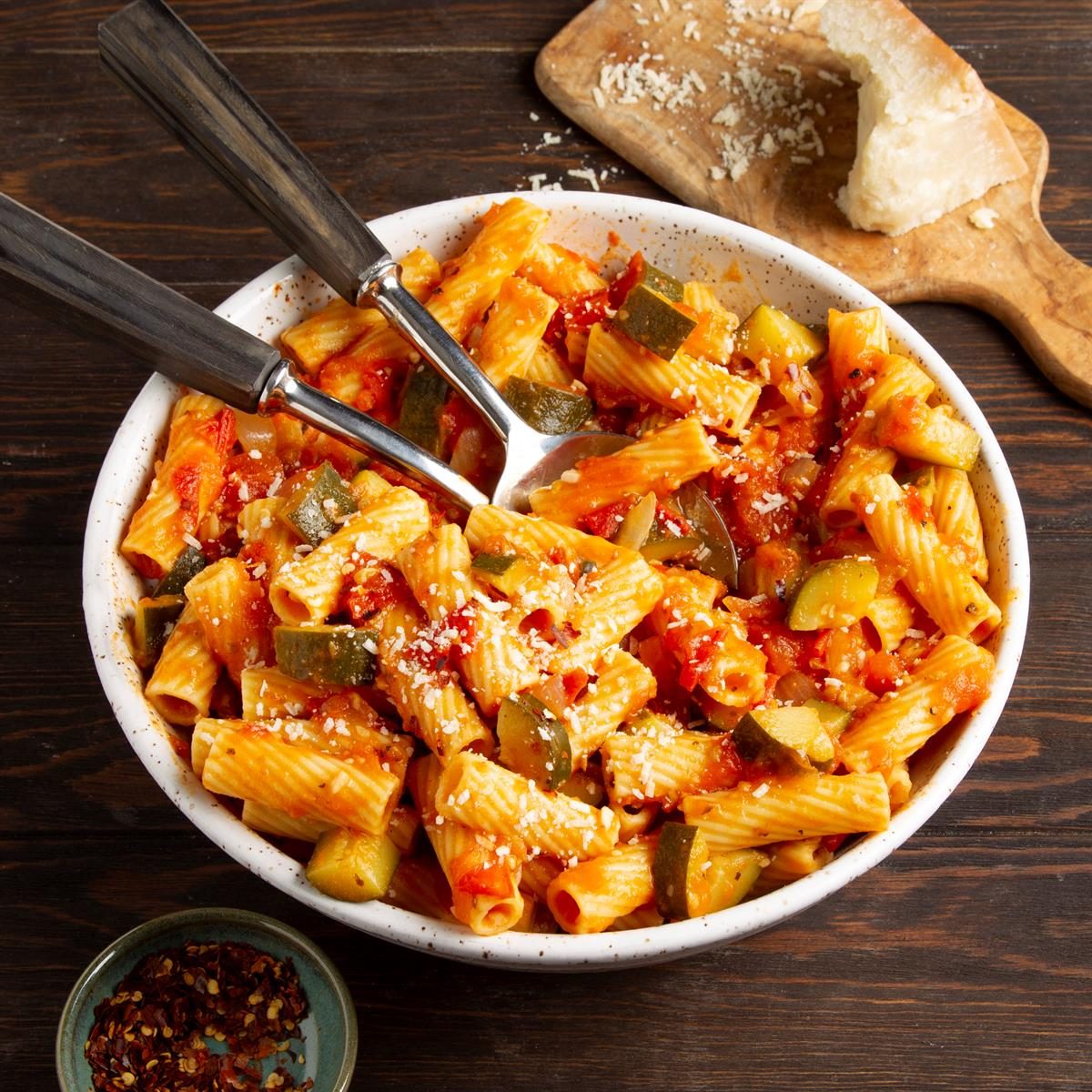
You've probably been there. You have a pile of garden-fresh zucchini, a bowl of heavy heirloom tomatoes, and a craving for something that feels like summer in Italy. You chop, you sauté, you toss it with some linguine, and five minutes later, your plate is a literal lake. It’s frustrating. Most zucchini tomato pasta recipes you find online ignore the biggest hurdle in the kitchen: water content. Zucchini is about 95% water. Tomatoes aren't far behind. When they hit a pan together, they don't just cook; they weep.
Getting this dish right isn't about following a rigid 1-2-3 step list. Honestly, it’s about heat management and moisture control. If you treat these vegetables like meat, you're going to fail. You need to understand the science of the "bleed" to make a sauce that actually clings to the noodle instead of pooling at the bottom of the bowl.
The Chemistry of the Perfect Zucchini Tomato Pasta
Why does it turn into soup? Osmosis. When you add salt to raw zucchini, it draws the moisture out of the cell walls. If that happens in your skillet at a low temperature, you’re basically boiling your dinner in its own juices. To get that deep, caramelized flavor—the kind that makes you want to lick the plate—you have to evaporate that water faster than it can accumulate.
Expert chefs, like J. Kenji López-Alt, often talk about the importance of surface area. If you’re making zucchini tomato pasta recipes, don't just cube the squash. Grate it or slice it into paper-thin rounds. This increases the surface area, allowing the high heat of a stainless steel or cast-iron pan to sear the exterior before the interior turns to mush.
The Salt Trap
Most people salt their vegetables way too early. Big mistake. If you salt the zucchini the moment it hits the pan, you trigger a massive release of water. Instead, sear the zucchini in screaming hot oil—preferably a high-quality extra virgin olive oil—until you see those brown, lacquered edges. Only then should you introduce the tomatoes.
Which Tomatoes Actually Work?
Not all tomatoes are created equal. If you use a beefsteak tomato, you're asking for a watery mess. They are delicious on a sandwich, sure, but in a pasta sauce? They’re a nightmare. You want something with a high flesh-to-seed ratio. Roma tomatoes are the industry standard for a reason. They have a lower water content and a sturdy structure that holds up under heat.
However, if you can find cherry or grape tomatoes, use those. Their skins are thick, and they contain a lot of pectin. As they heat up, they eventually "pop." That internal juice, combined with the pectin in the skins, creates a natural emulsifier. It turns into a jammy, thick coating that behaves more like a sauce and less like flavored water.
Texture Is Everything
Let's talk about the zucchini itself. You have two real paths here. You can go for the "melted" approach or the "al dente" approach.
For a melted sauce, you grate the zucchini. It basically dissolves into the olive oil and garlic, creating a green, creamy base that feels rich without any actual cream. Marcella Hazan, the godmother of Italian cooking in America, was a proponent of long-simmered vegetables. While she was famous for her onion and butter tomato sauce, the same logic applies here: slow heat breaks down the cellulose until the vegetable becomes the sauce.
The other way? High heat and quick timing. You want the zucchini to have a "snap." This requires cooking in batches. If you crowd the pan, the temperature drops, and you’re back to steaming. Work in two or even three rounds if you have to. It feels like extra work. It is. But the results are actually edible.
Why Your Garlic Is Probably Bitter
We need to address the garlic situation in these zucchini tomato pasta recipes. Most recipes tell you to sauté the garlic and onions, then add the veggies. By the time your zucchini is browned, your garlic is burnt. Burnt garlic is acrid. It ruins the sweetness of the summer tomatoes.
Try this instead: smash whole cloves and steep them in the oil while it's cold. Bring the heat up slowly. Once the garlic is golden, fish it out. You’ve now flavored the fat. Or, if you love pieces of garlic, add them in the last 60 seconds of the vegetable sauté. Garlic only needs about a minute to lose its raw bite and release its aromatics. Anything longer is a gamble you’ll probably lose.
The Role of Pasta Water
You’ve heard it a million times, but people still dump it down the drain. Stop. Starchy pasta water is the "glue" for zucchini tomato pasta recipes.
When you combine your pasta with the vegetables, add a splash of that murky, salty water. The starches help the fats (the olive oil) and the acids (the tomato juice) bind together. This is called emulsification. Without it, the oil will just sit on top of the noodles. It’ll feel greasy rather than silky.
Choosing the Right Shape
- Penne or Rigatoni: Good if you have chunky, rustic-cut vegetables. The tubes catch the pieces of tomato.
- Fusilli: The spirals are perfect for the "melted" zucchini approach. The green "jam" gets trapped in the ridges.
- Spaghetti or Linguine: Best for very thinly sliced zucchini or "zoodles" mixed with regular pasta.
Beyond the Basics: Elevating the Flavor
If you feel like the dish is missing something, it's probably acid or umami. Tomatoes have plenty of acid, but sometimes a squeeze of fresh lemon juice at the very end brightens the whole profile. It cuts through the oil.
For umami, don't just rely on Parmesan. Try a spoonful of capers or a few finely chopped anchovies melted into the oil at the beginning. You won't taste "fish." You’ll just taste a depth of flavor that makes people ask what your secret ingredient is. Honestly, a pinch of red pepper flakes (peperoncino) is non-negotiable for most Southern Italian versions of this dish. It provides a back-of-the-throat heat that balances the sweetness of the zucchini.
The Myth of Peeling
Don't peel your zucchini. Just don't. The skin holds the shape, provides the color, and contains most of the nutrients like lutein and zeaxanthin. Plus, the dark green contrast against the red tomatoes is what makes the dish look professional. If you peel it, you’re left with a pale, mushy mess that looks like baby food.
Actionable Steps for Your Next Meal
If you're ready to make this, keep these specific maneuvers in mind to avoid the common pitfalls:
- Dry the zucchini: After slicing, pat the pieces with a paper towel. Removing surface moisture is the first step to a successful sear.
- Use a wide pan: Use the largest skillet you own. This allows moisture to evaporate quickly rather than collecting.
- Undercook the pasta: Take your noodles out of the water two minutes before the package says "al dente." Finish cooking them in the pan with the sauce. This allows the pasta to absorb the vegetable juices.
- Finish with fresh herbs: Never cook your basil. Heat turns it black and kills the volatile oils. Tear the leaves by hand and toss them in after the heat is turned off.
- Quality oil: Since this is a simple dish, the oil is a primary flavor. Use the good stuff for finishing. A drizzle of cold, peppery extra virgin olive oil right before serving changes everything.
This isn't a dish that requires a culinary degree. It just requires you to pay attention to how water behaves in a hot pan. Stick to high heat, don't crowd the skillet, and use the pasta water. You'll end up with a vibrant, flavorful meal that actually tastes like the ingredients you started with.