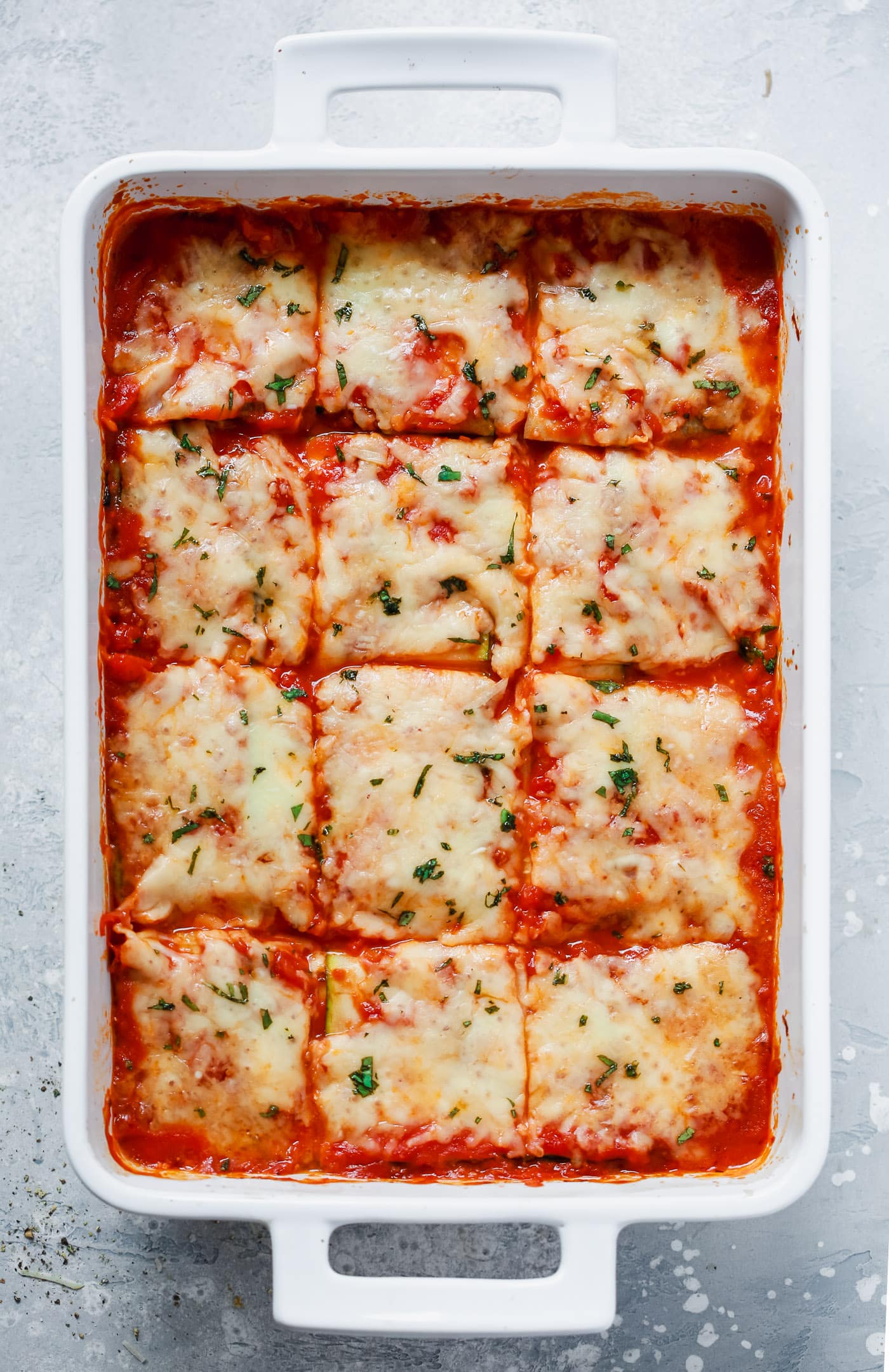
Let's be honest. Most low-carb swaps for comfort food are kind of a letdown. You’re expecting that rich, structural integrity of a classic Italian pasta dish, but instead, you end up with a puddle of vegetable water on your plate. It’s frustrating. If you’ve ever tried making zucchini lasagna with spinach, you know exactly what I’m talking about. You spend forty-five minutes slicing, layering, and praying, only to serve a soup that tastes like squash and sadness.
It doesn’t have to be that way.
Zucchini is roughly 95% water. Think about that for a second. When you subject that much moisture to a 375-degree oven, physics takes over. The cell walls of the zucchini break down, releasing all that liquid directly into your marinara and ricotta. If you don't account for this, your dinner is doomed before you even grate the mozzarella.
The Science of the "Sweat"
To get a zucchini lasagna with spinach that actually holds its shape, you have to treat the zucchini like a structural component, not just a vegetable. This starts with salt.
Osmosis is your best friend here. By slicing your zucchini into thin planks—aim for about an eighth of an inch—and generously salting them on a wire rack, you force the moisture out. Let them sit for at least 20 minutes. You’ll see beads of water forming on the surface. Blot them aggressively with paper towels. Some people even suggest a quick "flash roast" in the oven for five minutes to further dehydrate the slices. It's an extra step, sure, but it's the difference between a meal you’re proud of and one you eat over the sink in shame.
Don't Ignore the Spinach
Spinach is the silent accomplice in the "soggy lasagna" crime. Whether you’re using fresh baby spinach or the frozen chopped variety, it carries an incredible amount of water. If you're using frozen, you need to squeeze it until your knuckles turn white. Wrap it in a clean kitchen towel and wring it out until not a single drop remains. For fresh spinach, sauté it quickly with a bit of garlic and then—this is the key—drain it in a fine-mesh sieve.
Mixing the spinach directly into the ricotta cheese is a classic move. It distributes the flavor and ensures you aren't just hitting a "green wall" in the middle of your lasagna. Add an egg to that ricotta mixture. The egg acts as a binder, setting the cheese so it stays put when you cut into the layers.
Building a Better Flavor Profile
A lot of people think that because they're making a "healthy" version, they should skimp on the fat or the seasoning. That is a massive mistake. Because zucchini is so mild—basically a blank canvas—it needs bold partners.
- The Sauce: Use a thick, reduced marinara. If your sauce is runny, your lasagna will be too. Look for brands that don't add sugar, or better yet, simmer your own until it’s thick enough to coat the back of a spoon heavily.
- The Cheese: Don't just stick to part-skim ricotta. Mix in some sharp Pecorino Romano or a high-quality Parmesan. The saltiness of these hard cheeses balances the sweetness of the roasted zucchini.
- The Herbs: Fresh basil is non-negotiable. Throw in some dried oregano and a pinch of red pepper flakes into the sauce to give it some personality.
Layering Like a Pro
When you start assembling your zucchini lasagna with spinach, start with a very thin layer of sauce on the bottom of the pan. This prevents the bottom layer of zucchini from sticking.
Lay the zucchini planks down, overlapping them slightly. Think of it like shingles on a roof. You want a solid base. Spread the spinach-ricotta mixture over the top, then another light layer of sauce, and a sprinkle of mozzarella. Repeat.
The top layer should always be cheese. You want that golden-brown, bubbly crust that provides a textural contrast to the soft layers underneath.
Why Nutritional Density Matters Here
According to the USDA, zucchini provides a significant amount of Vitamin C and B6, but more importantly, it offers a high volume of food for very few calories. This makes it a staple for anyone managing blood sugar or looking to reduce simple carbohydrate intake. When you pair it with spinach—which is loaded with non-heme iron and folate—you’re creating a nutrient powerhouse.
But E-E-A-T (Experience, Expertise, Authoritativeness, and Trustworthiness) isn't just about quoting data. It's about knowing that if you use "Mexican Gray" zucchini versus the standard "Black Beauty," you're going to get different moisture levels. The darker, more common zucchini tend to have a slightly tougher skin that helps hold the lasagna together.
Common Pitfalls and Misconceptions
One of the biggest lies in the healthy cooking world is that you can just "swap" pasta for zucchini without changing anything else.
You can't.
If you use the same amount of sauce you’d use for a traditional lasagna, you’ll drown the vegetables. Use about 25% less sauce than you think you need. The vegetables will release a tiny bit more liquid even after salting, and that liquid will thin out the sauce as it bakes.
Another misconception is that you have to peel the zucchini. Don't. The skin provides the only bit of "bite" or "al dente" feel you're going to get in this dish. Plus, that’s where most of the fiber lives.
Equipment Check
You don't need a mandoline, but it helps. If you're using a knife, just take your time. Consistency is more important than paper-thinness. If one slice is a half-inch thick and the next is a sliver, they won't cook at the same rate. You'll end up with some crunchy bits and some mushy bits.
Use a glass or ceramic baking dish. Metal pans can sometimes react with the acidity in the tomatoes and give the zucchini a slightly metallic tang, which is... less than ideal.
Putting it All Together
Once the lasagna is in the oven, resist the urge to pull it out the second the cheese melts. It needs time. Usually 40 to 45 minutes at 375°F (190°C). If the cheese starts browning too fast, tent it with foil, but make sure the foil doesn't touch the cheese, or it’ll peel that delicious crust right off when you remove it.
The most important rule: Let it rest.
If you cut into a zucchini lasagna with spinach the moment it comes out of the oven, it will collapse. It needs at least 15 minutes to "set." During this time, the proteins in the cheese firm up and the fibers in the zucchini re-absorb a bit of the surrounding sauce.
Actionable Steps for Success
- Slice and Salt: Do this first. Do not skip it. Give it 20 minutes minimum.
- Squeeze the Spinach: Use a towel. Get every drop out.
- Thicken the Sauce: If your marinara looks watery, simmer it on the stove for 10 minutes before using.
- Egg in the Ricotta: Use one large egg per 15 ounces of ricotta.
- Resting Period: 15 minutes on the counter before slicing. No exceptions.
This isn't just a "diet" meal. When done correctly, it’s a legitimate culinary experience that stands on its own. The sweetness of the zucchini, the earthy depth of the spinach, and the creamy richness of the cheese create a balance that pasta sometimes masks with its own heaviness.
Stop settling for soggy vegetable bakes. Treat the ingredients with a bit of respect for their chemistry, and you’ll actually enjoy the result.