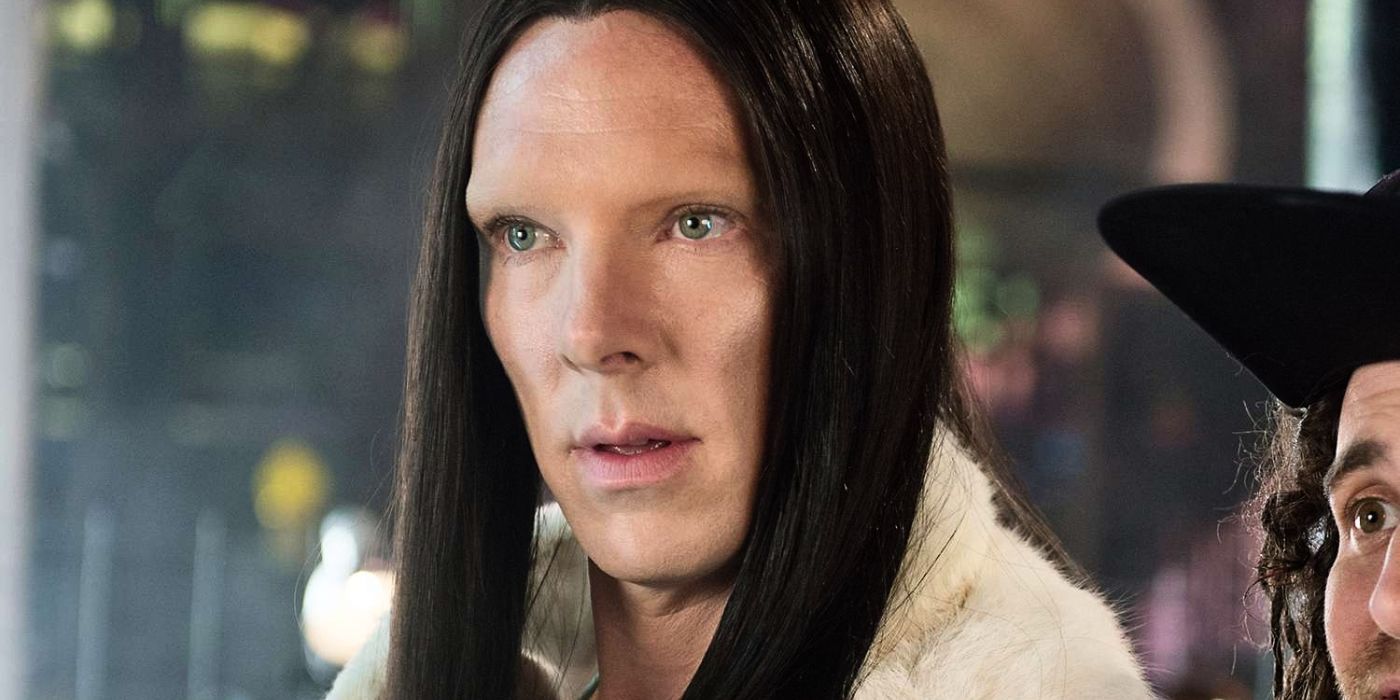
So, let’s talk about that weird, long-haired cameo in Zoolander 2. You know the one. Benedict Cumberbatch shows up as "All," a supermodel who supposedly transcends all gender boundaries. At the time, back in 2016, it was meant to be this huge "gotcha" moment—a massive A-list star hiding under a pile of prosthetics and a wig. But honestly, it didn't land. Not even a little bit.
Instead of being the "Blue Steel" of the sequel, it became a massive lightning rod for controversy. Looking back from 2026, the whole thing feels like a time capsule of exactly how Hollywood used to get things wrong while trying to be "edgy."
The Character "All" Explained (Simply)
Basically, the joke in the movie is that Derek Zoolander and Hansel are total "dinosaurs." They’ve been out of the game for years, and they return to a fashion world they no longer recognize. In walks All.
Benedict plays the character with shaved eyebrows, waist-length straight hair, and a sort of ethereal, detached vibe. When Ben Stiller’s Derek asks, "Are you like a male model or a female model?" Cumberbatch’s character simply replies, "All is all."
Then comes the line that really set things on fire. Hansel, played by Owen Wilson, chimes in with: "I think he’s asking if you have a hot dog or a bun."
Yeah. It’s pretty crude. The "joke" was supposed to be about how dumb Derek and Hansel are for not understanding a non-binary world. But for many people watching, the punchline wasn't the models' stupidity—it was the existence of the non-binary character itself.
Why the Backlash Was So Intense
It didn't take long for a boycott to start. Before the movie even hit theaters, an online petition gathered over 25,000 signatures. People weren't just annoyed; they were genuinely hurt.
The petition compared the casting of a cisgender man (Cumberbatch) to play a non-binary character to "the modern equivalent of using blackface." That’s a heavy comparison. The core argument was that by making a joke out of a marginalized identity and using a famous cis actor to do it, the filmmakers were punching down.
Justin Theroux, who co-wrote the script, tried to defend it. He told TheWrap at the time that the boycott "hurts my feelings" and argued that people were taking the scene out of context. He compared it to Robert Downey Jr. in Tropic Thunder, saying the goal was to mock the "idiots" who don't understand the world, not the community itself.
But the context didn't really save it. For a lot of folks, seeing a major studio use a trans/non-binary identity as a visual gag was a bridge too far.
What Benedict Cumberbatch Says About It Now
Fast forward a few years, and Cumberbatch hasn't really tried to hide from the criticism. He’s been surprisingly open about the fact that he messed up.
In a 2022 Variety "Actors on Actors" chat with Penélope Cruz, he admitted that the role "backfired a little bit." He basically said that in this day and age, that part would—and should—never be played by anyone other than a trans actor.
Then, just recently in 2025, he went even further in a video interview. He mentioned he’s had to "apologize for that quite a lot." He still loves the Zoolander crew, but he’s clear on one thing: he wouldn't do it again.
It’s rare to see a guy who plays Doctor Strange and Sherlock just flat-out say, "Yeah, I shouldn't have done that." It shows how much the conversation around representation has shifted since 2016.
The Box Office Reality
It wasn't just the controversy that hurt the film. Zoolander 2 was, frankly, a bit of a flop. It only made about $28 million domestically. Ben Stiller has even talked about how "blindsiding" the failure was.
Maybe the world had just moved on from that specific brand of 2001 humor. Or maybe the "All" controversy left such a bad taste in people's mouths that they just stayed home.
Why This Still Matters in 2026
The Zoolander 2 situation is a textbook example of "intent vs. impact." The writers might have intended to mock Derek's ignorance, but the impact was the caricature of a real group of people.
If you’re looking at this from a film history or social perspective, there are a few key takeaways:
- Authenticity is the new standard. Hiring cis actors for trans roles is basically a "no-go" for major studios now.
- Satire has limits. If the audience can’t tell who the butt of the joke is, the satire has failed.
- Apologies matter. Cumberbatch's willingness to own the mistake has helped him avoid being "cancelled," showing that genuine reflection counts for something.
If you want to understand more about how these casting choices have evolved, you should check out the casting of The Power of the Dog. It’s interesting to compare how Cumberbatch approached playing a repressed gay character in that film versus the "cartoonish" approach used in Zoolander 2. The difference in nuance is night and day.
Your Next Step: If you're interested in the evolution of Benedict Cumberbatch's career, take a look at his interviews regarding The Power of the Dog to see how he refined his approach to playing characters outside his own lived experience.