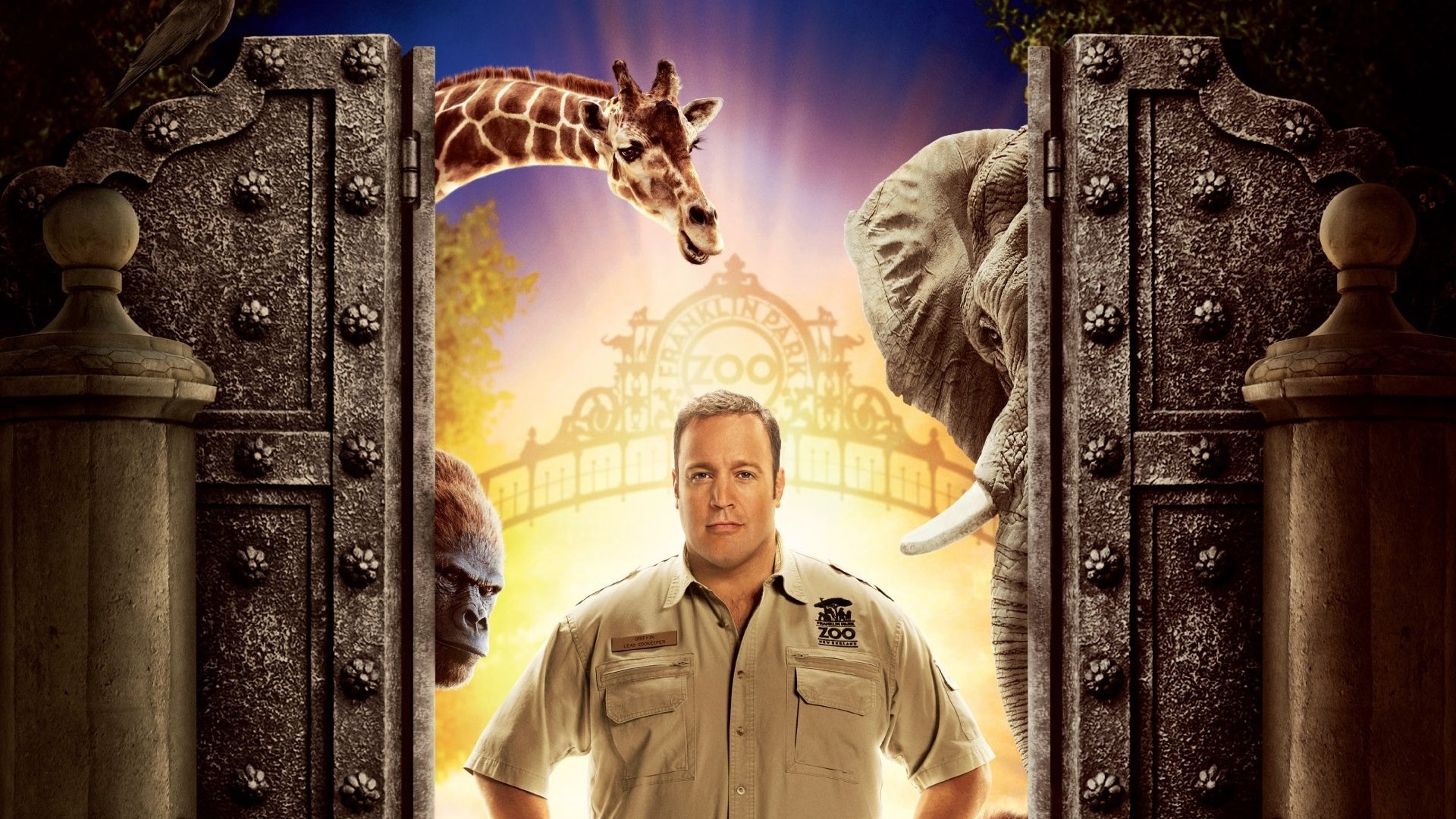
It was 2011, and the world was in a weird place for comedy. We were right in the thick of the "Happy Madison" era where slapstick was king, and Kevin James was arguably the most bankable "everyman" on the planet. Fresh off the massive success of Paul Blart: Mall Cop, James decided to pivot from a Segway to a Segway-sized gorilla.
The result was Zookeeper.
Honestly, if you haven't seen it in a decade, you might remember it as "that one movie where Kevin James talks to a lion." But there’s a lot more going on under the hood—or under the fur—than just a few pratfalls and a talking bear. It’s a movie that, despite getting absolutely clobbered by critics at the time, managed to pull in nearly $170 million at the global box office. People showed up. Kids loved it. And frankly, it’s became a weirdly nostalgic touchstone for a specific generation.
What Really Happened in Zookeeper?
The plot is basically a rom-com wrapped in a fur coat. Kevin James plays Griffin Keyes, a guy who genuinely loves his job at the Franklin Park Zoo. He’s the kind of guy who is better with animals than people, which becomes a problem when he proposes to his girlfriend, Stephanie (played by Leslie Bibb), and she shoots him down because he's "just a zookeeper."
Ouch.
Fast forward five years, and Griffin is still the head zookeeper, but Stephanie crashes back into his life. The animals—who have apparently been keeping a "code of silence" for centuries—decide they can't let Griffin leave for a more "glamorous" job at a car dealership. So, they start talking.
It's a wild premise. You’ve got a lion voiced by Sylvester Stallone giving dating advice. You’ve got a monkey voiced by Adam Sandler acting like, well, an Adam Sandler character. They decide to teach Griffin the "laws of the wild" to help him win Stephanie back. It’s exactly as chaotic as it sounds.
The Voices You Forgot Were There
One thing people usually get wrong about Zookeeper is assuming it was a low-budget throwaway. It wasn't. The voice cast is actually insane when you look back at it.
- Sylvester Stallone and Cher as the lion and lioness.
- Nick Nolte as Bernie the Gorilla (who arguably has the best character arc).
- Maya Rudolph as Mollie the Giraffe.
- Don Rickles as Frog (rest in peace to a legend).
Even Joe Rogan shows up in a live-action role as the douchey rival for Stephanie’s affection. It’s a snapshot of 2011 celebrity culture that feels like a fever dream now.
That Famous T.G.I. Friday’s Scene
If you ask anyone what they remember about this movie, it’s the scene where Griffin takes Bernie the Gorilla to T.G.I. Friday’s. It is peak 2000s product placement, but it’s also strangely wholesome. Seeing a CGI gorilla sitting in a booth eating "loaded potato skins" is the kind of absurdism that only Kevin James can pull off with a straight face.
The CGI, handled by Sony Pictures Imageworks, was actually pretty advanced for the time. They used a mix of real animals and "digital face replacements" so the mouths looked natural when they talked. It wasn't perfect, but it felt more "real" than some of the fully animated stuff we see today.
Why the Critics Hated It (and Why They Might Have Been Wrong)
Look, Zookeeper has a 14% on Rotten Tomatoes. Critics called it "juvenile," "predictable," and "shameless." And yeah, it’s a movie where a wolf tells a grown man to pee on a tree to mark his territory. It’s not Citizen Kane.
But there’s a layer of heart to it that critics often miss in these big studio comedies. Rosario Dawson plays Kate, the zoo vet who clearly likes Griffin for who he is, while he’s off chasing a shallow dream. It’s a classic trope, but James and Dawson actually have decent chemistry.
The movie deals with the idea of being "enough." Griffin thinks he needs to be a high-powered salesman to be worthy of love, only to realize that the animals (and the right woman) liked him better when he was just a guy who cared about elephants.
The Production Reality
Filming took place mostly in Boston at the actual Franklin Park Zoo. It wasn't an easy shoot. You’re dealing with live animals, huge sets, and a leading man who does a lot of his own physical stunts. Frank Coraci, who also directed The Wedding Singer and The Waterboy, brought that specific Happy Madison energy to the set.
There was even some controversy during production regarding the treatment of animals, though the production maintained they followed all American Humane Association guidelines. It’s a reminder that movies like this—using live lions and bears—are a dying breed. Today, the whole thing would be 100% CGI. There's something tactile about Zookeeper that makes it feel like a relic of a different era of filmmaking.
Lessons from the Zoo
If you're going to revisit Zookeeper, or if you're introducing it to your kids, there are actually some decent takeaways:
- Authenticity over Status: Griffin almost ruins his life trying to be someone he's not. It's a cliché for a reason.
- Respect for Wildlife: Even through the jokes, the movie highlights the bond between keepers and their animals.
- Physical Comedy is an Art: Say what you want about Kevin James, but the man knows how to take a fall. His timing is impeccable.
What to Do Next
If you’re feeling nostalgic for some early 2010s Kevin James, your best bet is to check which streaming services currently have Zookeeper in their rotation—it frequently pops up on platforms like Hulu or Disney+ depending on licensing.
For those who want a deeper dive into how they actually made the animals "talk," look for the "Behind the Magic" featurettes often included in the digital extras. It’s fascinating to see the puppetry and reference models they used to get Nick Nolte’s facial expressions onto a digital gorilla.
Stop worrying about the Rotten Tomatoes score. Sometimes, you just need to watch a movie where a gorilla discovers the joy of a blooming onion.