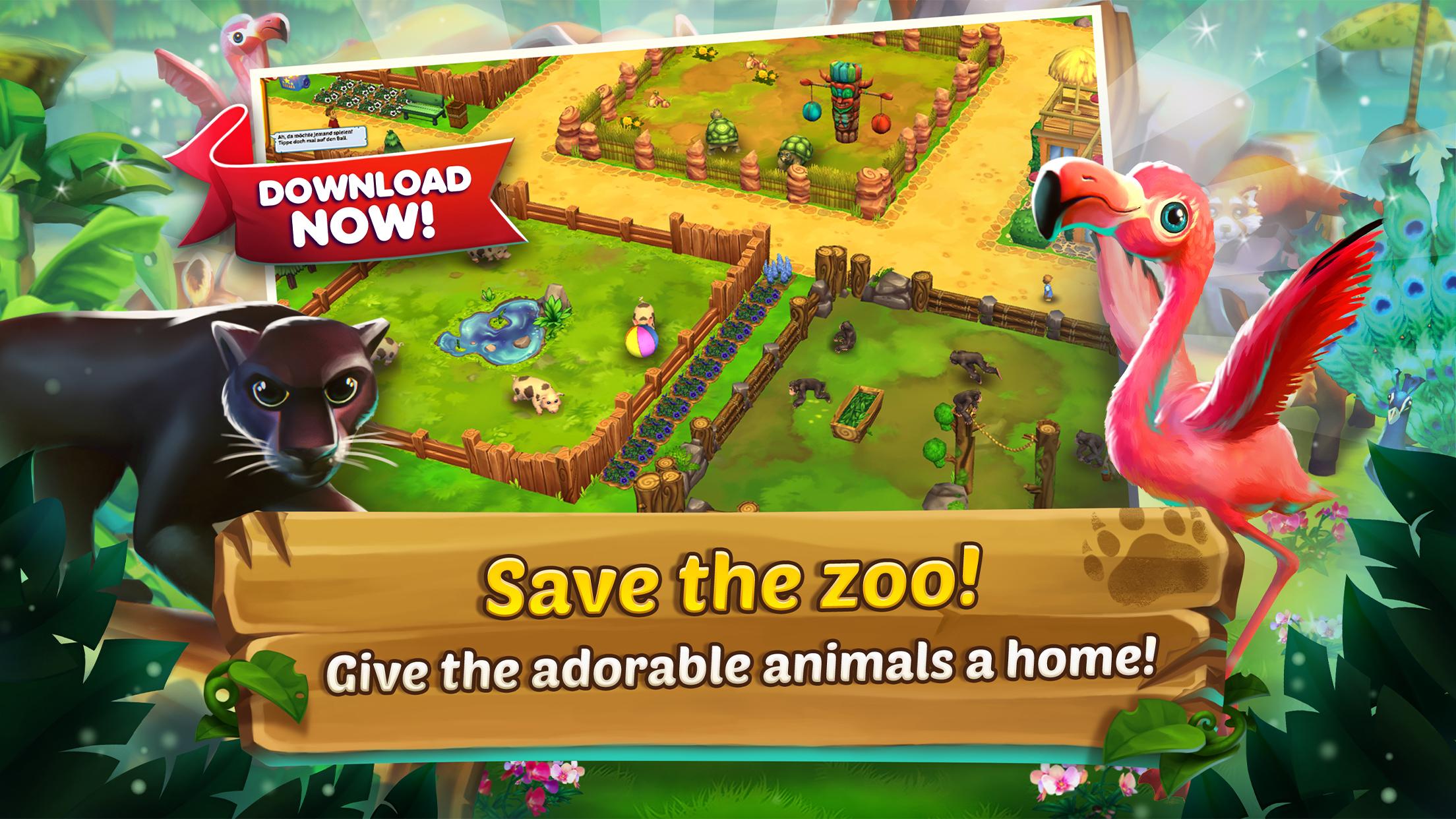
You’ve probably seen the ads. A cute panda looks at you with dinner-plate eyes while a digital hand builds a fence. Usually, these mobile tycoon games are shallow cash grabs that disappear from your phone after three days of clicking on glowing carrots. But Zoo 2: Animal Park is different. Honestly, it’s a bit of an outlier in the 3D simulation genre because it actually cares about the "tycoon" part of the name. Developed by upjers, a German studio that has been refining the browser-game-to-mobile pipeline for years, this title manages to hit that weirdly specific sweet spot between a cozy animal sanctuary and a ruthless business management sim.
It starts simple. Your great-grandfather’s zoo is a wreck. The mayor—who is basically the personification of corporate greed—wants to pave the over the whole thing and turn it into a shopping mall. It’s a classic trope. But as you dig into the mechanics, you realize you aren't just placing decorations. You're balancing visitor happiness, species breeding programs, and the cold, hard reality of coin generation.
Why Zoo 2: Animal Park Actually Works
Most mobile games treat "simulation" as a suggestion. Zoo 2 treats it as a rulebook. When you drop a Bengal tiger into an enclosure, the game doesn't just ask if you have enough space. It tracks whether you’ve provided the right type of terrain, the specific toys for enrichment, and if the water trough is actually filled. If you forget to clean the enclosures, your visitors start complaining. They get grumpy. They stop spending money at your juice shack. It’s a feedback loop that feels earned rather than forced.
The visuals help, too. We’re talking about 3D models that actually have personality. When you pet a bunny or watch a lion cub tumble over, the animations aren't just looped GIFs. There’s a fluidity there that makes you want to keep the app open just to watch the animals exist. But don’t let the cuteness fool you. The economy is tight.
You’ll spend a lot of time thinking about "pathing." If your visitors have to walk too far between the red panda exhibit and the nearest restroom, they’re going to be unhappy. It’s a light version of what you’d find in Planet Zoo, but optimized for a touchscreen. You’re constantly weighing the cost of a new exotic animal against the immediate need for more trash cans. It’s a juggle.
The Breeding Mechanic is a Deep Rabbit Hole
Breeding isn't just about clicking a "make baby" button. It’s the core progression system. You start with common variants—brown rabbits, basic goats—but the goal is always those rare color mutations. Getting a white tiger or a unique coat pattern on a horse requires a mix of patience and strategy.
The game uses a card-piece system for many of its unlocks. This is where the "free-to-play" aspect kicks in. You collect pieces of animal cards through chests or by completing quests. While some players find this frustrating, it actually adds a layer of long-term planning. You aren't just buying a zoo; you're collecting it. The dopamine hit of finally finishing that last card piece for a Nile Crocodile is real.
Navigation and UI: A Learning Curve
Let’s be real for a second. The UI in Zoo 2: Animal Park can be a lot. When you first open the game, there are icons everywhere. Quests on the left. Shop on the bottom. Event trackers on the right. Friends list, guild chat, and special offers popping up like weeds. It feels cluttered.
But once you spend an hour with it, the logic clicks. The game is organized into "regions." You have your main zoo, but eventually, you unlock the pond region, the terrarium, and even a prehistoric park. Each of these functions like a mini-expansion with its own set of rules. For example, the terrarium requires specific temperature management that the outdoor enclosures don't. It keeps the gameplay from getting stale after the first month.
Managing the Economy Without Going Broke
The biggest mistake new players make? Expanding too fast. It's tempting to buy every new animal the second you hit the required level. Don't do that. Every new enclosure is a drain on your resources. You need staff to clean them, food to fill them, and time to maintain them.
Coins are the lifeblood here. You get them from ticket sales, but the real money is in the shops. A well-placed popcorn stand near a popular exhibit like the polar bears will make more money than three enclosures combined. You have to think like a theme park mogul.
- Priority 1: Keep the trash cans empty. Nothing kills visitor satisfaction faster than litter.
- Priority 2: Level up your animals. Higher-level animals draw more crowds.
- Priority 3: Focus on the "Daily Tasks." These are the most consistent way to get Diamonds, the premium currency, without spending actual cash.
Diamonds are the hurdle. You can play Zoo 2: Animal Park without spending a dime, but you have to be disciplined. Save your diamonds for permanent upgrades, like larger storage or specialized staff members. Don't waste them on speeding up a 30-minute construction timer. That’s a rookie move.
The Social Aspect and Guilds
There is a surprisingly robust community within the game. Joining a "Club" (the game’s version of a guild) isn't just for chatting. You can trade card pieces with club members. This is the fastest way to get those elusive animals you’re missing. If you have four pieces of a Cheetah and your friend has the fifth, a quick trade benefits everyone. It turns a solitary building game into a collaborative project.
Visiting other players' zoos also gives you ideas. You’ll see people who have spent hundreds of hours meticulously decorating their parks with flower beds, fountains, and intricate pathing designs. It’s inspiring, if a little intimidating.
Beyond the Basics: Advanced Tactics
Once you hit level 20, the game shifts. It’s no longer about just surviving; it’s about optimizing. You start looking at "prestige" values. Every decoration has a prestige rating. If you want to attract the "VIP" visitors who drop more coins, your zoo needs to look the part.
This means you’ll eventually have to bulldoze your early-game layout. It’s painful. You’ll have to move the goats to make room for the elephants. You’ll have to rethink your entire entry plaza to maximize the "decoration bonus" that overlaps with enclosures.
Dealing with the Seasonal Events
Upjers is aggressive with their event calendar. Whether it’s Halloween, Christmas, or a random "Spring Awakening," there is almost always an event running. These events are the best way to get exclusive animals that aren't in the standard shop.
The trick is to hoard your resources before an event starts. If you know a big update is coming, stop spending your coins. The event tasks usually involve breeding a certain number of animals or buying specific decorations. If you’re broke when the event drops, you’re going to miss out on the unique rewards.
Is it Fair to Call it a "Tycoon" Game?
Actually, yes. While a lot of mobile games use the term "Tycoon" as a buzzword, Zoo 2: Animal Park earns it. You are managing logistics. You are managing a budget. You are managing a workforce.
There is a genuine sense of growth. You start with a patch of dirt and a few rabbits. A year later, you have a sprawling multi-region empire with extinct mammoths and rare tropical birds. The progression curve is steep but satisfying. It’s one of the few games in this category that rewards long-term loyalty over short-term spending.
The developers also keep the game updated. This isn't a "set it and forget it" app. They regularly add new species, often based on community feedback. The transition to the "Prehistoric" update was a massive shift that added an entirely new dimension to the game, proving that they aren't afraid to take risks with the formula.
How to Get the Most Out of Your Zoo
If you're just starting, keep your expectations in check. You won't have a white tiger by Tuesday. This is a marathon game.
Start by focusing on your visitor needs. Tap on the little thought bubbles above their heads. They will tell you exactly what’s wrong. If five people say they’re hungry, buy a hot dog stand. If they say the zoo is dirty, hire another scavenger. It sounds basic, but many players ignore the visitors and wonder why they aren't making any money.
Also, utilize the "Petting Zoo" feature. It’s a small interaction, but it boosts the happiness of your animals, which in turn increases the "XP" you gain from collecting their friendship hearts. These hearts are used for various upgrades and are often overlooked.
Actionable Next Steps for New Directors
To hit the ground running in Zoo 2: Animal Park, follow these specific moves during your first week:
- Don't Clear All the Junk Immediately: Clearing trees and rocks costs coins. Only clear land when you actually have an enclosure ready to put there.
- Focus on "The Mayor's Quests": These act as a tutorial but also provide the most efficient XP path to level 10.
- Invest in the Trash Can: It sounds boring, but the "Large Trash Can" upgrade is one of the best early-game investments you can make. It saves you from constant manual clicking.
- Join a Club by Level 15: Don't wait. The card-trading feature is too valuable to ignore, and most active clubs are happy to take in new, active players who help with club tasks.
- Watch the Ad-Board (If you’re F2P): There is a cinema in the game where you can watch a few ads for free tickets or diamonds. If you don't want to spend real money, this is your primary source of premium currency.
- Diversify Your Enclosures: Don't just build five grassland enclosures. Different animals require different biomes, and visitors want variety. A diverse zoo earns more "prestige" than a repetitive one.
By focusing on the balance between animal welfare and visitor satisfaction, you can turn a struggling family business into a world-class destination. Just remember to keep the water troughs full and the popcorn salted.