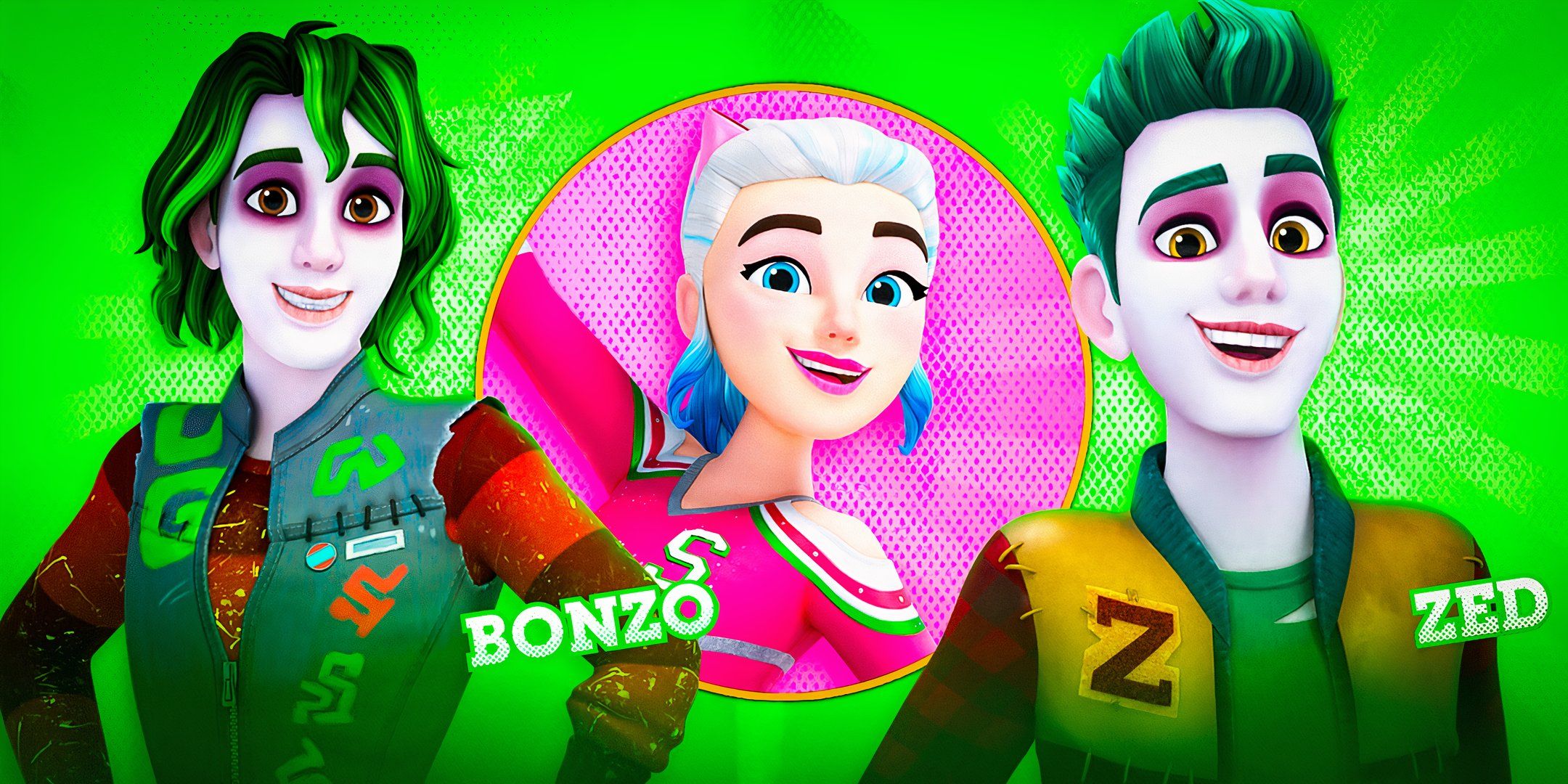
Disney finally did it. After three movies that defined a specific era of DCOM (Disney Channel Original Movie) culture, they pivoted. They didn't just make a fourth movie—well, not yet—they gave us ZOMBIES: The Re-Animated Series. Honestly, I was skeptical. Usually, when a live-action franchise goes "re-animated," it feels like a cheap cash grab or a way to keep the actors' voices around without paying for the full hair and makeup department. But this feels different. It feels like the writers just wanted to go absolutely wild with the lore of Seabrook without the constraints of a musical film's budget.
It’s weird. It’s funny. It’s colorful.
If you’ve been following Addison and Zed since the first film back in 2018, you know the vibe. We’ve seen humans, zombies, werewolves, and even aliens try to coexist in a town that is obsessed with pink and cheerleading. The animated series takes that foundation and pushes it into the realm of the absurd. You’ve got the original cast back, including Milo Manheim and Meg Donnelly, which is basically the only reason this works. Without their specific energy, it would just be another cartoon.
What ZOMBIES: The Re-Animated Series gets right about Seabrook
Most people think this is just a retelling. It isn't. ZOMBIES: The Re-Animated Series acts as a bridge and an expansion pack for the Seabrook universe. The show leans heavily into the "monster-of-the-week" format, which is something the movies couldn't really do because they had to focus on the big "everyone get along" message and the alien invasion plotlines. Here, we get to see the daily grind of being a zombie in a high school that still feels like it was designed by a suburban architect on a sugar high.
The humor is sharper than I expected.
Since it’s animated, the physical comedy can be much more extreme. Zed can literally fall apart in ways that would have required a massive VFX budget in live-action. There’s a specific kind of freedom in animation that allows the creators to poke fun at the franchise's own tropes. They know the "Z-Bands" are a bit of a convenient plot device. They know Seabrook's obsession with perfection is creepy. They lean into it.
One thing that stands out is the musical numbers. Look, it wouldn't be a Zombies project without singing. But in the series, the songs are shorter and punchier. You aren't getting a five-minute power ballad every episode, but you are getting catchy, 90-second earworms that keep the pace moving. It’s a smart move. It keeps the kids engaged without boring the parents who are inevitably watching this in the background.
The voice cast makes all the difference
I can’t stress this enough: having the original actors matters. Milo Manheim’s voice for Zed is so iconic to that character that a sound-alike would have tanked the show. The same goes for Meg Donnelly. Their chemistry translates surprisingly well to animation. You can tell they’re having fun with it.
- Milo Manheim (Zed)
- Meg Donnelly (Addison)
- Chandler Kinney (Willa)
- Ariel Martin (Wynter)
- Trevor Tordjman (Bucky)
Bucky, by the way, is a standout in the animated format. His ego was already too big for the screen in the movies, but in ZOMBIES: The Re-Animated Series, his self-importance is animated with such flair that he becomes the perfect comedic foil. He’s the guy you love to hate, but also just love to watch fail.
Why the animation style might surprise you
The visual direction isn't trying to be hyper-realistic. It’s bouncy. It’s stylized. It reminds me a bit of the newer Mickey Mouse shorts but with a modern, "teen-scream" twist. The colors are incredibly saturated. The pinks are pinker, the greens are glowier, and the whole thing looks like a bowl of neon cereal.
Some fans were worried it would look "cheap." It doesn't. It looks intentional.
By choosing a 2D-inspired look rather than a clunky 3D one, the producers allowed for more expressive character movements. This is vital for a show where half the characters are werewolves or zombies. You need that fluidity. You need to see the "snap" in a cheerleading routine or the "slouch" in a zombie’s walk.
Addressing the timeline confusion
There is a lot of chatter online about where exactly ZOMBIES: The Re-Animated Series fits in the timeline. Is it after Zombies 3? Is it an alternate universe?
Basically, it’s a bit of a "floating timeline." While it carries over the relationships and the status quo from the films (aliens are around, werewolves are integrated), it doesn't strictly follow a linear path. This allows the show to exist as its own entity. You can jump in without having a PhD in Seabrook history, though it definitely helps to know why the girl with white hair is so important.
Honestly, it’s better this way. It avoids the "continuity trap" that kills so many spin-offs.
The deeper themes that actually stick around
Despite the bright colors and the singing, the Zombies franchise has always been a thinly veiled metaphor for integration and prejudice. The animated series doesn't drop that ball. It explores what it actually looks like to live in a "multicultural" society where some people have fur and others have glowing green skin.
It handles it with a light touch.
It’s not a lecture. It’s about the awkwardness of trying to be "normal" when you aren't. It’s about Addison trying to find her identity when she’s literally part alien, part human, and a full-time cheerleader. Those are themes that resonate with the target audience (middle schoolers) because, let’s be real, everyone feels like a monster in middle school.
How to watch and what to expect next
The show is currently a staple on Disney Channel and Disney+. They’ve been dropping shorts and full-length episodes that keep the momentum going. If you’re a parent or a fan, the best way to consume it is in small doses—it’s high energy.
- Check the Disney+ "Zombies" Collection: They’ve grouped everything together, including the "Addison’s Monster Mystery" shorts which paved the way for this series.
- Keep an ear out for the soundtrack: The songs are being released on streaming platforms almost immediately after episodes air.
- Look for the Easter eggs: The animators have hidden a ton of references to the original movies in the backgrounds of the school and the Zombitown streets.
If you’re looking for a massive, gritty reboot, this isn't it. But if you want something that captures the "pure joy" and "utter weirdness" of the original films, ZOMBIES: The Re-Animated Series delivers exactly what it promised. It’s a celebration of being different, wrapped in a neon-green bow.
Next Steps for Fans and Parents
- Watch the "Addison’s Monster Mystery" shorts first. They serve as a great stylistic introduction to the animated world and help bridge the gap between the third movie and the series.
- Verify your Disney+ subscription level. Some regions are getting episodes on a staggered release schedule compared to the live broadcast on Disney Channel.
- Engage with the official soundtrack. If you like the music, the full versions are often better than the truncated versions seen in the episodes.
- Follow the cast on social media. Milo Manheim and Meg Donnelly are very active in promoting the series and often share "behind the scenes" looks at their voice recording sessions.
- Prepare for Zombies 4. The success of this series is directly tied to the hype for the upcoming live-action movie, Zombies 4: Dawn of the Vampires. Staying up to date with the show will likely give you clues about the new characters being introduced in the next film.
The world of Seabrook is clearly expanding, and the animated series is the best way to stay immersed in that world between the major cinematic releases. It’s fun, fast, and surprisingly smart. Just don’t expect the zombies to stay in their graves—or the songs to leave your head.