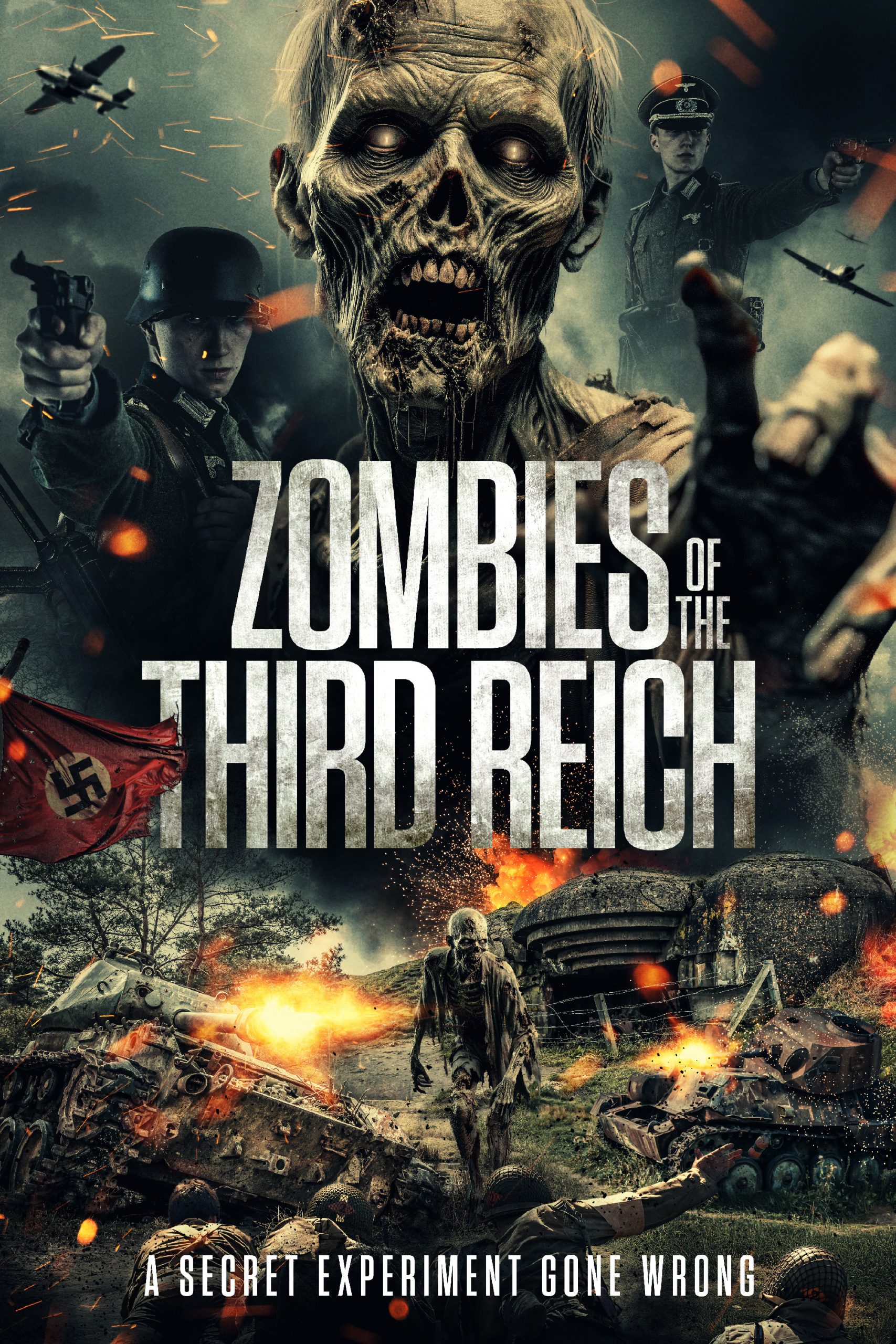
You've seen them everywhere. They’re in the Call of Duty maps you play at 2 a.m., the low-budget horror flicks on streaming services, and the dark corners of historical "what-if" forums. We're talking about zombies of the Third Reich. It’s a trope that has become so ingrained in our pop culture that it almost feels like a real historical footnote. But why? Where did this obsession start, and is there even a shred of historical reality buried under all those digital pixels and prosthetic makeup?
Honestly, the reality is weirder than the fiction. While there were no literal undead soldiers roaming the streets of Berlin in 1945, the Nazi regime's actual obsession with the occult, fringe science, and chemical "super-soldier" programs provided the perfect soil for this myth to grow.
The Birth of the Undead Nazi Trope
It didn't start with video games.
People usually point to 1977’s Shock Waves as the moment the "Nazi Zombie" became a cinematic thing. In that movie, you’ve got these water-logged, undead soldiers coming out of the ocean. It was creepy. It was weird. It tapped into a very specific kind of post-war anxiety. But the trope really exploded into the mainstream with Dead Snow and, most notably, the "Nacht der Untoten" map in Call of Duty: World at War.
Suddenly, zombies of the Third Reich weren't just a niche horror gimmick. They were a billion-dollar gameplay mechanic.
There's a reason this works so well in entertainment. Nazis are the "ultimate" villains—they represent a clear, historical evil. Zombies represent a mindless, unstoppable hunger. When you combine the two, you get a monster that is both ideologically and biologically terrifying. You don't have to feel bad about "killing" them again. They’re already dead, and they were the bad guys to begin with. It’s the ultimate guilt-free target practice.
The Occult Connection: Where Fiction Meets Fact
People often ask if Hitler was actually into the occult. The answer is... sort of, but it’s complicated. High-ranking officials like Heinrich Himmler were deeply obsessed with "Ariosophy" and the idea that the "Aryan" race had mystical origins. Himmler’s Ahnenerbe organization wasn't just some boring research group; they were out there looking for the Holy Grail and Thor’s hammer. Seriously.
Historian Eric Kurlander, author of Hitler's Monsters: A Supernatural History of the Third Reich, argues that the Nazi supernatural imaginary was a real thing. While they weren't trying to raise the dead, they were trying to create a "miracle weapon" (Wunderwaffe) that could turn the tide of the war. When you read about their actual experiments, you start to see where the zombie stories come from.
Pervitin: The Real "Zombie" Drug
If you want to find the real-life version of zombies of the Third Reich, you don't look at magic spells. You look at pharmacology.
The Wehrmacht was effectively fueled by Pervitin. That’s just a fancy 1940s name for methamphetamine.
During the invasion of France in 1940, German soldiers were taking millions of these pills. They stayed awake for days. They felt invincible. They didn't need food. To an outside observer, a battalion of soldiers who haven't slept in 72 hours, moving with a hollow-eyed, drug-induced intensity, looks a lot like the walking dead. They were "zombies" in a literal, physiological sense.
The drug use wasn't just a bottom-up thing, either. By the end of the war, the D-IX project was testing a cocktail of cocaine, Pervitin, and oxycodone on concentration camp prisoners. The goal? To see if they could make a soldier who could march 50 miles without stopping. The results were horrific. People collapsed. Their hearts gave out. But they kept pushing them.
Why the Myth Persists in 2026
We’re still talking about this because the "Mad Scientist" trope never dies. Projects like Operation Paperclip—where the U.S. brought Nazi scientists over after the war—fueled decades of conspiracy theories. If they were working on rockets and nerve gas, what else were they doing in those underground bunkers?
Pop culture loves a vacuum. Since we don't have all the answers to every weird experiment performed in the 1940s, we fill the gaps with monsters. It's a way of processing the very real, very human horrors of that era by turning them into something supernatural and "other."
Breaking Down the Gaming Impact
Let's be real: without Treyarch and Call of Duty, this wouldn't be a global phenomenon. The "Zombies" mode turned a historical tragedy into a repetitive, addictive loop of survival.
- It created a new "lore" that blended history with sci-fi.
- It introduced characters like Edward Richtofen, who embodied the "mad Nazi doctor" archetype.
- It utilized "Element 115" as a stand-in for the supernatural or alien technology.
This gamification has changed how a whole generation views the era. It’s no longer just about textbooks; it’s about "Easter eggs" and "Perk-a-Colas." While some historians worry this trivializes the Holocaust, others argue it keeps the history (however warped) in the public consciousness.
Misconceptions You Should Stop Believing
There is no evidence the Nazis had a "Zombie Program."
I know, it sounds obvious, but you’d be surprised how many YouTube "documentaries" try to claim otherwise. They’ll point to the Die Glocke (The Bell) or various "Vril" societies. Most of that is post-war fiction or "crypto-history" popularized in the 60s. The Nazis were plenty scary without needing magic zombies. Their real-world experiments with jet propulsion, rocketry, and chemical warfare were much more dangerous than any fictional undead army.
Actionable Insights for History and Horror Fans
If you're fascinated by the intersection of WWII history and the supernatural, don't just stick to the movies. Dig into the actual records.
- Read the Real Research: Check out Eric Kurlander’s Hitler's Monsters. It’s a dense read but it separates the actual occult beliefs of the Nazi party from the stuff made up by Hollywood.
- Explore the Pharmacy: Look into Blitzed: Drugs in the Third Reich by Norman Ohler. It explains the Pervitin situation in terrifying detail. You’ll see that the "super-soldier" myth was actually just a massive, state-sponsored drug addiction.
- Visit the Sites (Virtually or Physically): Places like Wewelsburg Castle—which Himmler tried to turn into a "Camelot" for the SS—show the bizarre architectural reality of their occult fantasies.
- Critique Your Media: Next time you play a game featuring zombies of the Third Reich, look at the environment design. You'll notice they often mix real historical artifacts with complete fantasy. It’s a fun exercise in media literacy to spot where the history ends and the "weird war" tropes begin.
The truth is, the human monsters of the 1940s were far more terrifying than any fictional zombie could ever be. By understanding the real history of the regime's fringe beliefs and chemical experiments, we can appreciate the horror movies for what they are—metaphors for a very real, very human darkness.
Stick to the primary sources when you want the facts, and save the Ray Gun for the weekend. The real story of what happened in those bunkers is much more haunting than anything a screenwriter could dream up.