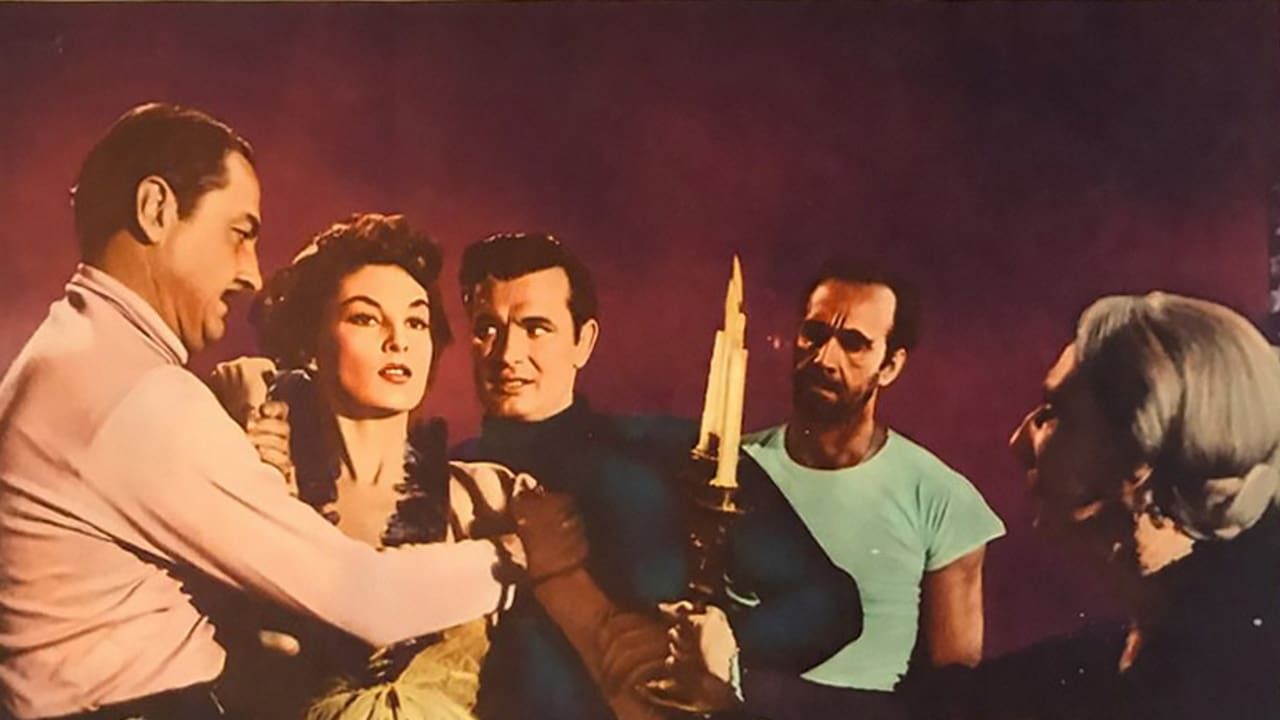
You’ve seen the modern zombie. They run. They scream. They’re basically caffeinated predators in ripped hoodies. But if you go back to 1957, to a black-and-white sleeper hit called Zombies of Mora Tau, you’ll find something much weirder and, honestly, more unsettling. These guys don’t hunger for brains. They’re just... waiting.
Produced by Sam Katzman and directed by Edward L. Cahn—the same guy who gave us It! The Terror from Beyond Space—this movie isn’t just a piece of drive-in nostalgia. It’s a blueprint. People usually point to George A. Romero’s Night of the Living Dead (1968) as the "birth" of the modern zombie, but the Zombies of Mora Tau were shambling through the mud a decade earlier, proving that you don't need a virus or a space probe to create a nightmare.
The story is simple enough. A group of deep-sea divers arrives on the African coast. They’re looking for a fortune in diamonds, specifically the "Mora Tau" treasure, which went down with a ship sixty years prior. The problem? The crew of that ship didn’t exactly retire. They’re still there. Guarding the loot. Underwater.
The Most Underrated Undead in Cinema
What makes the Zombies of Mora Tau so unique is their patience. They aren't mindless animals. They are cursed. In the film, the legend goes that anyone who tries to steal the diamonds is doomed to join the ranks of the "walking dead." This is classic voodoo-adjacent lore, which was the standard before the 1960s changed the rules to science fiction.
Think about the visual for a second. In 1957, seeing zombies walking along the ocean floor was a technical and creative feat. They don't breathe. They just stomp through the silt. It’s eerie because it’s slow. You can outrun them, sure, but can you outrun them forever? Probably not. The movie plays with this idea of inevitability.
Greed is the real villain here. The divers, led by the cynical Jeff Clark (played by Gregg Palmer), are warned by the local matriarch, Grandmother Peters. She knows the score. She tells them the dead are restless. Do they listen? Of course not. If they did, we wouldn’t have a movie.
Why the "Water Zombie" Matters
The "water zombie" trope is everywhere now. You see it in Pirates of the Caribbean with the crew of the Black Pearl. You see it in Lucio Fulci’s Zombie. But Zombies of Mora Tau did it first with real atmospheric weight.
- The zombies are waterlogged and mossy.
- They move with a synchronized, rhythmic gait.
- They can actually use tools and weapons, which is a terrifying departure from the "shuffling eater" archetype.
Honestly, the makeup by Jack P. Pierce (the legend who did Frankenstein’s monster) isn't the highlight here; it’s the choreography. These zombies have a purpose. They aren't looking for a snack; they’re looking for justice, or at least a way to keep their shiny rocks. It makes them feel more like ghosts with physical bodies than biological accidents.
A Masterclass in B-Movie Atmosphere
Edward L. Cahn was a workhorse. He knew how to stretch a dollar. By using heavy fog, high-contrast shadows, and some genuinely spooky location scouting, he made a low-budget Columbia Pictures release feel like a gothic fever dream.
You’ve got the classic trope of the "haunted" manor near the beach. The sound design is surprisingly sparse, which helps. Sometimes, horror is better when it’s quiet. The sound of wet footsteps on a wooden porch? That’s gold.
The film also tackles a weirdly progressive (for the 50s) idea: the zombies aren't exactly "evil." They’re tragic. They are bound by a curse they didn't ask for. When the divers realize that the only way to stop the cycle is to return the diamonds, it shifts the moral ground. It’s not about killing the monsters; it’s about acknowledging that the monsters were right to be angry.
The Supporting Cast and the "Final Girl" Archetype
Allison Hayes plays Mona Harrison, and she is a force. If you recognize her, it’s probably from Attack of the 50 Foot Woman. In Zombies of Mora Tau, she brings a level of melodrama that fits the "doomed expedition" vibe perfectly.
The interactions between the crew are snappy. It’s that 1950s tough-guy dialogue where everyone is smoking and looking suspiciously at each other. It adds to the tension. You aren't just worried about the zombies; you’re worried the divers are going to kill each other before the undead even get a chance.
How It Influenced Everything You Watch Now
If you look at the DNA of horror, Zombies of Mora Tau is a critical link. Before this, zombies were mostly controlled by a "master" (think White Zombie). Here, they are a collective force. They act as one. That hive-mind feel is a direct ancestor to the "horde" mechanics we see in World War Z or The Walking Dead.
Also, the "burial at sea" imagery is powerful. The film suggests that the ocean is a graveyard that doesn't always keep what it takes. It taps into a primal fear of the deep.
"They are not dead, and yet they do not live."
That line basically sums up the entire genre, but in 1957, it felt fresh. It wasn't a cliché yet. It was a warning.
The Legacy of the Mora Tau Diamonds
People still talk about this movie in cult film circles because it doesn't try to be more than it is. It’s a 70-minute blast of atmospheric horror. It doesn't have the heavy social commentary of Romero’s work, but it has more "creep factor" in its pinky finger than most modern CGI jump-scare fests.
The ending—no spoilers, but let’s just say it involves a lot of fire and a realization that some things are better left at the bottom of the sea—is satisfying. It feels earned.
Actionable Takeaways for Horror Fans
If you’re a fan of the genre, you can’t skip this. It’s foundational. Here is how to actually enjoy it in the 2020s without getting bogged down by the "old movie" feel.
Watch it for the "Slow Burn" Don't expect jump scares. Watch it for the way the shadows move. Pay attention to the scenes where the zombies are just standing in the woods, watching the house. It’s a lesson in tension.
Compare the Lore If you’re a writer or a creator, look at how Zombies of Mora Tau handles its rules. The zombies have specific triggers and specific weaknesses (fire, mostly). Having "rules" for your monsters makes them scarier because the audience can track the stakes.
Look for the Prints The film is often found in "100 Movie Packs" or on classic streaming services like Tubi or Criterion Channel. The restored versions actually look great—the silver-nitrate style of the 50s makes the "underwater" scenes look incredibly ethereal.
Don't Ignore the "B" in B-Movie Yes, some of the acting is stiff. Yes, the "underwater" scenes are clearly shot on a dry stage with some bubbles blown in front of the lens. But that’s part of the charm. It’s raw filmmaking.
The Zombies of Mora Tau might not be as famous as the walkers from Night of the Living Dead, but they paved the way. They proved that the dead could be persistent, purposeful, and profoundly scary without saying a single word. They represent the classic era of horror where the atmosphere was king and the monsters were a reflection of our own greed. Next time you're scrolling through a horror library, give the guys in the diving suits a chance. They’ve been waiting sixty years for your attention, and they aren't going anywhere.