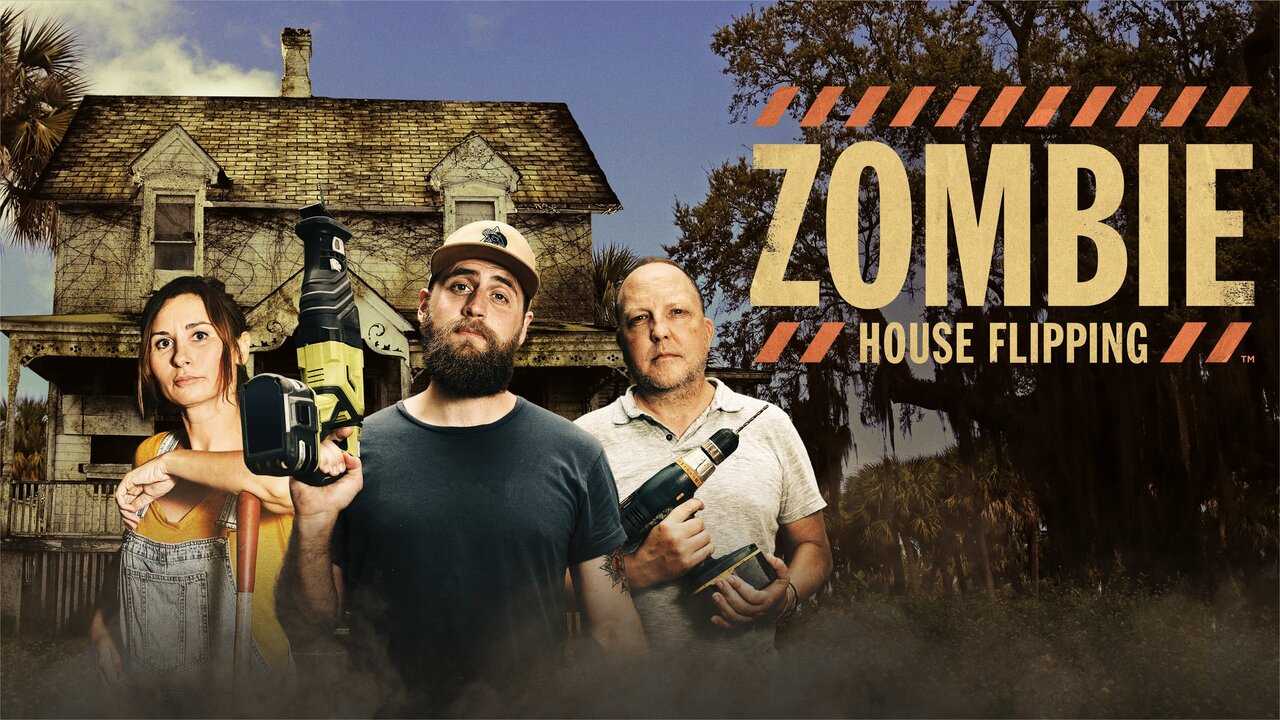
Houses rot. It starts with a broken window or a slow leak in the roof, and before you know it, nature is literally reclaiming the living room. These are the "zombies"—abandoned, bank-owned properties that sit in beautiful neighborhoods like a decaying tooth in a perfect smile. Honestly, most people just walk past these eyesores and shake their heads. But for the crew on the Zombie House Flipping TV show, these disasters are basically gold mines wrapped in black mold and lead paint.
The show first hit the airwaves back in 2016, and it immediately stood out from the polite, shiplap-heavy world of HGTV. This wasn't about choosing between three different shades of "greige" paint. It was about kicking down doors in Orlando (and later Dallas and Tampa) to find squatters, literal mountains of trash, and structural integrity that could be best described as "optimistic." It’s gritty. It’s gross. And somehow, it's incredibly satisfying to watch.
What Really Happens Behind the Scenes of a Zombie Flip
The premise is pretty straightforward, but the execution is where things get messy. Usually, a "zombie" is a house that has been stuck in foreclosure limbo for years. These aren't just fixer-uppers; they are biohazards. You’ve got Justin Stamper and his team—originally featuring Ashlee Casserly, Keith Ori, and Peter Duke—scouting these properties and trying to figure out if they can actually turn a profit before the holding costs eat them alive.
One thing people always ask is if the drama is real. While every "reality" show has a bit of a polish on it for the cameras, the actual construction nightmares are 100% authentic. If you’ve ever tried to renovate a kitchen, you know that opening a wall usually leads to a $5,000 surprise. Now imagine doing that to a house that hasn't had the power turned on since the Bush administration. You're dealing with termites that have basically formed their own government and electrical wiring that looks like a bowl of spicy spaghetti.
The tension usually comes from the budget. In the Zombie House Flipping TV show, the margins are often thinner than they look on the screen. Sure, they might show a "profit" of $80,000 at the end of the episode, but that often doesn't account for the massive carrying costs, taxes, and the sheer amount of sweat equity the team pours in.
Why the Orlando Market Was the Perfect Patient Zero
Orlando is a weird place for real estate. It has these pockets of incredible mid-century modern homes sitting right next to areas that got absolutely hammered during the 2008 housing crisis. This created a surplus of "zombie" inventory. Justin Stamper, who is basically the face of the show, actually started his career by buying his own foreclosed home. He knows the Florida market like the back of his hand.
The show eventually expanded its footprint. By the time we got to the later seasons, they were tackling "zombies" in Tampa and Dallas. The problems changed—Dallas has that nightmare expansive soil that cracks foundations like they're saltine crackers—but the core appeal remained the same. It’s the "before and after" on steroids.
The Team Dynamic (and Why It Shifted)
Long-time fans noticed some changes as the seasons progressed. Originally, the chemistry was built on a very specific set of skills:
- Justin Stamper: The visionary/broker who finds the deals.
- Ashlee Casserly: The designer with the Irish accent who has to make a dump look like a million-dollar listing.
- Keith Ori: The builder who looks like he could wrestle a bear and usually has to deliver the bad news about the plumbing.
- Peter Duke: The designer/creative who often clashed with the budget-conscious members of the group.
Duke eventually left the main cast, which happens in reality TV more often than not. When the show expanded to other cities, new teams were brought in to handle the local markets. This was a smart move by the producers because real estate is hyper-local. A flip in Florida doesn't work the same way as a flip in Texas.
The Math Behind a Zombie Flip
Let's talk about the money. Most people watch the Zombie House Flipping TV show for the gross-out factor of the "before" shots, but the business side is actually pretty fascinating.
Imagine buying a house for $150,000. It sounds like a steal, right? But then you realize it needs $100,000 in work. You're into it for $250,000. If the neighborhood caps out at $320,000, you’ve got $70,000 to play with. But wait. You’ve got closing costs on the buy side, interest on the hard money loan (which can be 10-12%), insurance, property taxes, and then the 6% commission when you sell. Suddenly, that $70,000 profit is more like $30,000. And that’s if nothing goes wrong.
In one episode, the team found a house that was literally sinking into the ground. They had to pier the foundation, which cost tens of thousands of dollars they hadn't budgeted for. That’s the reality of the zombie market. You are gambling against the unknown.
Why We Can't Stop Watching
There is a psychological reason why shows like this work. It's called "restitution." We love seeing something broken become whole again. When you see a house that has been stripped of its copper pipes and filled with trash bags become a family home, it feels like a win for the neighborhood. It’s not just about the money; it’s about fixing a "wound" in the community.
Also, the stakes feel higher than other shows. On some networks, the biggest problem is that the marble countertop didn't arrive on time. On Zombie House Flipping, the biggest problem is often that the house might actually be haunted by the ghost of bad decisions (and maybe some actual raccoons).
Real Advice for Aspiring Flippers
If you’re watching the show and thinking about jumping into the game, keep your head on a swivel. The "zombie" niche is not for beginners.
- Hard Money is Expensive: Most flippers use private lenders. These loans have high interest rates. Every day that house sits empty, you are losing money.
- The "Rule of Two": Whatever your contractor tells you for a timeline, double it. Whatever they tell you for a budget, add 20%.
- Inspect the Un-inspectable: On the show, they often buy these houses sight-unseen or with a quick walkthrough. In real life, try to get a scope of the sewer line. Sewer collapses are the silent killers of profit margins.
- Know Your Exit: Don't build a mansion in a neighborhood of bungalows. You will never get your money back. Ashlee is great at this on the show—she knows exactly what buyers in that specific ZIP code want.
Is Zombie House Flipping Real?
Yes and no. The houses are real. The renovations are real. The sales are real. However, the timelines are often condensed for television. A flip that takes six months might be edited to look like it happened in six weeks. Also, the "discovery" of certain items in the house sometimes feels a little too convenient for the plot. But at its heart, the show represents the actual grind of the professional house flipper.
The Zombie House Flipping TV show succeeds because it doesn't sanitize the process. It shows the dirt. It shows the sweat. It shows the moments where the team looks like they're about to have a collective breakdown because the roof is leaking during a hurricane.
To get started in this world, stop looking at the MLS (Multiple Listing Service) where everyone else is looking. You have to find the "off-market" deals. This means driving for dollars—literally driving around neighborhoods looking for houses with tall grass, piled-up mail, and boarded-up windows. Once you find one, use public records to find the owner or the bank that holds the deed.
Next, build a relationship with a local contractor before you even buy a property. You need someone who can walk through a "zombie" with you and give you a rough estimate on the fly. Without an accurate "After Repair Value" (ARV) and a solid renovation estimate, you aren't flipping; you're just gambling.
Finally, check your local zoning laws and permit requirements. In cities like Orlando, the building department doesn't play around. If you start swinging hammers without the right paperwork, the city will shut you down faster than you can say "open concept." Be the professional that the neighborhood needs, not just another guy trying to make a quick buck off a disaster.