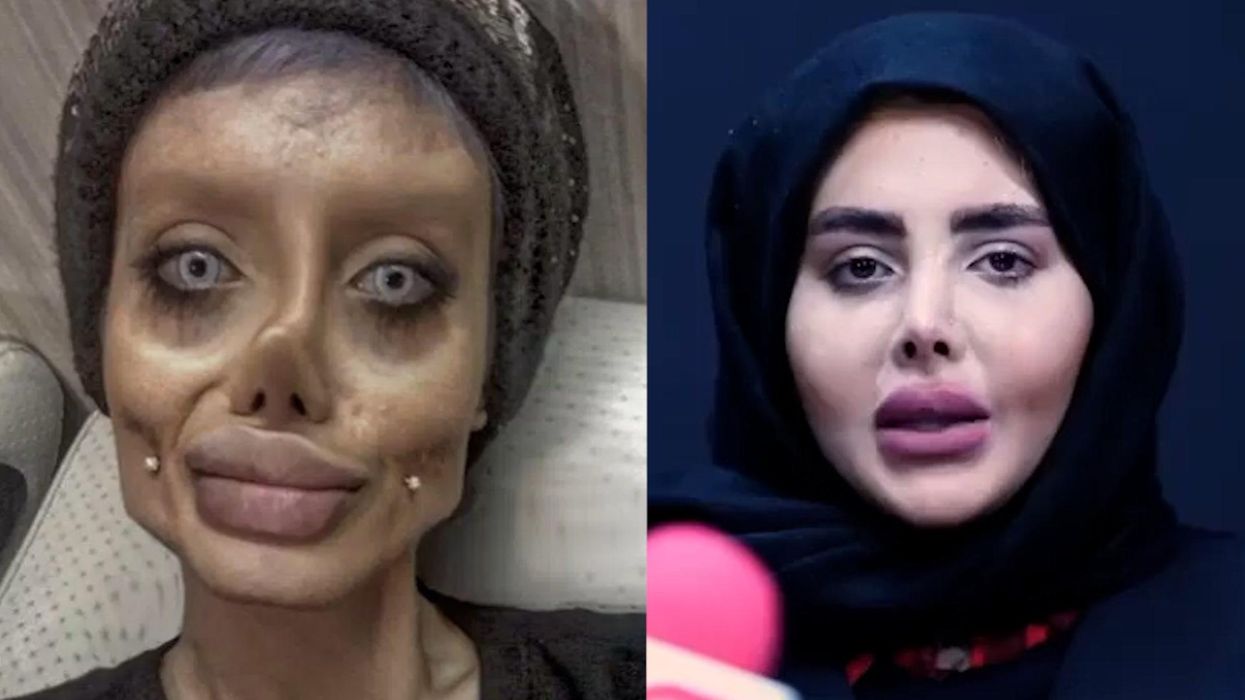
We’ve all seen the photos. You know the ones—the terrifying, hollow-cheeked, blue-eyed woman who looked like a Tim Burton character come to life. Back in 2017, the internet dubbed her the "Zombie Angelina Jolie." The viral story was almost too wild to be true. Reports claimed a young Iranian girl had undergone 50 plastic surgeries just to look like the Maleficent star. People were horrified. They were fascinated. Mostly, they were convinced they were looking at the world’s most botched attempt at Hollywood glamour.
But the truth? Honestly, it’s way more complicated than a few bad trips to a surgeon.
The Face Behind the "Zombie"
Her real name is Fatemeh Khishvand, though the world knows her by her Instagram handle, Sahar Tabar.
For years, the narrative was that she was a "cautionary tale" of plastic surgery gone wrong. People looked at her sharp, upturned nose and skeletal jawline and felt a mix of pity and disgust. But if you actually look at the zombie Angelina Jolie real face, you’ll realize you weren't looking at a surgical disaster. You were looking at an art project—and a very effective one at that.
Sahar didn't actually have 50 surgeries. Not even close.
In a massive reveal after her release from prison in late 2022, Sahar finally showed her actual face on Iranian state TV. Guess what? She looked like a perfectly normal young woman. The "zombie" look was basically a mix of heavy-duty makeup, some smart lighting, and a massive amount of Photoshop.
She admitted that while she did have a few procedures—a nose job, some lip fillers, and a bit of liposuction—the ghoulish, gaunt appearance was purely digital.
"What you saw on Instagram was the computer effects I used to create the image," she told reporters.
It turns out her real goal wasn't even to look like Angelina Jolie. She was actually inspired by the character Emily from Corpse Bride. She just wanted to be famous. And in the world of Instagram, being "weird" is the fastest way to get there.
Why the Hoax Worked So Well
We live in an era where we’re primed to believe the worst about "social media influencers."
When the photos first dropped, the internet didn't ask for proof. We saw a girl with grey skin and a nose that looked like it was carved out of wood, and we immediately filled in the blanks. She’s obsessed with celebrities. She’s mentally ill. She’s a victim of the beauty industry. Sahar leaned into it. She knew that the more outrageous she looked, the more followers she’d get. At her peak, she had nearly half a million followers.
She’d post videos of herself singing or dancing, looking like a literal ghost. People would point out the warped backgrounds in her photos—the telltale sign of a bad Photoshop "liquify" tool—but the "zombie" narrative was too juicy to let go.
It was the ultimate clickbait.
The High Cost of a "Joke"
Unfortunately, Sahar’s quest for fame didn't end with a brand deal or a reality show.
In Iran, the authorities don't exactly have a great sense of humor when it comes to "un-Islamic" content. In October 2019, Sahar was arrested. The charges were heavy: blasphemy, inciting violence, and encouraging the corruption of young people.
Think about that for a second. An 18-year-old was facing ten years in prison because she edited her photos to look like a zombie.
Her case became a global flashpoint for human rights. Activists like Masih Alinejad called on the real Angelina Jolie to speak out. People were outraged that a teenager’s "artistic" expression (or even just a dumb online prank) could lead to a decade behind bars.
Sahar ended up serving about 14 months in Qarchak prison—a place often described as one of the toughest women’s prisons in Iran—before being released on bail. The national outcry following the death of Mahsa Amini in 2022 likely played a role in the government's decision to let her go and try to calm public anger.
The "Real" Face vs. the Viral Face
When she finally stepped in front of the cameras for her "reveal," the difference was jarring.
- The Viral Version: Gaunt, grey skin, massive prosthetic-looking lips, tiny pointed nose, and sunken eyes.
- The Real Version: A young woman with dark hair, a slightly modified nose (typical of Tehran's "nose job capital" culture), and none of the skeletal features that made her famous.
She looked... human.
The contrast was so sharp that some people on the internet—true to form—started claiming the "real" face was a body double sent by the government. But if you look at the bone structure and the eyes, it’s clearly her. She just stopped using the filters.
What We Can Learn From the Sahar Tabar Saga
The story of the zombie Angelina Jolie real face isn't just about one girl’s desire for clout. It’s a mirror for the rest of us.
We’re so used to "perfect" filters that we’ve forgotten how to spot "imperfect" ones. We were so ready to judge her for "destroying" her face that we didn't notice she was just playing a character.
It’s also a sobering reminder of the digital divide. In the West, a "creepy" filter might get you a feature on a horror blog. In other parts of the world, it can literally cost you your freedom.
If you're still curious about the details, here’s the bottom line:
- Sahar Tabar is Fatemeh Khishvand.
- She did not have 50 surgeries.
- She used makeup and Photoshop to create the "zombie" look.
- She was jailed for her social media presence but is currently free.
Next Steps for You
The next time you see a "shocking" celebrity transformation or a "botched" surgery photo going viral, take a second look. Zoom in on the background. Check if the lines are straight. Most importantly, look for the person behind the pixels.
If you want to understand more about how digital manipulation affects our perception of beauty, look into the "Instagram Face" phenomenon or the rise of "CGI influencers." The line between what’s real and what’s rendered is getting thinner every day, and Sahar Tabar was just one of the first to show us how easy it is to fall for the illusion.