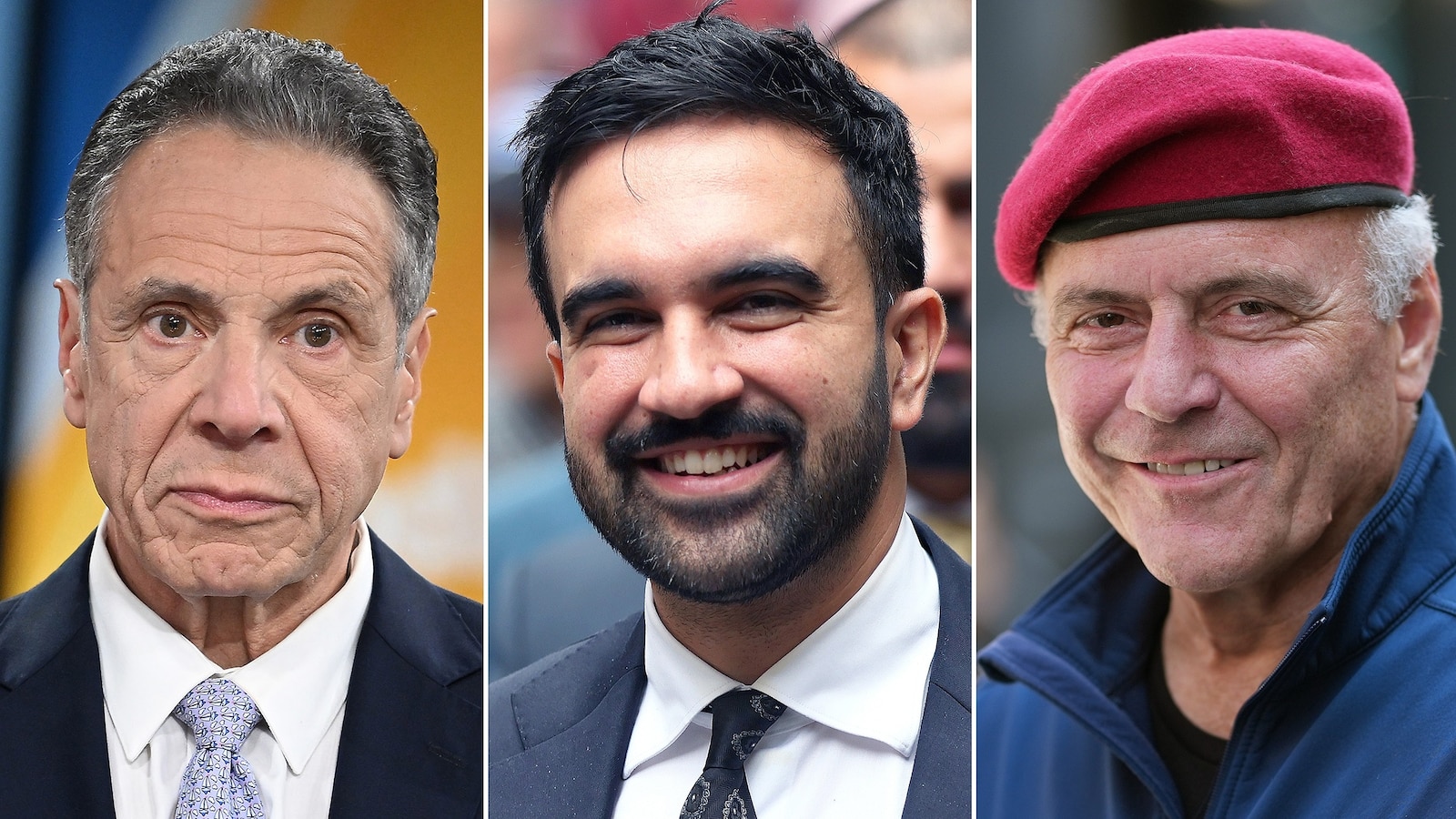
It finally happened. On January 1, 2026, Zohran Mamdani took the oath of office on the steps of a decommissioned subway station. He didn't pick City Hall's grand rotunda; he picked the ghost-quiet City Hall station, deep beneath the pavement. It was a move that felt less like a photo op and more like a manifesto.
Zohran Mamdani, the 34-year-old democratic socialist who just moved into Gracie Mansion, is a lot of "firsts." First Muslim mayor. First South Asian mayor. Youngest in over a century. But if you’re looking at his identity and missing his math, you're missing the whole story. He won because he leaned into a single, painful reality: New York is becoming impossible to afford. Honestly, it’s that simple.
The "Affordability" Hammer
Most political analysts thought Andrew Cuomo would waltz back into power. He had the name recognition and the war chest. But Mamdani’s campaign wasn't about "getting back to normal." It was about the fact that "normal" was already broken for the guy working two jobs in Astoria.
Mamdani’s platform—the one that got him over a million votes—is aggressively focused on lowering the cost of existence. We’re talking about things like:
- Fare-free city buses: He argues it costs more to police the "fare beaters" than to just make the ride free. Plus, it speeds up the commute.
- Universal child care: This is the big one. He wants a $1.7 billion expansion to cover even two-year-olds.
- City-owned grocery stores: A network of stores that don't need to turn a profit, designed to kill "food deserts."
It sounds radical. To some, it sounds like a pipe dream. But Mamdani points to his time in the State Assembly where he helped win $450 million in debt relief for taxi drivers. He’s used to being the underdog who actually brings home the check.
Can He Actually Freeze the Rent?
One of the loudest promises from the Zohran Mamdani campaign was a total rent freeze for rent-stabilized units. If you live in one of the roughly one million stabilized apartments in the city, this sounds like a godsend. If you own the building, it feels like a declaration of war.
Here is the thing: the Mayor doesn't just flip a switch to stop rent hikes. He has to go through the Rent Guidelines Board (RGB). Now, because the Mayor appoints all nine members of that board, he technically has the power to stack it with people who share his "zero percent" philosophy.
It’s not just about the freeze, though. Mamdani wants to build 200,000 new rent-stabilized homes over the next decade. Skeptics, like those at the Manhattan Institute, argue that this will just scare away private developers. Mamdani’s response? He’s not waiting for the private market to save the city. He’s looking at public land and public money.
The Budget Reality Check
Let’s talk about the $9 billion elephant in the room. Mamdani’s agenda is expensive. Very expensive. He estimates the annual cost at around $10 billion, with half of that going toward child care.
Where does that money come from? He’s looking at Albany. Specifically, he wants a state income-tax surcharge on people making over $1 million and a higher corporate tax.
Critics say this will trigger a "wealth flight," where the richest New Yorkers just pack up for Florida. It’s a classic New York debate. Mamdani’s team argues that the city's real value isn't its tax haven status, but its people—the ones who can't afford to live here anymore. He’s betting that a city that works for the 99% will be more stable than one that serves as a playground for the 1%.
Who Is Zohran Mamdani, Really?
He wasn’t born into a political dynasty. Born in Kampala, Uganda, to filmmaker Mira Nair and academic Mahmood Mamdani, he grew up in a household where art and post-colonial politics were the daily bread.
He went to Bronx Science. He was a hip-hop artist (under the name Mr. Cardamom). He worked as a housing counselor in Queens, helping people fight evictions. That last part is probably the most important. When you’ve spent your days in the trenches of housing court, you see the city differently.
His transition team reflects this "outsider-insider" mix. You’ve got Lina Khan, the FTC chair known for taking on Big Tech, serving as a co-chair. But you also have Maria Torres-Springer, a seasoned City Hall hand who served under Eric Adams. It’s a sign that Mamdani knows he can’t just burn the building down; he has to know how the plumbing works if he wants to fix it.
Common Misconceptions
- "He's anti-police": Actually, one of his first moves was asking Jessica Tisch to stay on as Police Commissioner. It was a move that surprised his most radical supporters and calmed the business community.
- "He's just a protester": While he did go on a hunger strike for taxi drivers, he also co-sponsored over 200 bills in the State Assembly. He knows how to move the gears of government.
- "He only won because of young voters": While the youth turnout was historic, he also saw a massive surge in support from immigrant communities in Queens and the Bronx who were hit hardest by inflation.
What’s Next for New Yorkers?
If you're living in the five boroughs, the Mamdani era is going to feel different almost immediately.
Expect to see more "No Kings" rhetoric—a jab at the old-school political machines. But more practically, keep an eye on the June 2026 Rent Guidelines Board vote. That will be the first real test of whether his "affordability" promise is a policy reality or just a campaign slogan.
Practical Steps to Watch:
- Check your rent status: If you're in a rent-stabilized unit, the 2026 hearings will be the most consequential in a generation. Show up to the public testimonies.
- The 3K Expansion: If you’re a parent, the rollout of universal childcare for two-year-olds is slated to begin in select zip codes by late 2026.
- The Fare-Free Pilot: Look for the expansion of the "Free Bus" program beyond the initial five routes.
New York has always been a city of reinvention. Whether Mamdani’s "Socialist City" works or ends up in a fiscal ditch is the biggest gamble the city has taken since the 1970s. But for the million-plus people who voted for him, the risk of staying the course was even higher.
The honeymoon period is short. The budget is tight. And the city is watching. If Mamdani can actually make it cheaper to live here without crashing the economy, he won’t just be a "first"—he’ll be a legend. If not, he’ll be another cautionary tale in the long history of New York populism. Either way, it’s not going to be boring.