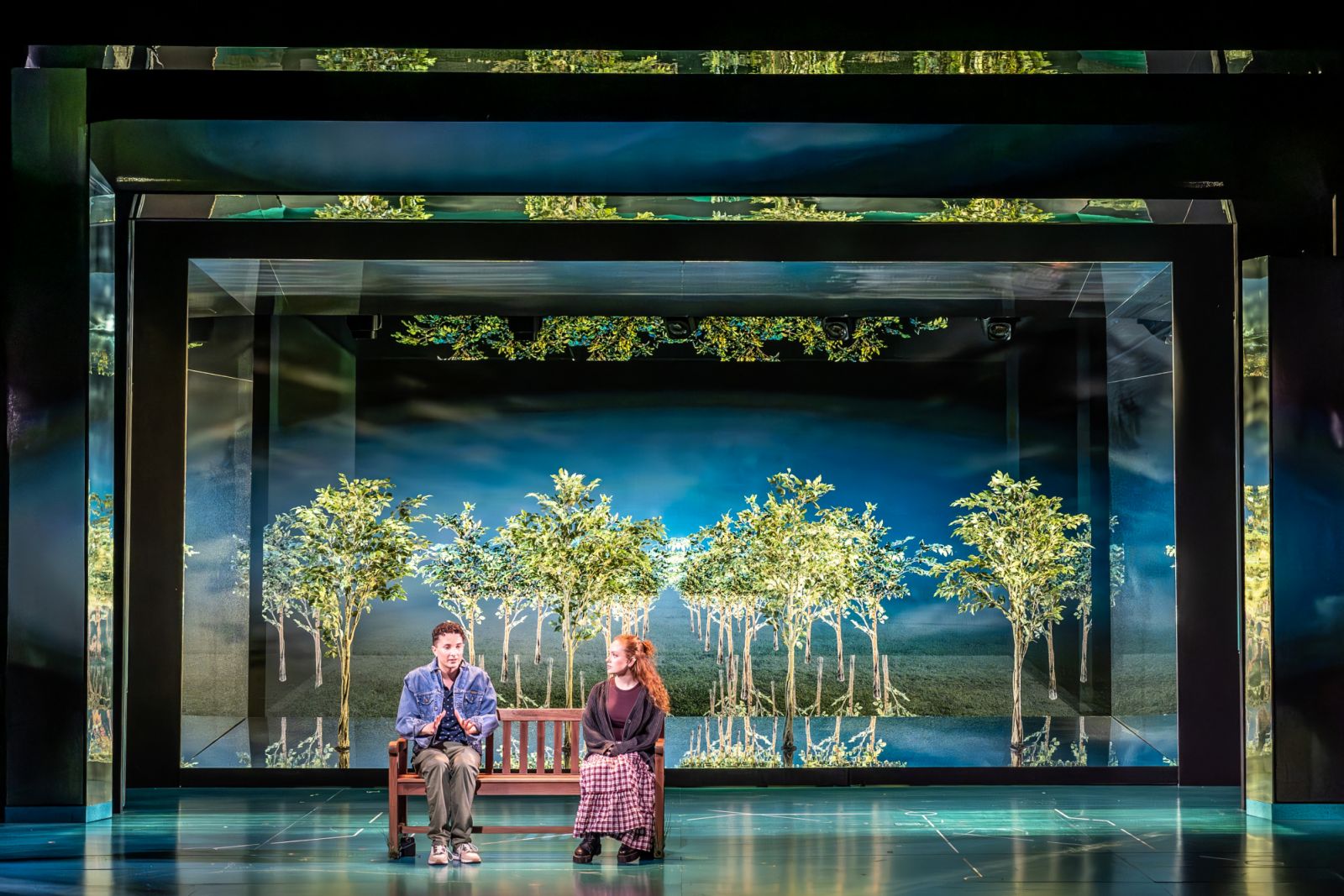
Let's be real for a second. In the chaotic, lie-filled whirlwind that is Dear Evan Hansen, almost everyone is messily human. You’ve got Evan spinning a web of deceit that eventually swallows a whole community. You’ve got parents desperately clinging to a version of their son that never actually existed. And then, there’s Zoe Murphy.
Usually, in musical theater, the "love interest" is a bit of a cardboard cutout. A prize to be won. But Zoe? She’s different. She is arguably the most grounded, painfully honest person in the entire show. While everyone else is busy "waving through a window" or trying to be "found," Zoe is just trying to survive the wreckage of a family that was broken long before the curtain even rose.
The Girl Who Refused to Lie
When we first meet Zoe Murphy, she’s not exactly a ray of sunshine. And honestly? She shouldn’t be. Her brother, Connor, wasn’t just a "troubled kid" to her. He was scary. He was often abusive. In the song "Requiem," which is probably one of the most honest depictions of complicated grief ever put on a Broadway stage, she flat-out refuses to play the role of the grieving sister.
"Why should I play the grieving girl and lie, saying that I miss you and that my world has gone dark without your light?"
That’s a heavy line. It’s radical, too. Society tells us that when someone dies, we have to canonize them. We have to forget the bad stuff and turn them into a saint. Zoe doesn't buy it. She remembers the reality of living in a house with someone who made her feel unsafe. She won't give him a "requiem" just because it’s the polite thing to do. This honesty is what makes her character so vital to the story. Without Zoe, the show might actually lean into the "fake it till you make it" vibe that Evan is accidentally promoting. She is the friction.
Why the Relationship with Evan is... Complicated
We have to talk about the romance. It’s the part of the show that makes some people cringe and others cry. Evan has been obsessed with Zoe from afar for a long time. When he starts lying about being Connor’s secret best friend, he’s basically using her dead brother to get close to her.
It’s kind of a lot.
In "If I Could Tell Her," Evan tells Zoe all the things Connor "said" about her—how her smile is "subtle and perfect and real." The irony is that Evan is actually describing his own feelings, but he’s hiding behind a dead guy’s ghost to say it. For Zoe, this is a lifeline. She finally feels seen by a brother she thought hated her. It’s why her eventual heartbreak is so much worse than her parents' heartbreak. They lost a son they didn't understand; she lost a version of a brother she was finally starting to love.
The Evolution of Zoe Across Different Media
If you’ve only seen the movie or only heard the cast recording, you might have a slightly different view of who Zoe is.
- The Broadway Original: Laura Dreyfuss originated the role with this perfect mix of cynicism and vulnerability. She felt like a real high schooler—someone who used sarcasm as a shield.
- The Movie Version: Kaitlyn Dever took a more somber, grounded approach. The film adds a bit more weight to the family's isolation.
- The Book: The novelization by Val Emmich actually gives us a bit more of Zoe's internal monologue, specifically her passion for the guitar and her "jazz band" life, which provides her an escape from the Murphy household.
Regardless of the version, Zoe’s ending is what sticks. A year after the truth comes out, she meets Evan at the apple orchard. She doesn’t take him back. She doesn’t scream at him either. She just acknowledges that the lie, as messed up as it was, gave her parents something they needed to survive. She’s the one who provides the closure, showing a level of maturity that Evan is only just beginning to grasp.
Key Takeaways for Understanding Zoe’s Impact
If you're analyzing the show for a class or just obsessed with the soundtrack, keep these points in mind:
- She represents the victim's perspective: While the show focuses on mental health through Evan and Connor, Zoe represents those left in the wake of someone else's chaos.
- Her "Jazz Band" is symbolic: It’s her own world. It’s something that doesn't belong to Connor or her parents.
- Forgiveness vs. Reconciliation: Zoe forgives Evan so she can move on, not so they can be together. That’s a huge distinction.
What to do next
If you want to understand the character deeper, go back and listen to "Only Us" followed immediately by "Words Fail." Notice the shift. One is about the hope of a relationship built on (what she thinks is) truth, and the other is the total disintegration of that hope. It's also worth checking out the cut song "Hiding in Your Hands" from the early workshops; it gives a lot of insight into how much Zoe felt she had to mask her own personality just to keep the peace at home.
Understanding Zoe Murphy isn't just about knowing the "love interest." It's about recognizing that in a story full of people pretending to be something else, she was the only one brave enough to be exactly who she was—even when it was uncomfortable.