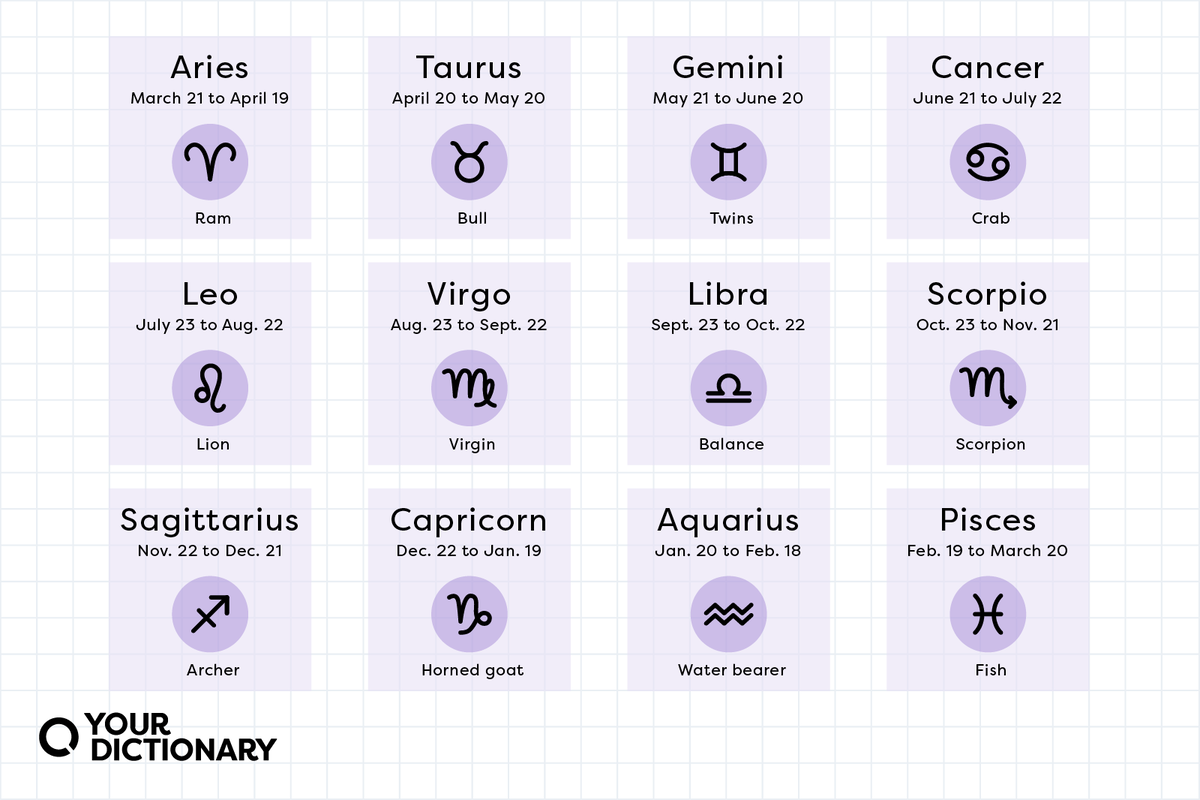
You've probably seen them a thousand times. Those glossy, neon-soaked illustrations of a girl with jugs of water or a muscular dude with goat horns that pop up on your Instagram feed every time Mercury goes into retrograde. People love zodiac star signs images because they give a face to the abstract chaos of our personalities. But here’s the thing—most of the art we consume today is actually a massive departure from the historical and astronomical reality of the constellations they represent.
It’s kind of wild when you think about it.
We use these visuals to define our identities, yet the "aesthetic" version of a Scorpio often looks more like a Marvel villain than the actual constellation Scorpius. If you look at the night sky, you aren't seeing a high-definition rendering. You're seeing a connect-the-dots puzzle that barely resembles its namesake.
The Evolution of Zodiac Star Signs Images from Stone to Screen
The way we visualize the zodiac didn't start with digital artists on DeviantArt. It started in Mesopotamia. The Babylonians were the ones who really solidified the zodiacal system around the 5th century BC. Back then, zodiac star signs images weren't meant to be pretty. They were functional maps.
Take the Dendera Zodiac from Egypt, for example. This is a massive sandstone bas-relief from the Hathor temple, dating back to about 50 BC. It’s one of the most important archeological finds for astrology. If you look at it, the figures aren't "cute." They are complex, mythological hybrids. The imagery was a blend of Babylonian constellations and Egyptian decans. It wasn't about "vibes." It was about the precise movement of the heavens as a calendar for the Nile's flooding.
Fast forward to the medieval period. You get these incredibly intricate manuscripts like the Book of Felicity or the works of Abū Maʿshar. The art changed. It became more about the "humors" and the elements. A Leo wasn't just a lion; it was a symbol of fire and "choleric" temperament. The colors used in these early zodiac star signs images were symbolic—reds for fire signs, blues for water.
Then the Renaissance hit. Suddenly, the zodiac became an excuse for artists to show off their grasp of human anatomy. Go look at the Sala dei Venti in Mantua. The frescoes there turn the zodiac into a high-stakes drama. It's theatrical. It's grand. It’s also where we started to see the Western "look" of the zodiac become standardized. We moved away from the literal stars and toward the Greco-Roman myths associated with them.
Why Modern Digital Art Often Misses the Point
Nowadays, if you search for zodiac star signs images, you’re hit with a wall of AI-generated portraits or "minimalist" line art. Don't get me wrong, some of it is gorgeous. But there's a disconnect.
Most modern imagery ignores the actual "bounds" of the constellations. Did you know that the sun stays in the constellation of Scorpius for only about a week, but spends nearly three weeks in Ophiuchus? Yet, you'll almost never find Ophiuchus in a standard set of zodiac images. We crave symmetry. We want 12 clean slices of the pie, so our art reflects that desire for order rather than the messy reality of the cosmos.
Artists today focus heavily on the "Sun Sign" aesthetic.
- Aries is always "The Warrior," heavy on the horns and red war paint.
- Virgo is almost always a young woman with wheat, looking vaguely like a harvest goddess.
- Pisces is usually two fish swimming in a circle, a direct nod to the Yin and Yang concept, even though the original myth of Aphrodite and Eros tying themselves together to escape Typhon is way more intense.
This focus on character-driven art makes the zodiac feel like a cast of superheroes. It’s effective for branding. It’s great for selling enamel pins and t-shirts. But it strips away the astronomical context. When we look at zodiac star signs images, we should probably be looking for the stars themselves once in a while.
The Astronomical Reality vs. The Artistic Interpretation
If you actually go out with a telescope, you’ll realize the "images" we’ve assigned to these stars are a bit of a stretch. The Greeks were basically the original "clouds that look like bunnies" people.
- Cancer the Crab: It’s basically a faint "Y" shape upside down. There is nothing about those stars that screams "crustacean." But the myth of the crab sent by Hera to nip at Hercules’ heels gave it its form.
- Libra the Scales: This is the only zodiac sign that is an inanimate object. It used to be considered the "claws" of the scorpion (Scorpio). It only became the scales later because the sun was in that part of the sky during the autumn equinox—when day and night are of equal "weight."
- Capricornus the Sea-Goat: This one is my favorite because the art is always so cool, but the constellation looks like a giant celestial bikini bottom. Honestly. It’s a triangle.
When you compare a 17th-century star chart by Johannes Hevelius to a modern 3D render, you see the shift in human priority. Hevelius was trying to be scientifically accurate while maintaining the mythic figure. Modern art is trying to evoke a feeling.
How to Find "High Quality" Zodiac Imagery
If you’re a designer or just someone obsessed with astrology, you’ve probably realized that most stock photo sites are filled with the same repetitive junk. If you want authentic zodiac star signs images that actually carry some weight, you have to look in specific places.
First, check the Public Domain Review. They often curate old astrological charts from the 16th and 17th centuries that are breathtaking. They have a depth of texture that digital brushes just can't mimic.
Second, look at the work of professional astronomical illustrators. People like Wil Tirion. His maps don't give the signs human faces, but they show the "beauty of the math."
Third, if you’re into the psychological side, look at the "Carl Jung" style of archetypal imagery. Jung was fascinated by the zodiac as a collective unconscious map. The art associated with Jungian astrology is often more abstract and surreal, focusing on the "shadow" side of the signs. It’s not just a pretty Taurus; it’s a representation of stubbornness and earthly grounding.
The Impact of AI on Astrological Visuals
We have to talk about the elephant in the room. AI has flooded the market with zodiac star signs images. You've seen them—the hyper-realistic women with constellations glowing on their foreheads.
While these are visually stunning, they tend to homogenize the signs. Every Leo looks like a fierce queen with a mane of gold. Every Scorpio looks "edgy" and dark. We’re losing the nuance. Astrology is supposed to be about the complexity of the human experience. When the art becomes a stereotype, the interpretation of the sign often follows suit.
Real expertise in astrology involves understanding that a "sign" isn't just a picture; it’s a set of "dignities" and "debilities." A planet in a sign changes how that sign "looks." A "Mars in Libra" image should look very different from a "Venus in Libra" image. Most generic zodiac star signs images don't account for this. They just give you the base model.
Practical Ways to Use Zodiac Images in 2026
If you're using these images for a project—maybe a blog, an app, or just personal decor—don't just grab the first thing you see on a search engine.
- Check the source: Is it a historical recreation or a modern interpretation?
- Look for the stars: Does the image actually include the correct constellation placement?
- Color Theory: Ensure the colors align with the classical elements (Fire=Red/Orange, Earth=Green/Brown, Air=Yellow/Blue, Water=Blue/Indigo).
Most people don't realize that the colors assigned to the zodiac aren't random. They are based on the "triplicities." If you find a "Water sign" image that is bright red and orange, it’s going to feel "off" to anyone who actually knows their stuff.
Moving Beyond the Stereotype
The most interesting zodiac star signs images are the ones that break the mold. There is a growing movement of "Indigenous Astrology" art that reclaims the stars. Different cultures saw different shapes. To some cultures in South America, what we call the "Milky Way" was a celestial river or a giant emu.
When you limit yourself to the standard Western zodiac images, you’re looking at only one slice of human history. Exploring how different cultures visualized the same stars can give you a much deeper appreciation for why we look at the sky in the first place.
Basically, the zodiac is a mirror. We’ve been painting our own faces on the stars for millennia. Whether it’s a Babylonian clay tablet or a 4K digital render, the goal is the same: trying to find some sort of meaning in the infinite.
Actionable Steps for Exploring Zodiac Visuals
- Visit the NASA Image Archive: Search for specific constellations like "Orion" or "Pleiades" to see what the stars actually look like through the Hubble or James Webb telescopes. Compare these to your favorite zodiac art.
- Audit your "Aesthetic": If you're a designer, try creating a zodiac series based on the planetary ruler rather than the sign itself. For example, draw "Aries" through the lens of Mars—focusing on iron, energy, and survival rather than just a ram's head.
- Support Human Artists: In an era of AI-generated content, seek out illustrators who specialize in "Esoteric Art." Their work usually contains hidden symbolism—like the correct alchemical symbols for the planets—that AI usually scrambles or ignores.
- Study the "Decans": Each 30-degree slice of a zodiac sign is further divided into three 10-degree "decans." There is a whole world of "Decanic Art" (like the images in the Picatrix) that provides a much more specific and "gritty" visual representation of the zodiac than the standard 12 signs.
The next time you scroll through zodiac star signs images, look past the "pretty" factor. Look for the geometry. Look for the history. The stars have been there for billions of years; the least we can do is try to see them for what they really are.
Expert Insight: Remember that the "Zodiac" is technically a belt of space extending about 8 degrees north or south of the ecliptic. Any image that places a zodiac sign significantly outside this path is artistically licensed but astronomically incorrect. For true accuracy, the ecliptic line should always be the "spine" of your zodiacal compositions.