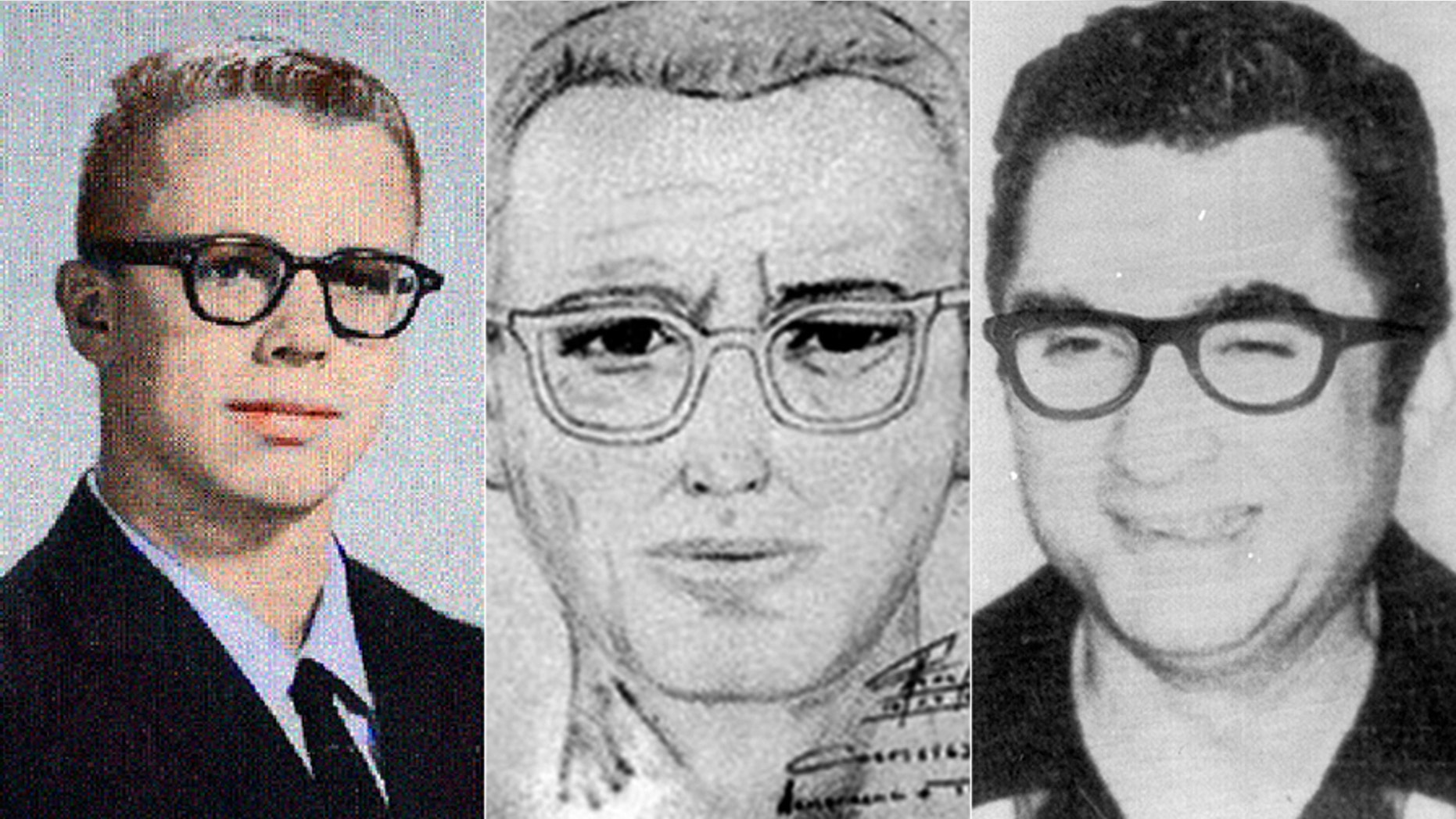
The fog hasn't lifted. Decades later, the mention of Zodiac killer knife DNA results still makes true crime junkies lean in, hoping for that one "CSI moment" where a name finally pops up on a screen. We want that closure. We want the ghost to finally have a face. But the reality of the 1969 Lake Berryessa attack—and the physical evidence left behind—is way messier than the headlines usually admit.
Bryan Hartnell survived. Cecelia Shepard didn't.
That day in September '69 remains one of the most chilling chapters because it was the only time the killer wore that bizarre, hooded executioner’s costume in broad daylight. He used a knife. He tied them up with pre-cut lengths of plastic clothesline. He even took the time to write on the door of Hartnell’s Karmann Ghia. Logic suggests that if you’re handling rope, unsheathing a blade, and leaning over a car door to write, you're leaving something behind. Skin cells. Sweat. Maybe a stray hair caught in the wind.
But 1969 wasn't 2026.
The Lake Berryessa Evidence and the DNA Problem
The primary reason we haven't seen a definitive break regarding Zodiac killer knife DNA results comes down to how the evidence was handled before DNA was even a "thing" in forensics. When the Napa County Sheriff's Office processed the scene, they weren't thinking about touch DNA. They were looking for fingerprints. They were looking for physical footprints (those famous Wing Walkers).
The knife itself? The killer took it with him.
He didn't just drop the murder weapon at the scene like a movie villain. He cleaned it, or at least stowed it, and drove away. What investigators actually have are the "secondary" items. We're talking about the plastic clothesline used to bind the victims and the car door. For years, the hope has been that technology would eventually get sensitive enough to pull a profile from the knots in that rope.
Think about it. Tying a knot requires friction. Friction sheds skin. If the Zodiac wasn't wearing gloves under those big mitts he reportedly had on, he would have left a goldmine of biological material. Even if he was wearing gloves, there's the "perspiration soak-through" factor.
Why traditional testing failed
In the early 2000s, there was a surge of optimism. The San Francisco Police Department (SFPD) tried to pull DNA from the envelopes and stamps of the Zodiac letters. They found something, but it was a partial profile. It didn't match Arthur Leigh Allen, the most famous suspect. That was a huge blow to the "Leigh Allen did it" camp, but it didn't prove his innocence either, because the DNA might have belonged to a postal worker or a curious lab tech from the 70s.
Contamination is the monster under the bed here.
When it comes to the Lake Berryessa evidence specifically, the items were handled by dozens of people over fifty years. Back in the day, detectives would pass evidence around the office. They’d touch things with bare hands. They’d smoke over them. This creates a "DNA soup" that makes it almost impossible to isolate a single, clean profile belonging to a killer from over half a century ago.
The 2018 Genetic Genealogy Revolution
Everything changed when they caught the Golden State Killer.
When Joseph James DeAngelo was identified via Investigative Genetic Genealogy (IGG), every cold case unit in California—and the world—started looking at their evidence lockers with new eyes. The Napa County Sheriff’s Office and the Vallejo Police Department haven't been sitting on their hands. They’ve been working with private labs, trying to see if the Zodiac killer knife DNA results or letter DNA could finally be uploaded to databases like GEDmatch or FamilyTreeDNA.
Honestly, it’s a race against time.
The DNA is degrading. Every time you "run" a sample, you use some of it up. It’s a finite resource. If you have a tiny amount of degraded material from a piece of rope found at Berryessa, you only get a few shots at sequencing it. If you fail, that evidence is gone forever. This is why investigators are so secretive. They aren't going to announce a "maybe." They are waiting for a "definitively."
The Paul Doerr Theory and New Lead Pressure
Lately, names like Paul Doerr have cropped up, largely due to the work of researchers like Paul Haynes. Doerr had the right interests (knifemaking, Zine culture, LARPing-adjacent hobbies) and lived in the right area. But without a direct link to the Zodiac killer knife DNA results or the letters, it’s all just really compelling circumstantial evidence.
The pressure on the labs is immense.
We are currently seeing a shift toward "M-Vac" systems—basically a high-tech vacuum that sucks DNA out of porous surfaces like fabric or rope—and "SNP" (Single Nucleotide Polymorphism) testing. These methods are way more robust than the old STR (Short Tandem Repeat) testing used in the 90s. If there is a single, viable cell from the Zodiac on that Berryessa rope, 2026 technology is the best chance we’ve ever had to find it.
What Most People Get Wrong About the "Knife DNA"
You’ll often see headlines screaming that "DNA has cleared" a certain suspect. Take that with a massive grain of salt.
- Partial Profiles: If the lab only gets 3 or 4 markers, it’s not enough to identify someone. It’s only enough to exclude them if their DNA is wildly different.
- The "Stamp" Fallacy: Just because DNA was found on a stamp doesn't mean it’s the killer's. He could have had someone else mail the letters, or the DNA could be from the person who sold him the stamps.
- The Berryessa Costume: The killer wore a heavy bib/tunic. This actually limited the amount of DNA he would have left behind compared to a struggle in normal street clothes.
Basically, the "knife DNA" isn't actually from the knife. It's from the surrounding crime scene artifacts. The distinction matters because the "chain of custody" for a car door or a piece of rope is much harder to maintain than a weapon sealed in a bag.
Current Status of the Investigation
The case is technically still open. The SFPD, Vallejo PD, and Napa County Sheriff still have active files. In recent years, several labs have been rumored to be working on the samples, including Sorenson Forensics and others specializing in highly degraded samples.
They are looking for a "long string" of DNA. If they can get a profile that is at least 30% to 50% complete, they can build a family tree. They don't need the Zodiac’s DNA in the system; they just need his second cousin’s DNA to be in there. From there, they build the tree down until they find a male relative who was in the Bay Area in 1969.
It worked for the Golden State Killer. It worked for the NorCal Rapist. It can work here, provided the material hasn't rotted away.
Why We Haven't Heard an Update
It’s frustrating.
Law enforcement is notoriously tight-lipped because the Zodiac case is the "Holy Grail" of true crime. If they make a mistake, it’s a global embarrassment. If they find a match, they need to make sure they can build a prosecution (even if the suspect is dead) that holds up to public scrutiny.
There's also the "publicity" problem. Every time a new DNA technique is announced, the police get flooded with thousands of "tips" from people who are sure their Uncle Bob was the guy. This creates a backlog that actually slows down the real science.
Actionable Next Steps for True Crime Researchers
If you’re following the Zodiac killer knife DNA results closely, don't just wait for the evening news. The real information usually leaks out through specific channels first.
- Monitor the Napa County Cold Case Logs: This is where the Berryessa evidence (the knife-related crime) is officially held. Updates often appear in sheriff's department press releases before they hit national news.
- Follow the "Zodiac Killer Facts" Community: Dedicated researchers like Michael Butterfield or Tom Voigt often have better sources within the police departments than the major networks.
- Study the "Paul Doerr" Research: While not DNA-based, the circumstantial case for Doerr is the most significant new lead in a decade. It provides a framework for what a "match" might look like.
- Look into Othram and Parabon Nanolabs: These are the private companies doing the heavy lifting for genetic genealogy. They occasionally release "case cleared" reports that don't always mention the name "Zodiac" immediately but reference 1960s Bay Area cold cases.
The reality is that we are closer than we’ve ever been. The technology has finally caught up to the killer's arrogance. He thought he was invisible because he wore a mask, but he couldn't hide his biology. Whether it's from the knots of a rope or the back of a stamp, the clock is ticking on the most famous unidentified serial killer in American history.
Stay skeptical of "breakthrough" headlines that don't cite a specific law enforcement agency. True forensic results won't come from a blog; they'll come from a podium at a press conference in Northern California. Until then, we wait for the science to finish what the detectives started in 1969.
Practical Research Tip: If you want to dive into the technical side of how they extract DNA from old evidence like the Berryessa ropes, look up "Vacuum-based forensic DNA collection" (M-Vac). It explains why we can now find DNA on items that were previously considered "dead" by 1990s standards. This technology is currently the best hope for a final resolution in the Zodiac case.