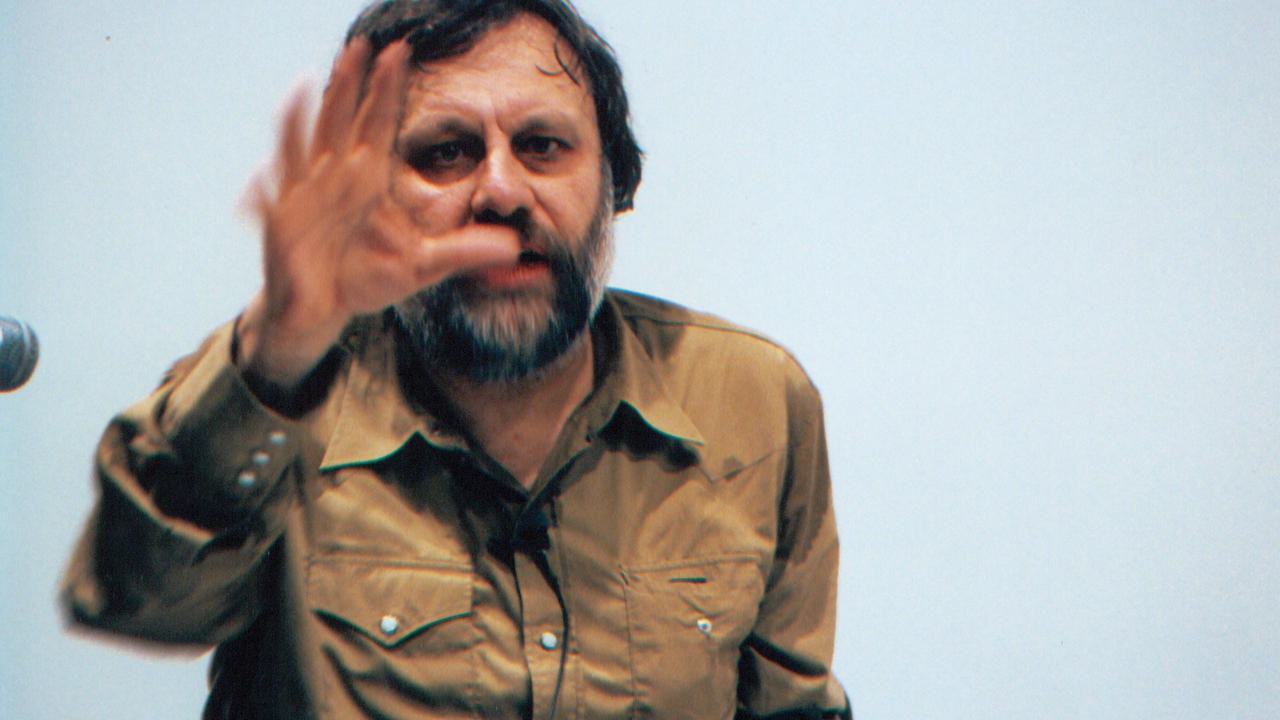
Slavoj Žižek is kind of a lot. If you've ever seen a video of the Slovenian philosopher, you know the deal: the constant sniffing, the t-shirt tugging, the thick accent, and the wild tangents about kung fu movies or toilet design. But beneath the "Elvis of cultural theory" persona, there is a very sharp, very grumpy core that doesn't just want to entertain you. He wants to ruin your dinner. Specifically, he wants to ruin the way you think about being a "good person" in a broken world.
In his 2009 book, First as Tragedy, Then as Farce, Žižek took a sledgehammer to the global consensus that followed the 2008 financial meltdown. The title is a riff on Karl Marx, who was himself riffing on Hegel. Marx famously said that history repeats itself: the first time as tragedy, the second time as farce. For Žižek, the "tragedy" was 9/11—the moment the liberal-democratic utopia of the 1990s died in a cloud of smoke. The "farce" was the 2008 bank bailouts.
Think about that for a second.
We were told for decades that the market was a natural force, like the weather. You can’t control the rain, and you can’t control the market. But then, when the big banks started to sink, suddenly the "invisible hand" found a remote control. Billions of dollars appeared out of nowhere to save the very people who broke the machine. That's the farce. It’s the moment the mask slips and you realize the rules only apply to you, not the people running the game.
It’s Ideology, Stupid
Most people think ideology is something "other" people have. You know, like fundamentalists or hardcore extremists. We think we’re just being "rational" or "pragmatic." Žižek says that’s the biggest lie of all. Honestly, the most powerful ideology is the one that convinces you it doesn't exist.
He uses this great example about Starbucks. You’re walking down the street, feeling a bit guilty about global poverty. So, you buy a cup of "Ethical" coffee. The label tells you that a portion of the price goes to a farmer in Guatemala or helps save a rainforest. You feel better. You’ve "bought" your redemption.
But Žižek argues this is actually worse than doing nothing.
Why? Because the act of "ethical consumption" allows you to keep participating in the system that caused the poverty in the first place. You aren't changing the world; you’re just paying a tax to stop feeling bad about it. It’s what he calls "cultural capitalism." It turns your sense of empathy into a product. It's basically like buying a carbon offset for your soul.
The Charity Trap
He gets really spicy when it comes to figures like George Soros or Bill Gates. He doesn't doubt they’re "honest guys" in a personal sense. But he points out a weird paradox: they’re repairing with the right hand what they ruined with the left.
- You use a brutal economic system to amass billions.
- The system creates massive inequality and suffering.
- You give a fraction of those billions back to "fix" the suffering.
- Everyone calls you a hero.
Žižek quotes Oscar Wilde to make his point here. Wilde argued that the worst slave owners were the ones who were kind to their slaves, because their kindness prevented the slaves from realizing how horrific the system actually was. If the system is broken, "kindness" is just a Band-Aid on a gunshot wound. It keeps the machine running.
The Death of Liberalism (Twice)
The book argues that liberalism died twice in the first decade of the 2000s. First, as a political doctrine after 9/11. We saw the rapid erosion of civil liberties, the rise of the "security state," and the "War on Terror." Suddenly, the "free world" didn't look so free.
The second death was economic. In 2008, the idea of the "self-regulating market" turned out to be a total myth.
What’s left? Žižek thinks we’re living in a weird, post-political era where we’ve lost the ability to even imagine a different way of living. We’re like the characters in a cartoon who have run off a cliff but haven't looked down yet. We keep our legs moving, hoping the gravity of reality won't kick in.
He identifies four "antagonisms" that he thinks will eventually force us to look down:
- The Ecological Crisis: You can’t negotiate with melting ice caps.
- Intellectual Property: The struggle over who owns "the commons" (like DNA, software, or ideas).
- Biogenetics: The terrifying possibility of "designing" humans.
- The Excluded: The growing wall between the people "inside" the system and the "waste" of humanity living in slums or refugee camps.
The last one is the most important for him. You can solve the first three through authoritarian measures—basically, a "green" dictatorship or tech-feudalism. But the gap between the Included and the Excluded? That’s the real ticking time bomb.
Why You Should Care Now
You might be thinking, "This book is over 15 years old. Why does it matter?"
Look around.
The patterns Žižek described haven't gone away; they’ve just become more extreme. We see the same "farce" in the way we handle climate change—rich countries telling the global south to "go green" while they continue to profit from the systems that caused the mess. We see it in the way every social justice movement is immediately turned into a marketing campaign by Nike or Disney.
Basically, we're stuck in a loop. We keep trying to solve the problems of capitalism by using more capitalism.
Žižek doesn't offer a simple 5-step plan to fix the world. He’s actually pretty annoying about that. He famously said, "Don't act. Just think." He believes we’re in such a rush to "do something" (sign a petition, buy the ethical coffee, post a black square on Instagram) that we forget to ask if what we're doing actually matters.
Actionable Insights for the "End Times"
If you want to actually take something away from Žižek's rambling brilliance, stop looking for "feel-good" solutions. Real change is usually uncomfortable. It’s not a lifestyle choice.
- Question "Ethical" Branding: Next time a brand tells you that buying their product is an act of revolution, laugh. It’s not. It’s a transaction. Recognize it for what it is.
- Identify the "Systemic" Violence: Don't just focus on "bad people" doing bad things. Look at the systems that make people act that way. If a bank is corrupt, don't just fire the CEO; look at the laws that make corruption profitable.
- Embrace the "Dead End": Žižek argues that we have to accept that our current path is doomed before we can find a new one. It’s "reverse causality." If you assume the catastrophe is inevitable, you might actually find the courage to do something radical enough to stop it.
- Reclaim the Commons: Support policies and movements that protect things we all share—the environment, healthcare, the internet—from being privatized and sold back to us.
Stop trying to be a "beautiful soul" who stands above the mess. We're all in the trash can. The first step is realizing that the trash can is called ideology, and it tastes like burnt Starbucks.
Next Steps for You
To move beyond the "farce" of modern political discourse, start by auditing your own "pseudo-activity." Track how often you engage in symbolic gestures (like social media posting) versus tangible community building or systemic advocacy. Pick one "commons" issue in your local area—whether it's public park access or municipal internet—and focus your energy there rather than on globalized, "feel-good" consumerism.