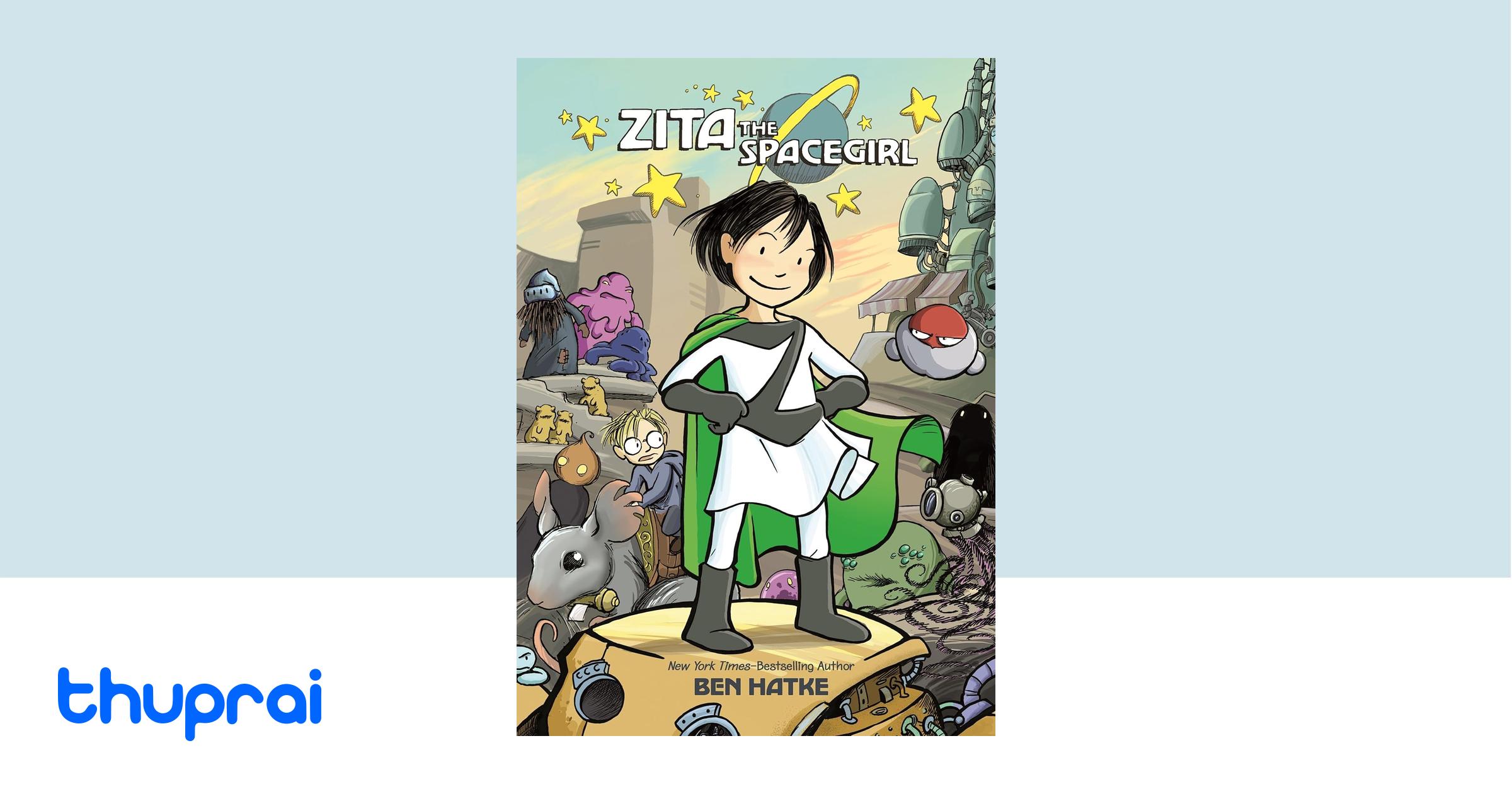
It started with a button. A big, glowing, red button in a crater. Most kids would have probably poked it with a stick or just ran home for dinner. Not Zita. She pushed it.
Honestly, that one impulsive click basically redefined what middle-grade graphic novels could be back in 2011. Zita the Spacegirl didn’t just land on the scene; it crashed through the ceiling of the "damsel in distress" trope and gave us a hero who was terrified, messy, and fiercely loyal.
You’ve probably seen the bright, chunky covers in a library or a Scholastic book fair. Ben Hatke, the mastermind behind the series, managed to create something that feels like a cross between a Hayao Miyazaki film and a Saturday morning cartoon. It’s whimsical. It’s slightly dusty. And it’s surprisingly heavy on the heartstrings.
The Secret Origin Story Most People Miss
Here is a bit of trivia for the superfans: Zita wasn't actually Ben Hatke’s idea. Well, not originally.
The character was actually created by his wife, Anna, back when she was in high school. When they met in college, Ben started adapting the character, tinkering with the design, and eventually moving her from early webcomics and short stories—specifically one in the 2008 Flight Explorer anthology—into the full-blown trilogy we know today.
It’s kinda cool to think that one of the most iconic female leads in modern comics started as a high schooler's sketchbook doodle.
Why Zita the Spacegirl Actually Matters
The plot is straightforward, at least on the surface. Zita’s best friend Joseph gets snatched by an alien doomsday cult after she (oops) teleports him away. She jumps through the portal to save him and ends up on a dying planet full of neurotic robots, giant mice, and humanoid chickens.
But why does it stick with you?
Most "hero" stories are about being the chosen one. Zita isn't chosen. She’s just a girl who feels incredibly guilty for getting her friend into a mess and refuses to leave until she fixes it. That’s the core of the Zita the Spacegirl DNA—it's about the burden of responsibility.
- The World-Building: It’s not "shiny" sci-fi. Everything is a bit broken. The robots have existential crises. The monsters are often just misunderstood people trying to survive a meteor strike.
- The Found Family: One of the best parts is the crew she picks up. You have Piper, who is a bit of a shifty con man, and Mouse, who is... well, a giant mouse that prints out his thoughts on a little ticker-tape machine.
- The Stakes: By the time you get to the third book, The Return of Zita the Spacegirl, the story shifts. It’s not just an adventure anymore; it’s about the cost of being a legend.
What’s Really Happening with the Movie?
If you’ve been scouring the internet for a Zita the Spacegirl movie, you’ve probably seen the headlines from 2016. 20th Century Fox (now under Disney) picked up the rights. Screenwriters Morgan Jurgenson and Alex Ankeles were attached to it.
Then? Silence.
The "development hell" is real. While fans are still clamoring for an animated adaptation, especially since Hatke's art style screams for the big screen, there haven't been major updates in years. It’s one of those projects that feels like it’s just waiting for the right studio to realize it’s a goldmine of Star Wars-meets-Pixar energy.
The Hatke Multiverse
Ben Hatke didn't just stop with Zita. If you haven't read Mighty Jack, you’re missing out on half the story. Eventually, these two worlds collide in Mighty Jack and Zita the Spacegirl. It’s a crossover that actually makes sense because both characters deal with the same thing: being a kid forced to grow up way too fast because the adults aren't around to help.
He’s also got Little Robot, which won an Eisner Award in 2016. It’s nearly wordless but packs an emotional punch that most 500-page novels can't touch.
Practical Steps for New Readers
If you're looking to dive into the world of Zita the Spacegirl or introduce it to a kid, don't just stop at the first book.
- Read the Trilogy in Order: Start with Zita the Spacegirl, move to Legends of Zita the Spacegirl, and finish with The Return of Zita the Spacegirl. The character arc is a slow burn that pays off massively at the end.
- Check out the Webcomics: Some of the early iterations of Zita are still floating around online or in older anthologies. Seeing how much the art evolved from 2008 to the final book is a masterclass in character design.
- Explore the "Mighty Jack" Connection: Once you finish the main trilogy, pick up the Mighty Jack books before hitting the crossover. It makes the reunion in the final volume much more satisfying.
The series is a reminder that being a hero isn't about having superpowers or a cool suit. It's about showing up when you're the only one left who can. Zita might just be a kid with a cape made of a literal rag, but in a galaxy full of monsters, she’s usually the most formidable person in the room.
If you’ve already finished the series, your best bet is to look into Hatke’s more recent work like Things in the Basement or his beautiful picture books like Julia’s House for Lost Creatures. They carry that same DNA of "strange worlds and big hearts" that made Zita a household name in the first place.