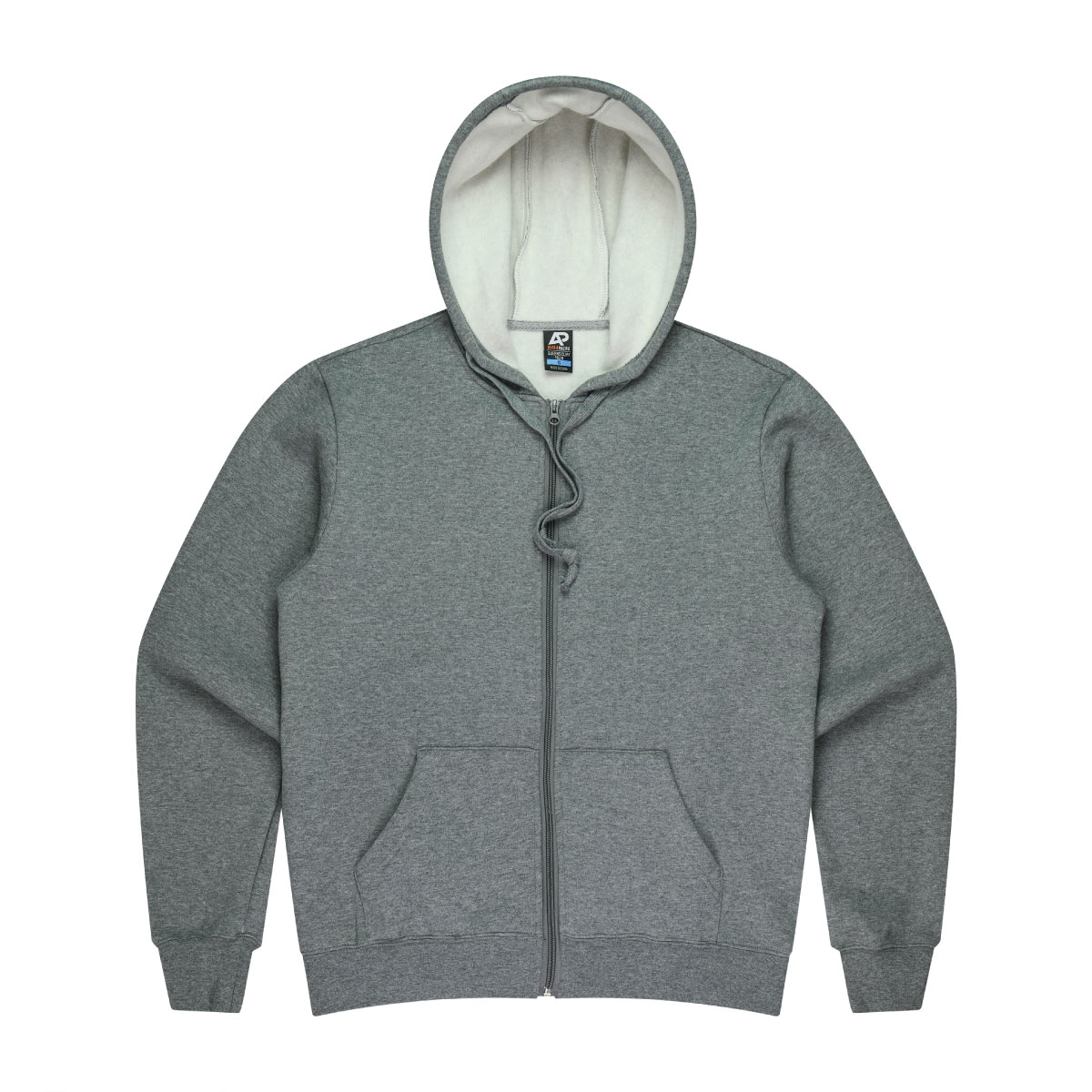
You probably have three or four of them hanging in your closet right now. Maybe one is a gray marl you’ve owned since college, thin at the elbows, smelling faintly of old detergent. Another might be a "performance" tech fleece that makes you sweat the second you stop moving. We treat zippered hoodies for men like the white bread of fashion—essential, ubiquitous, and mostly boring.
But honestly? Most guys are buying them wrong.
The industry is flooded with cheap, fast-fashion garbage that loses its shape after three washes. You know the type. The zipper waves like a coastline, and the hood sits on your head like a floppy, sad pancake. There is a genuine science to why some zip-ups make you look like a put-together adult while others make you look like you’re perpetually on your way to do laundry. It’s about GSM, stitch density, and the specific architecture of the zipper tape.
The Weight Debate: What 400 GSM Actually Feels Like
If you want a hoodie that lasts a decade, you have to talk about weight. In the world of textiles, we measure this in Grams per Square Meter (GSM). Most "mall brand" zippered hoodies for men sit around 200 to 250 GSM. They feel light. They feel... flimsy.
When you jump up to something like a Camber USA or an American Giant Classic Full-Zip, you’re hitting the 400 to 500 GSM range. This isn't just "thick." It’s structural. A high-GSM hoodie acts more like a soft jacket. It hides the lines of your undershirt. It creates a silhouette. It doesn't cling to your midsection in that way we all secretly hate.
But there’s a trade-off.
Heavyweight cotton takes forever to dry. If you’re living in a humid climate, a 500 GSM hoodie is basically a sponge. On the flip side, the lighter stuff—often blended with polyester—wicks moisture better but pills almost instantly. You’ve seen those tiny little balls of fuzz under the armpits? That’s the polyester fibers breaking and tangling. If you want longevity, look for 100% cotton French Terry. It’s looped on the inside, which creates air pockets for insulation without the "shedding" you get from brushed fleece.
The Hardware Problem: Why Your Zipper Waves
Have you ever noticed that weird, curvy "bacon" effect along the zipper line after a few months? That happens because the cotton fabric shrinks in the wash, but the polyester zipper tape does not. The fabric gets shorter, the zipper stays the same length, and suddenly you’re wearing a topographical map.
Premium makers solve this by pre-shrinking the fabric before the zipper is even sewn in. Brands like Iron Heart or Reigning Champ use YKK or RiRi hardware. These aren't just fancy names. YKK’s "Excella" line, for example, features individual teeth that are polished so they don't snag your favorite t-shirt. It sounds like overkill until you’ve had a cheap plastic zipper snap off in your hand while you’re running for a bus.
Honestly, if a brand doesn't specify what kind of zipper they’re using, it’s probably the cheapest one available. That’s a red flag.
How Men Actually Wear Zippered Hoodies (and How Not To)
The zip-up is the ultimate "middle layer." It’s more versatile than a pullover because you can control the temperature.
The Mid-Layer Strategy
Under a denim jacket or a leather biker? Perfect. But the hood needs "stand." If the hood is made of single-layer fabric, it’ll collapse under the weight of the jacket collar. Look for a double-lined hood. It’s literally two layers of fabric sewn together. It has enough heft to sit outside the jacket without looking like a crumpled rag.
The Business Casual Myth
Can you wear zippered hoodies for men to the office? Maybe. But only if you stick to the "Rule of Muted Tones." Navy, Charcoal, and Black. If it has a giant logo across the chest, you’re the tech intern. If it’s a clean, slim-fit merino wool zip-up, you’re the creative director.
Merino is the secret weapon here. Brands like Unbound Merino or Icebreaker use wool that is thinner than human hair. It doesn't itch. It doesn't smell—literally, you can wear it for weeks because the fibers are antimicrobial. It looks more like a sweater than a sweatshirt.
The "Made in USA" vs. Japanese Loopwheel Dilemma
There is a subculture of menswear obsessed with "Loopwheel" machines. These are vintage circular knitting machines—mostly found in Wakayama, Japan—that knit fabric at an incredibly slow pace. We’re talking about one meter of fabric per hour.
Because there’s zero tension on the thread during the process, the resulting hoodie is impossibly soft and will never lose its shape. The Real McCoy’s or Strike Gold produce these. They cost $200 to $300. Is it worth it?
For most guys, no.
But for the guy who wants one hoodie to last twenty years? It’s the only option. The American equivalent is the "10-year hoodie" philosophy. It’s about over-engineering. Triple-needle stitching on the seams so they don't burst when you’re actually moving. Reinforced elbow patches. It’s workwear disguised as leisurewear.
Fit Physics: The Shoulder Seam
Look at your shoulder. If the seam of your hoodie is drooping two inches down your arm, it’s too big. You aren't in a 90s music video. Modern zippered hoodies for men should have a seam that sits right on the edge of the acromion bone.
If you have a broader build, look for a "raglan" sleeve. This is a sleeve that extends in one piece fully to the collar, leaving a diagonal seam from underarm to collarbone. It allows for a much better range of motion. If you’re hitting the gym, raglan sleeves make your shoulders look wider and your waist look narrower. It’s basic geometry.
Maintenance: Stop Killing Your Clothes
The dryer is the enemy.
Heat destroys the elastic fibers (spandex/elastane) that give some hoodies their stretch. If you want your zip-up to stay "crisp," wash it inside out on cold and hang it to dry. If you must use a dryer, use the "air fluff" or lowest heat setting. High heat is why your cuffs eventually get loose and wavy.
And for the love of everything, zip the hoodie up before you throw it in the wash. Those metal teeth act like a saw against the rest of your clothes during the agitation cycle.
Beyond the Basics: Pockets and Cuffs
The "kangaroo pocket" is standard, but check the entry point. Are the pockets reinforced with bartack stitches at the corners? If not, they’ll eventually rip if you habitually keep your hands or a heavy smartphone in there.
Then there are the cuffs. A good rib-knit cuff should have "recovery." It should snap back. If you pull your sleeves up to your elbows and the cuffs stay stretched out like a loose sock, the brand cheaped out on the ribbing. High-quality pieces use a high percentage of Lycra in the cuffs to ensure they stay tight against your wrists, keeping the heat in.
What Really Matters in 2026
Fashion is moving away from the "slim-fit everything" era. We’re seeing a return to "relaxed" but "intentional" silhouettes. This doesn't mean "baggy." It means the fabric drapes instead of clings.
A zippered hoodie is a tool. It’s for that 6:00 AM coffee run, the freezing airplane cabin, or the gym warm-up. But because it’s so functional, we often forget it’s an aesthetic choice. When you choose a hoodie with a brass zipper, a 400 GSM weight, and a structured hood, you aren't just "throwing something on." You’re wearing a piece of engineering.
Actionable Buying Checklist
Instead of just looking at the price tag, run these quick checks:
- The Pinch Test: Pinch the fabric. If it feels like two layers of air, move on. You want density.
- The Zipper Tug: Pull the fabric away from the zipper tape. Is the stitching tight, or can you see the threads straining?
- The Inner Loop: Turn it inside out. Look for "French Terry" loops. They are more durable and breathable than "Brushed Fleece," which eventually mats down and loses its softness.
- The Weight Label: If the website doesn't list the weight (GSM or Oz), email them. If they don't know, they’re just white-labeling cheap blanks.
- The Shoulder Alignment: Try it on. Ensure the seam hits the corner of your shoulder. If it's a raglan sleeve, ensure there’s no "bubbling" of fabric in the armpit.
Investing in one high-quality, heavyweight zip-up is objectively better than buying a new $30 one every single season. It’s better for your wallet and significantly better for the planet. Look for brands that offer a lifetime warranty or repair program—that's the ultimate sign of a manufacturer that actually trusts their own stitching.