You’re standing 600 feet underground. It is cold. The air tastes faintly of brine, a sharp, metallic tang that sits on the back of your tongue. Around you, the walls aren't made of rock or dirt, but of solid, compressed halite—salt crystals formed over 250 million years ago when this entire region was a massive inland sea. This is the Zipaquira Salt Cathedral Bogota Colombia, and honestly, it’s one of those rare "tourist traps" that actually lives up to the Instagram photos.
Most people visit Bogota and stick to the gold museum or the graffiti tours in La Candelaria. Those are great, don't get me wrong. But skipping the trek out to Zipaquira is a mistake. It’s not just a church in a cave. It’s a massive architectural flex, a testament to the grit of Colombian miners, and a bizarrely beautiful intersection of geology and Catholicism.
Getting there is part of the deal. You’ve got to head about 30 miles north of the city. Depending on Bogota’s legendary traffic, that could take an hour or two. You’ll pass through the savanna, watching the urban sprawl give way to rolling green hills and cows.
What Actually Is the Salt Cathedral?
Let's clear something up right away. This isn't the original cathedral. The first one was opened in the 1950s by miners who wanted a place to pray for safety before their shifts. Imagine working in a dark, unstable salt mine with early 20th-century technology. You’d want a little divine intervention too.
Unfortunately, that first version became structurally unsound. Salt moves. It breathes. It shifts. By the early 90s, the old cathedral was shut down, and the current masterpiece was carved out about 200 feet below the original site. They excavated 250,000 tons of salt to make this happen.
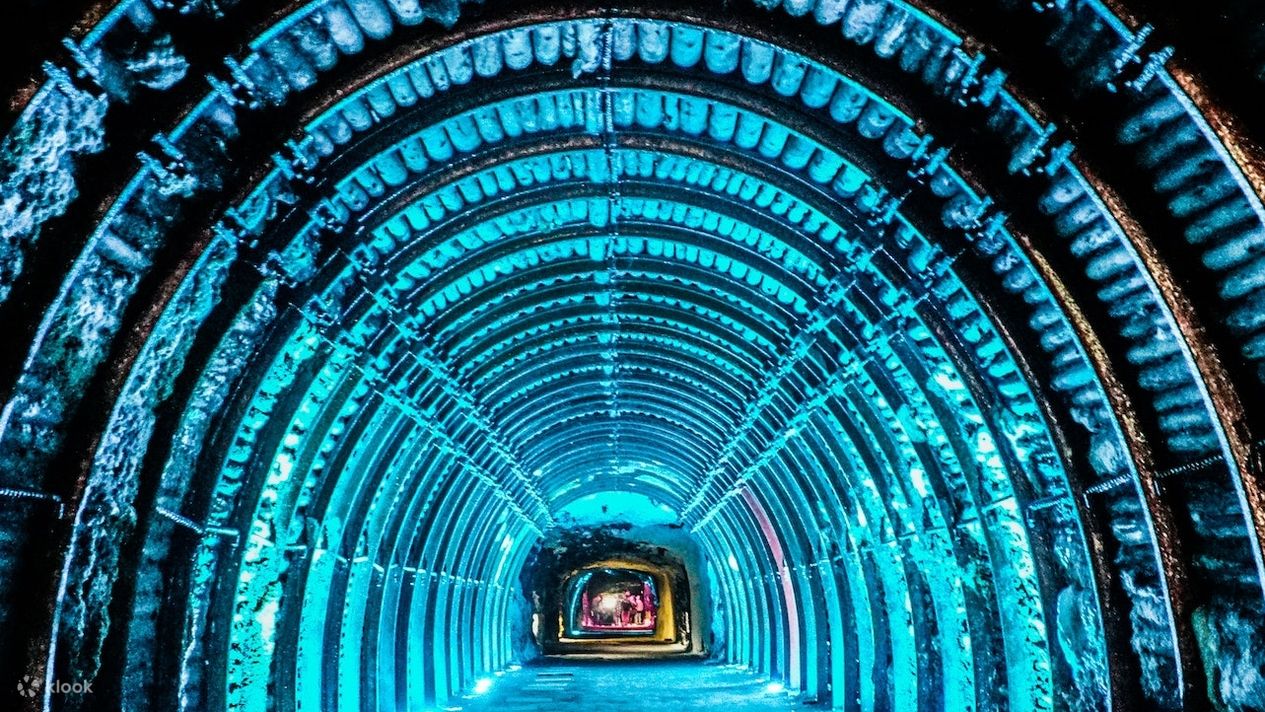
When you walk in, you follow the Stations of the Cross. Each one is a small chapel carved directly into the salt. The lighting is moody—lots of deep blues and purples that make the translucent salt crystals glow. It feels more like a set from a sci-fi movie than a traditional cathedral.
The main nave is the showstopper. It features a massive cross, roughly 50 feet tall, carved into the back wall. Because of the way it's lit, the cross looks like a solid 3D object floating in space, but it’s actually a hollowed-out relief. It’s a clever optical illusion that catches almost everyone off guard.
The Engineering Nobody Talks About
We talk about the "spirituality" of the place, but the engineering is the real hero. Salt is a nightmare to build with. It’s hygroscopic, meaning it absorbs moisture from the air. In a humid country like Colombia, that’s a recipe for structural collapse.
The lead architect, Roswell Garavito Pearl, won a design competition in 1990 to build this thing. He didn't just want a cave; he wanted a "monument to the work of the miners." That's why the textures are so raw. You can see the pickaxe marks. You can see the layers of sediment.
Unlike the Wieliczka Salt Mine in Poland, which is full of intricate, polished statues that look like marble, Zipaquira is brutalist. It’s jagged. It’s heavy. It feels like the earth is leaning on you, which, technically, it is.
How to Get to Zipaquira Without Losing Your Mind
You have three real options for the Zipaquira Salt Cathedral Bogota Colombia trip. Choose wisely based on how much you value your sanity and your wallet.
The Tren Turístico de la Sabana: This is the "classic" way. It’s an old steam train that leaves from the Sabana Station or Usaquén in Bogota. It’s slow. Very slow. But they have live music on board, and they serve snacks. It’s a whole day affair. If you have kids or just want to vibe, do this. If you’re in a rush, avoid it like the plague.
The Public Bus: Head to the Portal del Norte TransMilenio station. Look for the white buses that say "Zipa." It’s cheap—usually less than 10,000 COP. It’s the "local" experience, meaning you might be squeezed in next to someone carrying a bag of potatoes. It’s efficient and runs every few minutes.
Private Driver or Uber: Honestly, if you have a group of three or four, just hire a driver. It’s roughly $40-$60 USD for the day. You get door-to-door service and don't have to navigate the chaos of the bus terminals.
The Town of Zipaquira is Actually Cool
Most people hit the cathedral and then bolt back to Bogota. Don't do that. The town of Zipaquira itself is a preserved colonial gem. The main plaza, Plaza de los Comuneros, is massive and flanked by impressive buildings like the Cathedral of the Holy Trinity.
Grab some postre de natas (a creamy, milk-based dessert) or some cuajada con melao (cheese with sugar syrup) from a street vendor. The food here is heavy, rustic, and incredibly cheap compared to the fancy spots in Bogota’s Zona G.
Practical Tips for Your Visit
Let's talk logistics because being unprepared in a salt mine sucks.
Wear layers. It stays around 57°F (14°C) inside the mine. While it’s not freezing, the dampness makes it feel colder than it is. Once you’re down there for an hour, you’ll be glad you brought a jacket.
Wear grippy shoes. The floor is salt. Sometimes it’s dusty; sometimes it’s slick. It is uneven. This is not the place for your fancy heels or slick-bottomed dress shoes. Sneakers or hiking boots are the way to go.
The "Miner’s Tour" Add-on. When you buy your ticket, they’ll offer a "Miner’s Tour" for an extra fee. You get a hard hat and a headlamp. Is it cheesy? A little. But you get to go into the actual working areas of the mine where tourists usually aren't allowed. You even get to try "mining" a piece of salt yourself. It’s worth the few extra bucks just for the photo op and the context.
Altitude Check. Zipaquira is slightly higher than Bogota, sitting at about 8,700 feet. If you just landed in Colombia yesterday, you might feel winded climbing the stairs back out of the mine. Drink plenty of water and maybe grab some coca tea before you go in.
Misconceptions and Reality Checks
People often call this one of the "Wonders of Colombia." It is. But it’s not a "natural" wonder. Humans carved this. If you go in expecting a natural stalactite-filled cavern, you’ll be disappointed. This is an industrial site turned into art.
Also, be prepared for crowds. On Sundays, this place is packed with Colombian families. It’s a pilgrimage site. If you want that eerie, quiet, spiritual vibe, go on a Tuesday morning.
The lighting can be a bit... much. Some parts have neon LEDs that feel a little like a nightclub. Some people love the modern touch; purists hate it. Just know that it’s not all "ancient stone and candles." It’s a 21st-century tourist attraction.
What to Bring
- Cash: Many small vendors in Zipa don't take cards.
- A Camera with Low-Light Capabilities: Your phone will do okay, but the salt absorbs light. It’s notoriously hard to photograph.
- Water: The salt air can make you surprisingly thirsty.
Actionable Steps for Your Trip
To make the most of the Zipaquira Salt Cathedral Bogota Colombia, follow this specific sequence:
- Book an early morning departure. Aim to leave Bogota by 8:00 AM to beat the worst of the traffic and arrive just as the mine opens.
- Download the audio guide app before you go. The Wi-Fi inside a salt mine is, predictably, non-existent.
- Visit the Salt Museum (Museo de la Sal) located in the park above the cathedral. It gives you the "why" behind the geology, which makes the "what" of the cathedral much more impressive.
- Eat lunch at "La Carreta." It's a local favorite in Zipaquira known for traditional grilled meats and sopa de patacón.
- Check the schedule for the light show. There’s a 3D mapping projection inside the main nave that happens every hour or so. It’s about 15 minutes long and explains the history of the mine in a very flashy way.
The Salt Cathedral is a feat of human will. It’s the result of people working in the dark for centuries and deciding to build something beautiful in the middle of it. Whether you're religious or just a fan of weird architecture, it’s a site that sticks with you long after you've washed the salt dust off your shoes.