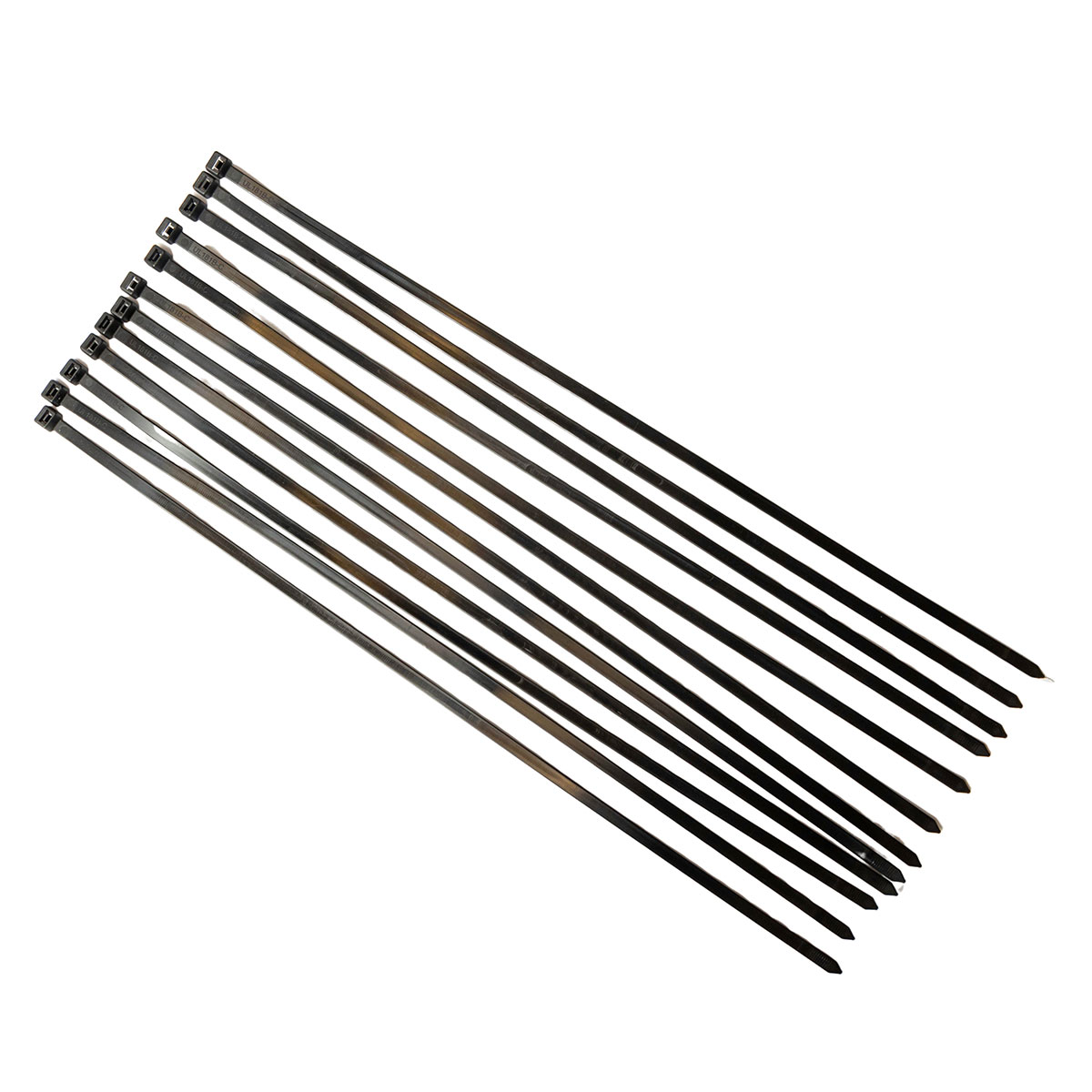
You’ve seen the video. It’s snowing, someone is stuck in a driveway, and they start cinching heavy-duty plastic fasteners around their rims. It looks genius. It's cheap. It's DIY. But honestly, putting zip ties on tires is one of those "life hacks" that usually ends with a call to a tow truck or a very expensive visit to the mechanic. People think they’ve found a loophole to buying expensive snow chains or winter tires, but physics doesn't really care about your TikTok feed.
It's a mess.
Most people searching for this are looking for a quick fix for traction. Maybe you're stuck in a parking lot. Maybe you're worried about a hill. But before you go raiding the toolbox, we need to talk about why this "hack" is almost always a disaster in waiting.
The Viral Myth of DIY Snow Chains
The logic seems sound enough. You wrap a thick plastic strap around the tire tread, and suddenly you have "teeth" to grab the ice. In theory, it mimics the grip of a tire chain or a snow sock. In reality, the stresses placed on a vehicle's wheel assembly are astronomical compared to what a piece of nylon can handle.
Standard zip ties are designed for bundling cables or securing signs. They aren't engineered for the centrifugal force of a spinning 3,000-pound machine. When you accelerate, the tire deforms. It squishes. That plastic strap, which has zero elasticity, either snaps instantly or starts sawing into your tire's sidewall.
I've seen enthusiasts on forums like Reddit’s r/MechanicAdvice show photos of the aftermath. It isn't pretty. Usually, the "teeth" part of the tie—the ratchet mechanism—becomes a projectile. If you're lucky, it hits a snowbank. If you're unlucky, it punctures a brake line or shreds a sensor wire for your ABS.
Why Plastic Fails Where Metal Wins
Steel snow chains work because they are loose enough to shift but strong enough to bite. They have weight. Plastic zip ties are brittle. When the temperature drops below freezing, most standard nylon (Nylon 6/6) becomes incredibly prone to cracking.
Think about it. You’re asking a freezing piece of plastic to survive:
- Constant impact against frozen pavement.
- The heat generated by friction.
- The sheer force of the car's torque.
It’s a recipe for failure. Even the "emergency traction ties" you see advertised on Amazon—the ones that look like orange zip ties on steroids—have a sketchy track record. They are often marketed as a one-time use solution, but "one-time" often means "for about fifty feet."
The Real Danger to Your Brakes and Rims
This is the part the viral videos skip. Look at your wheel. Behind those spokes lies a complex system of brake rotors, calipers, and fluid lines. Most modern cars have very tight clearances between the wheel and the suspension components.
When you loop zip ties on tires, you are running a strap through the gaps in your rim.
- Brake Interference: If the zip tie is too thick or the tail isn't cut perfectly flush, it can strike the brake caliper every time the wheel rotates. Click. Click. Snap. 2. The "Saw" Effect: Dirt and grit get trapped under the plastic. As the wheel spins, the tie vibrates. It acts like sandpaper on your alloy rims, stripping the clear coat and leading to corrosion.
- Electronic Gremlins: Modern cars use wheel speed sensors for traction control. A flailing broken zip tie can snag these wires in a heartbeat. Now you've gone from being "stuck in snow" to "stuck in snow with a Christmas tree of warning lights on your dash."
Are "Traction Zip Ties" Actually Different?
You might be thinking, "But I saw specific orange ones made for cars!"
Yes, brands like ZipGripGo or various generic versions exist. These are technically designed for this purpose, featuring wider straps and molded cleats. They are better than the stuff you buy at Home Depot. Obviously. But they still suffer from the same fundamental flaw: they are temporary.
In a legitimate emergency—say, you’re stuck in a flat driveway and need to move ten feet to get onto a cleared road—they might help. Maybe. But the moment you hit bare pavement, the plastic will disintegrate. Asphalt is basically a giant grater for plastic. If you use these, you have to remove them the second you hit a plowed street. If you don't, you're just throwing money away and risking your wheel liners.
Legal and Insurance Headaches
Here is something nobody mentions. If you live in a state with "Chain Laws," like Colorado or California (specifically in mountain passes like Tahoe), zip ties on tires do not count.
State troopers aren't going to look at your plastic straps and give you a thumbs up. They will turn you around or hand you a hefty fine. Worse, if you get into an accident while using unapproved traction devices, your insurance company might have a field day. They look for any reason to deny a claim, and "unauthorized modification of the contact patch" is a pretty big red flag.
Better Alternatives for Traction
If you're genuinely worried about getting stuck, there are better ways to spend twenty bucks. Honestly, just keeping a small bag of sand or non-clumping kitty litter in the trunk is more effective.
- Traction Mats: These are plastic or metal "ladders" you shove under the tire. They don't stay on the wheel; you just drive over them to get momentum.
- Snow Socks: These are fabric covers that slip over the tire. They're surprisingly effective and won't destroy your brake lines if they tear.
- Traditional Chains: Harder to put on? Yes. But they actually work and stay on.
- Winter Tires: If you live where it snows, just buy the tires. The rubber compound in winter tires stays soft in the cold, whereas "all-season" tires turn into hockey pucks at 40°F.
What to Do if You're Already Stuck
If you're currently staring at your car in a snowbank, skip the zip ties. Dig out around the tires. Turn off your traction control (the "TC" button) just to get the wheels spinning enough to clear the slush, then turn it back on.
Try the "rocking" method. Move forward a bit, let the car roll back, then move forward again. You’re building a little runway. Use your floor mats if you have to—they’ll be ruined, but they're cheaper than a new set of brake lines.
Actionable Steps for Winter Prep
If you want to avoid the temptation of a dangerous DIY fix, get a real kit together.
- Buy a set of Snow Socks: They take up less space than a shoebox and are legal in most areas as a chain alternative.
- Check your clearances: Look behind your wheel. See those wires? Those are your ABS sensors. Remember how close they are before you ever think about putting a plastic strap near them.
- Carry a shovel: A folding camp shovel is more useful than a thousand zip ties.
- Lower your tire pressure (slightly): If you're desperate, dropping your PSI to 20-25 can increase your footprint temporarily. Just remember to pump them back up immediately once you're on a clear road.
Using zip ties on tires is a shortcut that usually leads to a dead end. It’s a "hack" in the worst sense of the word—something that breaks more than it fixes. Keep the zip ties for your holiday lights and keep your tires clear of anything that isn't rated for the road. Best case scenario, they snap and do nothing. Worst case, you're looking at a four-figure repair bill for your suspension and brakes. It just isn't worth the risk.