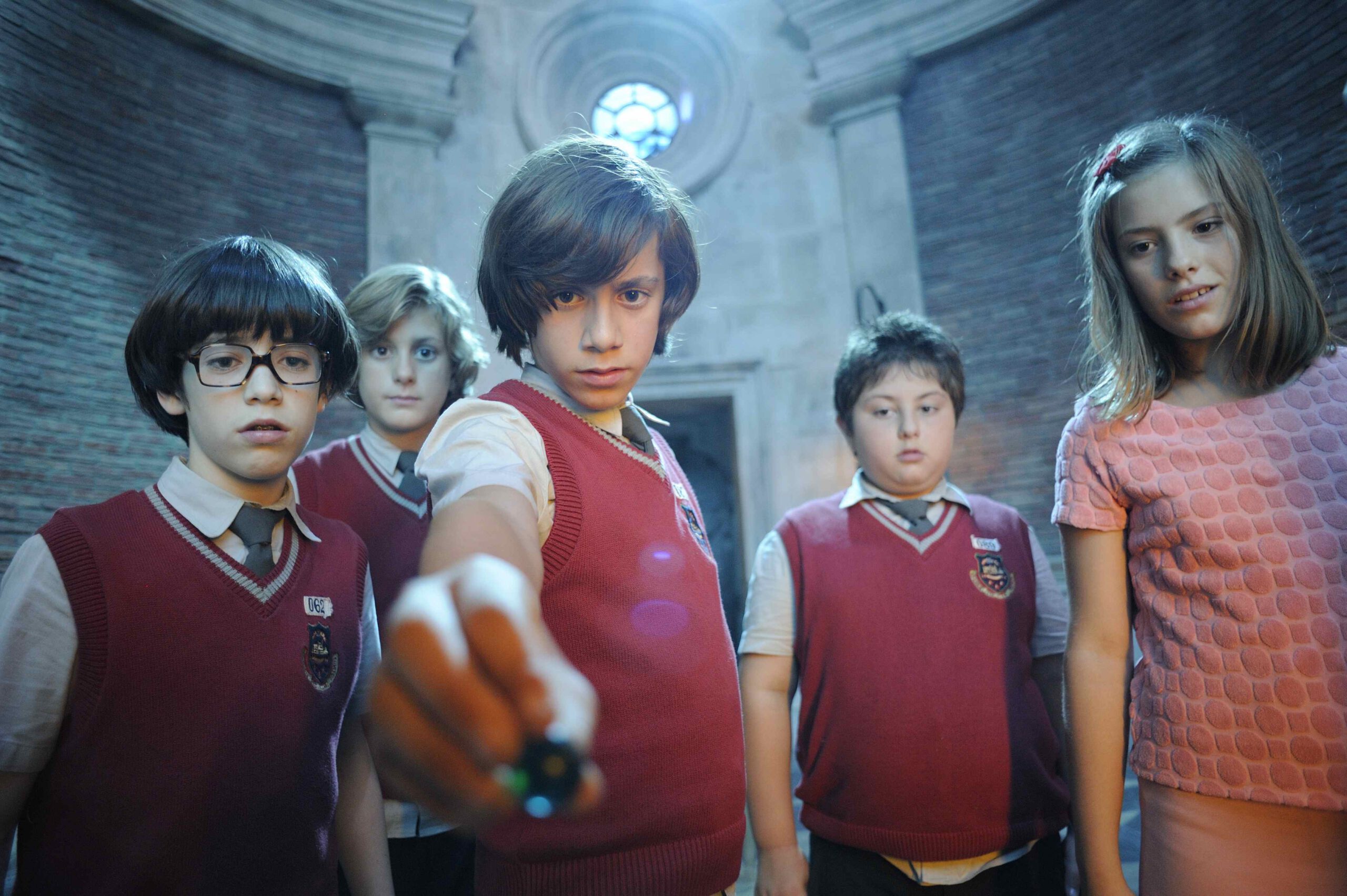
You probably remember the red and black striped sweaters before you remember the actual plot. Honestly, if you grew up anywhere near Spanish culture or just happened to stumble upon the 2013 film Zipi y Zape y el club de la canica, you know exactly the vibe I’m talking about. It's chaotic. It’s nostalgic. It’s basically what happens when you mix a heist movie with a middle-school detention hall. Zip and Zap: The Marble Gang isn't just some random kids' flick; it’s a modern resuscitation of a comic book legacy that dates back to 1947.
José Escobar Saliente created these twins. Zip (Zipi) is the blonde one, usually seen as the slightly more sensible one—if you can even call him that—while Zap (Zape) is the brunette with a penchant for even more immediate trouble. For decades, they were the face of Spanish comics, published by Editorial Bruguera. They were the "Ant-and-Bee" or the "Dennis the Menace" of Spain, but with a sharper, more satirical edge that reflected the era they were born into. When Oskar Santos decided to bring them to the big screen in the early 2010s, people were skeptical. You don't just mess with a national treasure. But he did, and he turned it into a Goonies-esque adventure that actually worked.
The Shift from Panels to the Big Screen
The transition was weird. In the original comics, the boys were basically agents of chaos in a domestic setting. They were always getting "vales" (vouchers) from their dad, Don Pantuflo Zapatilla, a professor of Philology who was obsessed with discipline. The movie, however, threw all that out the window for something much bigger.
Instead of short, episodic gags about failing school or breaking windows, the film sends the brothers to Esperanza. It sounds like a nice place, right? "Hope." Wrong. It’s a summer school that’s basically a high-security prison for kids where fun is literally against the law. This is where the Marble Gang comes in. It’s not just a cute name. It’s a resistance movement.
I think what makes this specific adaptation stand out is that it didn't try to be a shot-for-shot remake of the comic strips. That would have been boring. Instead, it leaned into the "Amblenesque" style of filmmaking. You’ve got the dark hallways, the secret maps, the grumpy headmaster with an eye patch (Falconetti), and a mystery involving a hidden treasure. It’s a classic trope, sure, but it felt fresh because the chemistry between Raúl Rivas and Daniel Cerezo—the kids playing Zip and Zap—was actually believable. They felt like brothers who genuinely annoyed each other but would jump off a cliff for one another.
Why the Marble Gang Matters More Than You Think
Let’s talk about the "Gang" part. It wasn't just the twins. You had Filo, the smart kid who’s basically the walking encyclopedia of the group. Then there’s Micro, the small kid with skills, and Matilde, the niece of the headmaster who provides the necessary inside intel.
The marble is the symbol.
In a school where toys are confiscated and laughter is punished, a simple marble becomes a weapon of defiance. It’s a bit on the nose, yeah, but for a kid watching this, the stakes feel massive. The film taps into that universal childhood fear: the loss of autonomy. When Falconetti forbids "all forms of entertainment," he’s not just being a movie villain. He’s the personification of every boring, soul-crushing rule we all hated at age eleven.
Breaking Down the Visual Language
The cinematography in Zip and Zap: The Marble Gang is surprisingly sophisticated for a "kids' movie."
Josu Inchaústegui, the DP, used a palette that shifts from the drab, oppressive greys of the school’s exterior to the warm, amber glows of the secret tunnels. It looks expensive. It feels like an adventure. When the kids are navigating the "Hearth of the Diamond" or solving the puzzles left behind by the school's founder, the lighting mimics those old 80s adventure films we all love. It’s a visual love letter to Spielberg, but with a distinctly European flavor.
One thing people often overlook is the music. Fernando Velázquez, who did the score for The Orphanage, brought a level of orchestral grandiosity to a story about two kids in striped sweaters. It makes the small moments feel epic. When they finally find the secret chamber, the music tells you this isn't just a prank—it’s a discovery that changes their lives.
The Comic Legacy vs. The Movie Reality
If you talk to a purist who grew up reading Escobar’s comics in the 60s or 70s, they might complain. The movie Zip and Zap are much more "heroic" than their comic counterparts. In the books, they weren't necessarily trying to save the day; they were just trying to exist without getting grounded.
The original comics were a reflection of post-war Spain—stiff, traditional, and a bit repressive. The boys were a release valve for that tension. The movie, being a product of 2013, focuses more on teamwork and "found family." It’s a necessary evolution. A modern audience wouldn't connect with a 90-minute film about two kids getting spanked with a slipper for failing math. We want the mystery. We want the secret society.
Impact on the Spanish Film Industry
Believe it or not, this movie was a massive hit. It was the highest-grossing Spanish film of 2013. That’s a big deal. It proved that Spain could produce high-quality, big-budget family adventures that could compete with Hollywood imports. It paved the way for the sequel, Zip & Zap and the Captain's Island, though many argue the first one has more soul.
It also launched the careers of the young actors. While child stars often vanish, the "Zip and Zap" kids became household names in Spain for a solid few years. The film’s success at international festivals—Giffoni, Toronto—showed that the "naughty twins" archetype is universal. You don't need to know Spanish history to understand the joy of outsmarting a mean teacher.
Common Misconceptions About the Movie
A lot of people think this is a Disney production. It’s not. It was produced by Zeta Cinema, Atresmedia Cine, and Mod Producciones. The confusion probably stems from the high production value. Another myth is that the actors are actual twins. They aren't. Raúl Rivas and Daniel Cerezo aren't related at all, which makes their on-screen chemistry even more impressive. They had to spend weeks together before filming just to sync up their movements and mannerisms.
Also, some viewers think the movie is "too dark" for kids. There’s a scene involving a mechanical toy that’s a bit creepy, and the threat of the "re-education" center is real. But honestly? Kids love that. They love being a little bit scared. It respects their intelligence enough to know they can handle a villain who is actually threatening, not just a bumbling idiot.
Key Takeaways for Fans and Newcomers
If you’re looking to dive into the world of Zip and Zap, don't just stop at the 2013 movie. The history is deep. Here is how you should actually approach this franchise:
- Check out the original Escobar strips. Even if you don't speak Spanish, the visual storytelling is incredible. You can see the DNA of the characters in every line.
- Watch for the Easter eggs. In the movie, there are several nods to the original comics, including the way the boys hide things and their specific slang.
- Compare it to the 2016 sequel. The second movie is much more "fantasy" (think Jules Verne vibes), whereas the first one is more of a "mystery-adventure."
- Look for the "Zapatilla" influence. The father figure in the comics is a legend in his own right. Understanding his character helps you realize why the boys are so rebellious.
How to Experience Zip and Zap Today
Actually, the best way to "get" the Marble Gang is to watch the film with a sense of your own childhood rebellion. It’s currently available on various streaming platforms depending on your region (it pops up on Netflix and HBO Max sporadically).
If you want to go deeper, look for the collected "Magos del Humor" books. They are the gold standard for Zip and Zap comics. They’ve been reprinted dozens of times. Reading them gives you a sense of why these characters have survived for nearly 80 years. They represent the eternal struggle between the rules of the adult world and the boundless, often messy energy of childhood.
Next Steps for the Interested Reader:
- Search for "Zipi y Zape comics" on eBay or specialized book sites. Finding a physical copy of the Bruguera editions is a treat for any collector.
- Host a double-feature night. Watch The Goonies followed by Zip and Zap: The Marble Gang. The parallels are fascinating, especially in how they handle the "nerd" and "leader" archetypes.
- Explore the works of José Escobar. He wasn't just a comic artist; he was a pioneer of Spanish animation. His life story is as interesting as his characters.
- Analyze the "Resistance" trope. If you're a film student or a writer, look at how the Marble Gang uses small, insignificant objects to build a narrative of rebellion. It’s a masterclass in "show, don't tell."
The Marble Gang isn't just about kids playing with glass spheres. It's about the fact that no matter how many rules you make, you can't actually kill curiosity. Zip and Zap are proof of that. They’ve been causing trouble since 1947, and honestly, they’re probably just getting started.