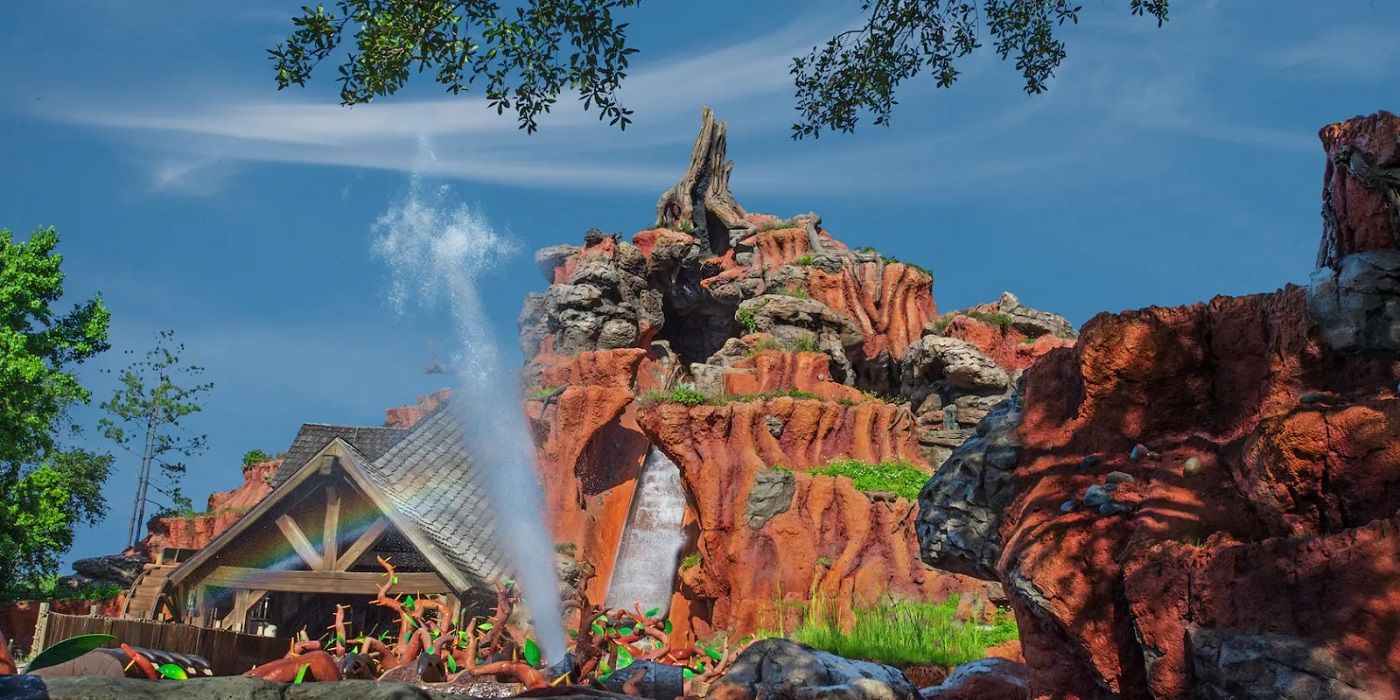
If you close your eyes and think about the Magic Kingdom, you can probably hear it. That upbeat, bouncy banjo rhythm. The whistling. The feeling of a log flume climbing a steep, wet incline right before a five-story drop. For over thirty years, the song on Splash Mountain was the literal heartbeat of Disney’s Frontierland and Critter Country. "Zip-A-Dee-Doo-Dah" wasn't just a theme park tune; it was a cultural juggernaut that won an Academy Award long before it ever became the soundtrack to a soaking wet thrill ride. But lately, things have changed. If you walk through those same gates today, you’ll find Tiana’s Bayou Adventure where the Briar Patch used to be. The song is gone from the ride, but the conversation surrounding it? That’s louder than ever.
Honestly, it’s complicated.
The Oscar-Winning Origins of the Song on Splash Mountain
Most people don't realize that "Zip-A-Dee-Doo-Dah" existed for decades before Splash Mountain was even a blueprint on an Imagineer's desk. It was composed by Allie Wrubel with lyrics by Ray Gilbert for the 1946 film Song of the South. At the 20th Academy Awards, it took home the Oscar for Best Original Song. It was a massive hit.
The track was inspired by a pre-Civil War folk song called "Zip Coon," which is part of its deeply troubled DNA. In the film, James Baskett—the first Black man to win an Honorary Academy Award—sings it as Uncle Remus. He’s walking through a bright, animated landscape with Br'er Rabbit. It looks innocent. It sounds joyful. But the context is heavy. Song of the South has been locked in the Disney vault for years because of its romanticized portrayal of the post-Civil War South and its use of racial stereotypes.
When Tony Baxter and his team were designing Splash Mountain in the 1980s, they needed a way to save the flume ride concept. It was originally going to be called "Zip-a-Dee River." They were trying to reuse animatronics from an old show called America Sings to save money. By choosing the Br’er Rabbit stories, they essentially tethered the ride to a film Disney was already starting to feel uneasy about. They thought they could strip the "good" parts—the catchy music and the cute animals—away from the problematic source material. For a long time, it worked.
Why the melody stuck in your head
There is a scientific reason why the song on Splash Mountain became an earworm. It uses a "shuffle" rhythm that mimics a walking pace, roughly 110 to 120 beats per minute. This is the "sweet spot" for human movement. It makes you want to nod your head. The lyrics are nonsense—"Zip-a-dee-doo-dah, zip-a-dee-ay"—which makes them easy for children to memorize instantly.
During the ride's finale, the version of the song played on the Zippin' Gator paddleboat was a massive, orchestral arrangement. It featured a full brass section and a chorus of animatronic geese, frogs, and foxes. It was designed to provide a "dopamine hit" after the terrifying drop down Chickapin Hill. You were wet, your heart was racing, and then you were greeted by the most cheerful song ever written.
The Lyrics Nobody Actually Remembers
While everyone knows the chorus, the verses of the song on Splash Mountain are actually quite short.
"Mister Bluebird's on my shoulder / It's the truth, it's 'actch'll' / Everything is 'satisfactch'll'"
The use of "actch'll" and "satisfactch'll" was a deliberate attempt by the songwriters to mimic a specific, stylized dialect. This is where the tension lies. To some, it's just whimsical wordplay. To others, it’s a lingering remnant of minstrelsy tropes that permeated 1940s Hollywood.
Disney didn't just use one song, though. The ride was a medley. You had "How Do You Do?" at the beginning, which was upbeat and welcoming. Then "Everybody's Got a Laughing Place," which had a frantic, minor-key undertone that built tension as you entered the caves. Finally, the big "Zip-A-Dee-Doo-Dah" finale. Each song was synced to the ride's pacing. If the logs backed up—which they often did—the music looped. For the ride operators, this was a special kind of torture. For the guests, it was the sound of a vacation.
The 2020 Pivot and the Silence of the Bluebird
In the summer of 2020, amid a global conversation about racial justice and representation, Disney announced they would be "reimagining" the ride. The song on Splash Mountain was going to be retired. This wasn't a snap decision, though. Imagineering had been quietly working on a Princess and the Frog retheme since at least 2019.
The backlash was immediate and divided.
One side argued that the song had outgrown its origins. They felt that "Zip-A-Dee-Doo-Dah" represented a "Disney-fied" version of a history that never existed—one that ignored the pain of the Reconstruction-era South. The other side saw the song as a piece of pure nostalgia. To them, it was about a rabbit outsmarting a fox, not a commentary on 19th-century race relations. They saw the removal as a loss of theme park history.
The song began disappearing in stages:
- First, it was removed from the background music loops at the park entrances.
- Then, it was scrubbed from the Magic Kingdom's "Festival of Fantasy" parade.
- Finally, on January 23, 2023, the California version of the ride closed, and the song was played for the last time in a US Disney park.
It’s weird to think about a song being "banned" when it’s still available on Spotify. You can go listen to it right now. But in the context of the Disney "brand," it has been effectively sunsetted.
What Replaced the Music?
Tiana’s Bayou Adventure, the replacement for Splash Mountain, took a completely different approach to music. Instead of relying on a song from 1946, Disney went to the source of American music: New Orleans.
They hired PJ Morton, a Grammy winner and keyboardist for Maroon 5, to write a new original song called "Special Spice." They also brought in Terence Blanchard, a legendary jazz trumpeter, to handle the arrangements. The goal was to replace the "satisfactch'll" vibes with authentic Zydeco, Jazz, and R&B.
The new music is objectively more complex. It uses syncopated rhythms and real accordion tracks recorded in Louisiana. But it faces a steep hill. "Zip-A-Dee-Doo-Dah" had 75 years to settle into the collective consciousness. It’s hard to compete with three-quarters of a century of tradition.
Why We Can't Stop Talking About It
The obsession with the song on Splash Mountain isn't really about the notes or the lyrics. It's about how we handle the "messy" parts of our culture.
Some fans have gone to extreme lengths to preserve the music. There are high-fidelity "binaural" recordings on YouTube that allow you to simulate sitting in the log flume. There are communities of "extinct attraction" enthusiasts who trade rare rehearsal tapes of the vocalists who recorded the ride’s tracks.
Is it possible to love a song while acknowledging it comes from a broken place? That’s the question Disney decided was too risky to answer. They chose to move on.
Key facts you might have missed:
- The song was actually a #1 hit on the Billboard charts in 1947, covered by Johnny Mercer.
- Most of the animal voices you heard singing on the ride were not from the original 1946 film; they were re-recorded in the 1980s by veteran voice actors like Jess Harnell.
- The "Mister Bluebird" mentioned in the lyrics actually appeared as an animatronic at the very end of the ride, perched on a branch near the exit. He was one of the few figures not moved to the new Tiana attraction.
Moving Forward Without the Melody
If you’re looking to scratch that nostalgic itch, you won't find it in Orlando or Anaheim anymore. Tokyo Disneyland still operates their version of Splash Mountain with the original songs, as of early 2026. There are no current plans to change it there, largely because the cultural context of Song of the South is viewed differently in Japan.
For those in the States, the transition is a reminder that theme parks are living things. They change. They grow. Sometimes they outgrow the things we loved as kids.
To understand the full scope of this musical shift, you should look into the history of the "Zip-A-Dee-Doo-Dah" Academy Award win. Research the life of James Baskett and the barriers he broke down, even while performing in a film that remains a point of contention. Understanding the man behind the voice adds a layer of humanity that a theme park ride often obscures.
Check out archival footage of the America Sings attraction. This will show you exactly where the singing vultures and the "Zip-A-Dee" chorus lines actually came from. It puts the entire lifecycle of the ride's music into a technical perspective that most casual fans miss.
Finally, listen to the new soundtrack of Tiana's Bayou Adventure with a critical ear. Compare the polyrhythms of the New Orleans jazz to the simple 4/4 time of the old track. It’s a masterclass in how Disney uses sound to shift the "energy" of a physical space.
Actionable Next Steps
- Listen to the "Special Spice" track by PJ Morton to hear the evolution of Disney's "flume music" philosophy.
- Watch the documentary segments on the making of Splash Mountain (found on Disney+) to see how Imagineers originally integrated the music.
- Compare the ride's arrangement to the original 1946 film version; you'll notice the ride version is significantly faster and uses different instrumentation to maintain "thrill" levels.