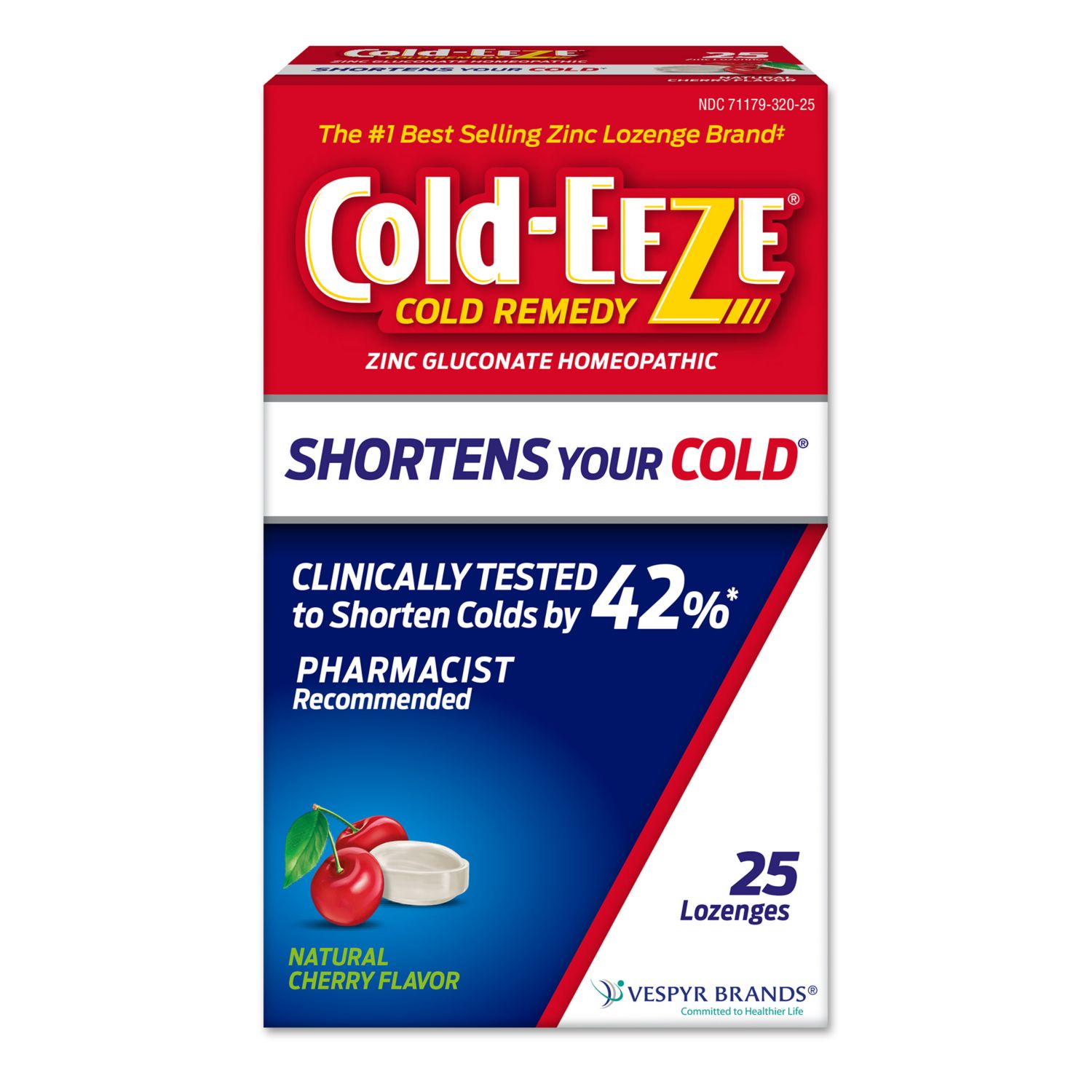
You’re standing in the pharmacy aisle, nose leaking like a rusty faucet, eyes stinging, and your throat feels like you’ve been swallowing fiberglass. You see the "Cold and Flu" section. It's a wall of bright boxes, all promising to "shorten" your misery. Among the syrups and decongestants, those zinc lozenges for the common cold stare back at you. Are they a miracle cure or just expensive candy? Honestly, the answer depends entirely on when you start sucking on them and exactly what kind of zinc you’re putting in your mouth.
Most people get this wrong. They wait until they’re three days into a fever to start a regimen. By then, the virus has already set up shop and invited all its friends. If you want zinc to do anything at all, you have to be fast. Like, "I think I felt a tickle in my throat ten minutes ago" fast.
The Science of Why Zinc Might Actually Save Your Week
It sounds like a folk remedy, but there is real, crunchy science behind why zinc messes with the common cold. When a rhinovirus—the jerk responsible for most of our sniffles—enters your system, it tries to latch onto the ICAM-1 receptors in your nasal passages and throat. Think of these receptors like docking bays at a space station.
Zinc ions carry a positive charge. If you have enough of them floating around in your mouth and throat, they basically jam those docking bays. The virus can't land. If it can't land, it can't replicate. That’s the theory, anyway.
Harri Hemilä, a researcher from the University of Helsinki who has spent years obsessing over this, conducted a meta-analysis that basically changed the game. He found that high doses of zinc acetate lozenges could shorten the duration of a cold by about 33%. That isn't just a rounding error. We are talking about shaving two or three days off your suffering. Imagine going back to work on Thursday instead of Sunday.
However, there is a catch. There's always a catch.
Most lozenges you buy at the grocery store don't actually have enough "free" zinc to do the job. Manufacturers often add flavors like citric acid or tartaric acid to hide the metallic, "bloody" taste of zinc. While this makes the lozenge taste like a lemon drop, it also binds the zinc ions. The zinc gets trapped in the flavor chemicals and never makes it to your throat lining. You’re basically paying for a placebo with a side of citrus.
The Acetate vs. Gluconate Debate
If you’re scanning labels, look for zinc acetate. It doesn't bind to other chemicals as easily, which means it releases more ions into your saliva. Zinc gluconate is the other common form. It works, but it's a bit more "sticky" chemically speaking.
Avoid anything with "citrate" or "picolinate" if you’re looking for immediate cold relief. Those are great for daily supplements to keep your immune system ticking over long-term, but they are almost useless as a localized treatment for an active infection. You want the zinc to stay in your throat, not just end up in your stomach.
Getting the Dosage Right Without Wrecking Your Stomach
Let’s talk about the "zinc belly." It's real. If you’ve ever taken a high-dose zinc supplement on an empty stomach, you know that sudden, "I need to lie down in a dark room" nausea. It’s brutal.
To actually see results with zinc lozenges for the common cold, studies suggest you need between 75 and 100 milligrams of elemental zinc per day. That’s a lot. Most daily multivitamins only have 11mg.
The trick is frequency. You can’t just pop one 100mg pill and call it a day. You have to dissolve a lozenge every two to three hours while you're awake. This keeps a constant "shield" of ions in your pharynx. But if you do this for more than a week, you're going to run into trouble.
High doses of zinc interfere with copper absorption. Do this for a month, and you might end up with a copper deficiency, which leads to neurological issues and anemia. Use it for the cold, then stop. Simple.
Why Some Studies Claim Zinc is a Total Bust
You'll see headlines every few years saying "Zinc doesn't work for colds!" These aren't usually fake news; they’re just reflecting poorly designed studies.
The Cochrane Library, which is basically the gold standard for medical reviews, has gone back and forth on this. In 2017, they noted that the evidence was strong, but by 2024/2025, new reviews pointed out that many "zinc" products used in trials were under-dosed or used formulas that didn't release ions properly.
Basically, if the trial uses 20mg a day, it fails. If the trial uses 80mg of zinc acetate, it usually wins.
Also, we have to talk about the "Zicam" incident from years ago. People were using zinc nasal swabs and losing their sense of smell—sometimes permanently. This is called anosmia. Because of that, doctors are very wary of anything you put up your nose containing zinc. Stick to the lozenges. Your sense of smell is worth the extra day of sneezing.
The Reality Check: Zinc is Not a Shield
Zinc isn't a vaccine. It's not going to prevent you from catching a cold if your toddler sneezes directly into your open mouth. It is a tool for mitigation.
I’ve seen people treat zinc like a magic spell. They take it, keep staying up until 2:00 AM, drink three glasses of wine, and wonder why they're still sick. Your body still needs to do the heavy lifting. The zinc just slows the enemy down so your white blood cells can catch up.
Think of it like this:
- Day 0 (The Tingle): Start lozenges immediately.
- Day 1-3: Consistent dosing, plenty of water, extra sleep.
- Day 4: Taper off.
If you're still feeling like death on day five, the zinc didn't "fail"—you might have a bacterial sinus infection or the actual flu, neither of which care about zinc ions.
What to Look for on the Label
When you're standing in that pharmacy aisle, don't look at the flashy "Immune Support" branding. Flip the box over.
- Check the Form: Is it Acetate or Gluconate? (Acetate is better).
- Check for "Binders": Does it list citric acid or mannitol high on the list? If so, the zinc might be "locked."
- Check the Dose: If each lozenge only has 5mg, you'd have to eat the whole box to reach the therapeutic threshold. Look for 13mg to 18mg per lozenge.
Honestly, the "medical" tasting ones—the ones that leave a slightly weird, furry feeling on your tongue—are usually the ones that are actually working. If it tastes like a delicious gummy bear, it's probably not doing much for your rhinovirus.
Practical Steps for Your Next Cold
Don't wait until you're sick to buy these. By the time you feel bad enough to drive to the store, the window of opportunity is closing.
- Buy a pack now. Keep it in your medicine cabinet or desk drawer.
- The Second-of-Infection Rule: At the very first sign of a scratchy throat or an unexplainable sneeze, take one.
- Eat something small first. A few crackers or half a piece of toast can prevent the zinc-induced nausea that ruins most people's attempts at this.
- Don't drink orange juice right after. The acids will neutralize the ions you just worked so hard to coat your throat with. Wait at least 15 minutes before eating or drinking anything after the lozenge dissolves.
- Set a timer. It’s easy to forget to take them every two hours. Set a recurring alarm on your phone for the first 48 hours.
Zinc is one of the few over-the-counter supplements with actual, peer-reviewed evidence suggesting it can beat back a virus. It's not perfect, and it won't work every time, but when you're staring down a week of misery, a 30% reduction is a massive win. Just make sure you're using the right chemistry, or you're just sucking on expensive, metallic-tasting candy.