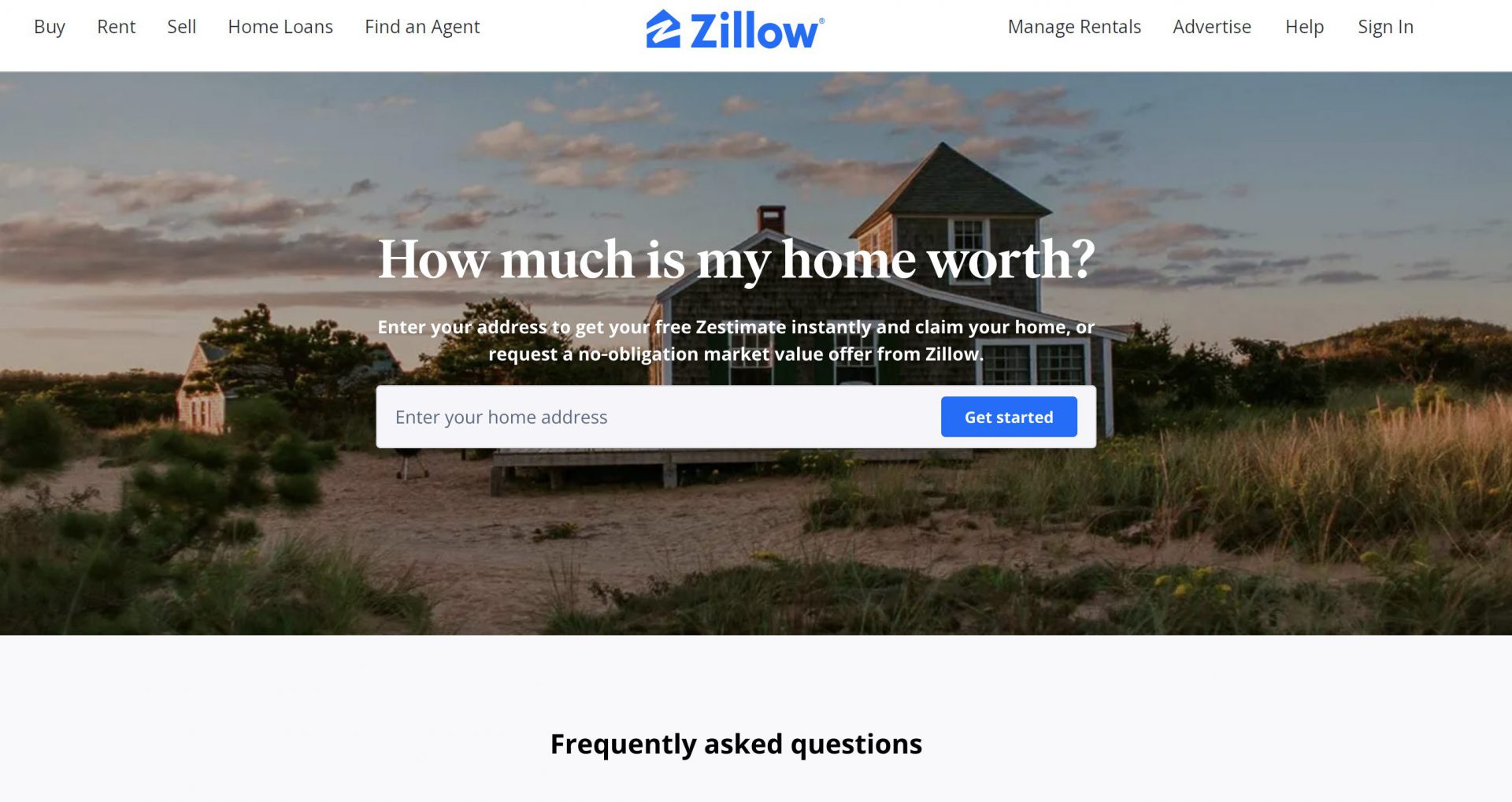
You're standing in your kitchen, looking at that spare bedroom or maybe staring at a "For Rent" sign you’re about to plant in the yard. You need a number. A real one. So, naturally, you head to the Zillow rent estimate calculator, also known as the "Rent Zestimate." It’s easy. It’s free. It’s right there on your phone. But here is the thing: that number might be spectacularly wrong.
Pricing a rental isn't just about data points. It's about vibes, smells, and that weirdly specific alleyway noise that only happens on Tuesdays. Zillow’s algorithm is smart, sure, but it isn't walking through your front door with a clipboard.
The Math Behind the Zillow Rent Estimate Calculator
Let’s get into the weeds for a second. Zillow uses a proprietary formula. They call it a "neural network-based model." Basically, it’s a massive brain made of code that looks at millions of data points across the country. It factors in your square footage, how many bathrooms you have, the local school ratings, and what the guy down the street is charging for his identical townhouse.
The accuracy varies wildly. If you live in a cookie-cutter suburb in Phoenix where every house was built in 2012 by the same developer, the Zillow rent estimate calculator is probably going to be pretty spot on. It has plenty of "comps" (comparable properties) to look at. However, if you own a 1920s bungalow in a rapidly gentrifying part of Atlanta or a quirky loft in Brooklyn, the algorithm starts to sweat.
Zillow itself is actually fairly transparent about this. They publish their "median error rate" for Zestimates. For rentals, that error rate usually hovers around 5% to 10%. On a $3,000 apartment, a 10% error is $300 a month. That’s $3,600 a year. That is a lot of money to leave on the table or, conversely, a lot of money to overcharge and watch your property sit vacant for three months.
Why the Algorithm Misses the "Soul" of Your Home
Algorithms love hard data. They love numbers. They don't understand that you just installed $5,000 worth of soundproof windows or that your backyard has a literal view of a dumpster.
Here is what the Zillow rent estimate calculator typically misses:
- Interior Finishes: Zillow knows you have a kitchen. It doesn't know if that kitchen has 1990s laminate or brand-new Calacatta marble.
- The "Walkability" Nuance: It knows your zip code. It doesn't know that walking two blocks east puts you at the best coffee shop in the city, while walking two blocks west puts you under a noisy overpass.
- Specific Amenities: Things like in-unit laundry, central air (in older cities), or a dedicated parking spot can swing rent by hundreds of dollars, but the calculator often generalizes these based on neighborhood averages.
- Recent Renovations: Unless you’ve updated your home’s "Facts and Features" on Zillow recently, the tool is guessing based on old tax records.
Honestly, it’s a bit like a weather app. It can tell you it’s raining, but it can’t tell you if you’re going to step in a giant puddle right outside your door.
The Problem with Public Records
A lot of people don't realize that Zillow pulls from public records. If the county clerk says your house is a 2-bedroom because the basement isn't technically "finished" by legal standards, but you’ve spent $40k making it a luxury suite, the Zillow rent estimate calculator will likely treat your home like a 2-bedroom. You’re being compared to smaller, inferior properties.
To fix this, you have to "claim" your home on the platform. It’s a simple step, but most landlords forget it. You go in, edit the facts, and suddenly the algorithm sees that extra bathroom. Your Zestimate will usually jump within 24 to 48 hours.
Competition and the "Lease-Up" Strategy
Markets move fast. Faster than an API can refresh. If three big apartment complexes just opened a block away and they’re offering two months of free rent, the market rate for the whole neighborhood just plummeted. The Zillow rent estimate calculator might take weeks to reflect that downward pressure.
On the flip side, if a major tech company just announced a new headquarters nearby, the "street" price of rent might skyrocket overnight. Local property managers know this because they’re talking to people every day. Zillow is looking in the rearview mirror.
How to Actually Price Your Rental Without Getting Burned
Don't just look at the Zestimate and call it a day. That’s lazy, and it’ll cost you.
First, use the Zillow rent estimate calculator as a baseline—a "floor," if you will. Then, go to the map view on Zillow, Redfin, and even Craigslist (yes, people still use it). Filter for "For Rent" and look at properties within a half-mile radius that have been listed in the last 14 days.
Look at the photos. If their kitchen looks like yours and they’re asking $2,500, but the listing has been sitting there for 45 days, $2,500 is too high. If a place looks worse than yours and is listed for $2,400 and it disappears in two days, you can probably get $2,600.
Check the "Days on Market"
This is the most underrated metric in real estate. If you see a rental with a high Zestimate but it has been on the market for 60 days, that Zestimate is a lie. The market has rejected that price.
The Ethics of Algorithmic Pricing
There’s a bigger conversation happening right now about tools like this. You might have heard about companies like RealPage, which are facing legal scrutiny for allegedly using algorithms to "collude" on rent prices. While Zillow’s tool is more of an estimator for individuals rather than a price-fixing bot for corporate landlords, the result is often the same: a slow creep upward in rent because "the computer said so."
As a renter, you should use the Zillow rent estimate calculator as a negotiation tool. If a landlord is asking for $2,200 but the Zestimate says $1,900, ask them why. They might have a great reason (like that marble kitchen we talked about), or they might just be hoping you don't check the data.
Actionable Steps for Landlords and Renters
If you want the most accurate number possible, follow this workflow:
- Claim Your Property: Go to Zillow, find your home, and click "Claim This Home." Update every single detail—square footage, AC type, flooring, and appliances.
- Run the Rent Zestimate: See what the new number is. Note it down.
- Perform a Manual Comp Search: Find three active listings and three "recently rented" listings. Ignore the outliers.
- Factor in Seasonality: Renting in June? You can charge a premium. Renting in December? You might need to drop the price by 5% to 10% just to avoid a vacancy.
- Test the Market: List the property at the higher end of your range for 7 days. If you don't get at least three high-quality inquiries, drop the price immediately.
The Zillow rent estimate calculator is a compass, not a GPS. It’ll point you North, but it won’t tell you where the cliffs are. Use it to start your journey, but use your own eyes to finish it.
The most important thing to remember is that a property is only worth what someone is willing to pay for it today—not what an algorithm thought it was worth yesterday. Verify the data, talk to locals, and don't be afraid to deviate from the "suggested" price if the reality on the ground tells a different story.