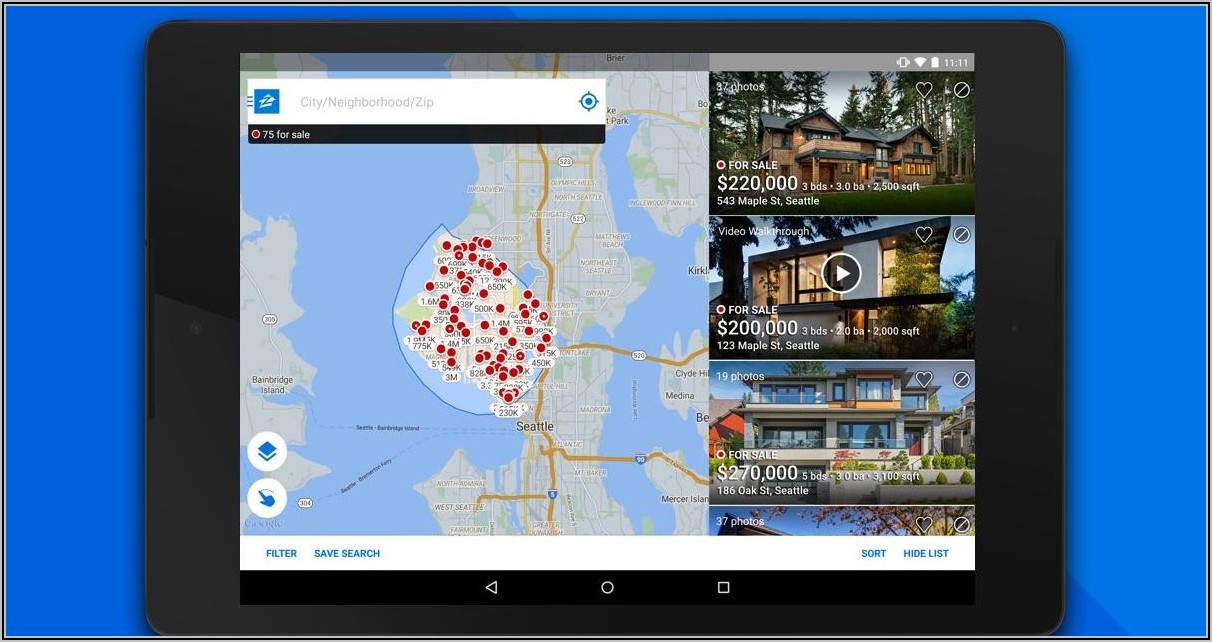
You’re sitting on your couch, scrolling through your phone, and you decide to check that number. We all do it. You type your address into the search bar and wait for that big, bold figure to pop up. There it is. The Zillow home value estimate, or the "Zestimate," as the company famously calls it. Maybe you’re thrilled because it went up $20,000 since last month. Maybe you’re annoyed because your neighbor’s house—which definitely has a smaller kitchen—is showing a higher value than yours.
It’s addictive. Honestly, it’s basically real estate's version of checking your credit score, except way more volatile and sometimes totally disconnected from reality.
But here’s the thing. That number isn't a professional appraisal. It’s an algorithm. And while Zillow has poured millions into their Neural Zestimate, which uses artificial intelligence and high-resolution imagery to "see" into your home, it still struggles with the nuances of a local market. If you’re planning to sell, or even just curious about your net worth, you need to understand that this number is a starting point, not a bankable fact.
The Math Behind the Zestimate
How does Zillow actually come up with this stuff?
It’s a mix of public records and user-submitted data. Zillow’s algorithm looks at tax assessments, prior sales in your area, and "comparables"—homes similar to yours that sold recently. In 2021, they upgraded the system to a neural network. This means the model can process massive amounts of data points at once, including how long a house sat on the market and whether it has a view of the park versus a view of a dumpster.
Zillow claims that for homes currently on the market, the Zestimate has a median error rate of about 1.9%. That sounds incredible. If your house is worth $500,000, being off by less than $10,000 is impressive.
But wait.
The accuracy drops significantly for homes that aren't for sale. For off-market properties, that median error rate often jumps to around 6.9% or higher. On a $500,000 house, a 7% error is $35,000. That is the difference between being able to afford a down payment on your next place or staying stuck where you are.
The algorithm is a hungry beast. It eats data. If the data is bad, the output is garbage. If your county records haven't updated since you added that third bathroom or finished the basement, Zillow doesn't know about it unless you manually claim your home and update the facts.
Why Your Neighbor’s House is "Worth" More
You've seen it. You have a brand-new roof and a designer kitchen. Your neighbor has carpet from 1974 and a leaky faucet. Yet, their Zillow home value estimate is higher.
Why?
Usually, it comes down to "comps." If your neighbor sold their house three years ago, that transaction is a hard data point. If you’ve owned your home for 20 years, Zillow is guessing based on trends. Also, the algorithm heavily favors square footage and bedroom count over "vibe" or high-end finishes. It can't easily distinguish between $10-a-square-foot marble and $2-a-square-foot laminate unless the listing description explicitly highlights it in a way the machine understands.
The Zillow Offers Disaster: A Cautionary Tale
Remember when Zillow tried to buy houses?
This is the best evidence we have that even Zillow doesn't always trust the Zillow home value estimate. Back in late 2021, Zillow shut down its "iBuying" arm, Zillow Offers. They ended up losing hundreds of millions of dollars because their algorithm overpaid for thousands of homes.
They couldn't accurately predict where the market was going.
Basically, the machine was too optimistic. It saw prices rising and assumed they would keep rising at the same clip. When the market shifted, Zillow was left holding the bag on houses that were worth significantly less than what their own Zestimate suggested. If the company that built the tool couldn't use it to turn a profit flipping houses, you probably shouldn't use it as the sole basis for your retirement planning.
The Problem With Local Nuance
Real estate is hyper-local. I’m talking street-by-street local.
In many cities, being on the "right" side of a specific road can add $50,000 to a property value. Algorithms aren't great at "prestige." They don't know that the school district boundary cuts right through the middle of the cul-de-sac. They don't know that the house three doors down smells like cats or that your street gets a lot of cut-through traffic during rush hour.
A local real estate agent knows these things. They know that the house that sold for $600,000 down the street only went that high because two families got into a bidding war over the backyard play structure. Zillow just sees $600,000 and raises the value for everyone in the zip code.
How to Make the Zestimate Work for You
Does this mean the Zillow home value estimate is useless? No. It’s a tool. You just have to know how to calibrate it.
- Claim your home. This is the easiest way to improve accuracy. Go to the site, prove you own it, and update the features. If you finished the attic, say so. If you added central air, make sure it’s checked.
- Look at the "Zestimate History." Instead of looking at the single number today, look at the trend line. Is it moving up or down? This tells you more about the general heat of your local market than the specific dollar amount.
- Check the comps yourself. Zillow lists the houses it used to calculate your value. Look at them. Are they actually like your house? If the algorithm is comparing your 1920s bungalow to a 2024 new-build mansion half a mile away, ignore the number.
The Role of the Appraiser
When you go to get a mortgage or a refinance, the bank does not look at Zillow.
They send a human being.
A licensed appraiser provides a "Value of Opinion." They walk through the house, check the foundation, look at the quality of the windows, and measure everything. They then find three to six "closed" sales—not just listings—and adjust the prices based on differences. If a comp has a fireplace and yours doesn't, they subtract value. This is a level of granularity that a web-based Zillow home value estimate simply cannot match.
When the Zestimate Actually Hits the Mark
To be fair, in "cookie-cutter" neighborhoods, Zillow is actually pretty scary-accurate.
If you live in a suburban development where every house was built in 2015 by the same developer and there are five different floor plans, the algorithm thrives. There is so much clean, uniform data that the margin for error shrinks. In these areas, you can usually trust the number to be within a few percentage points of the eventual sale price.
But if you live in an old farmhouse, a custom-built modern home, or an area with "eclectic" zoning, take the number with a massive grain of salt.
What Homeowners Get Wrong
The biggest mistake people make is getting emotionally attached to the Zestimate.
I’ve seen sellers refuse to list their home for anything less than the Zestimate, even when the market is cooling. This is called "anchoring." You see a high number and your brain decides that is the "true" value. If the Zestimate says $450,000 but every buyer in town thinks it’s worth $410,000, guess what? It’s worth $410,000.
A house is only worth what someone is willing to pay for it on a Tuesday afternoon in a specific month.
Moving Beyond the Screen
If you really want to know what your home is worth, you need a Comparative Market Analysis (CMA). Most real estate agents will do this for free. They’ll look at the same data Zillow does, but they’ll add the "human layer." They’ll see that your kitchen renovation was done with high-end Sub-Zero appliances instead of the basic stuff from a big-box store.
They’ll also look at "active" and "pending" listings. Zillow is often looking backward. A local expert is looking at what is happening right now. If three houses on your street just hit the market at once, your value just dipped because of increased competition. Zillow might not reflect that for weeks.
Practical Steps for Homeowners
Don't let the Zillow home value estimate dictate your financial stress levels. Use it as a weather vane—it tells you which way the wind is blowing, but it doesn't tell you the exact temperature.
- Check your home facts annually. Set a reminder to ensure the square footage and room count on Zillow match your actual house.
- Track the "Price per Square Foot" in your zip code. This is often a more stable metric than the total estimate.
- Ignore the "Forecast" tool. Zillow tries to predict what your home will be worth in a year. No one, not even a sophisticated AI, can account for a sudden hike in interest rates or a local factory closing down.
- Use the Zestimate to challenge your property taxes. If your tax assessment is way higher than your Zestimate, you might actually be able to use Zillow’s data as part of an appeal to lower your tax bill.
The Zestimate is a conversation starter. It’s a way to engage with the market. Just remember that it’s a computer program trying to estimate the value of a place where you’ve built a life. There are some things—like the way the sun hits your breakfast nook or the quietness of your backyard—that an algorithm will never truly understand.
Next Steps for Accurate Valuation
To get a definitive sense of your home's worth, start by downloading your property's "Property Report" from your local county assessor's website to ensure all public records are correct. Once you have confirmed your home's basic facts are accurate, contact a local real estate professional to perform a Comparative Market Analysis. This will bridge the gap between Zillow's algorithmic data and the current local buyer sentiment, giving you a realistic price range for a potential sale or refinance. If you are preparing for a legal matter or a formal bank loan, skip the online tools entirely and hire a state-certified appraiser to provide a Uniform Residential Appraisal Report.