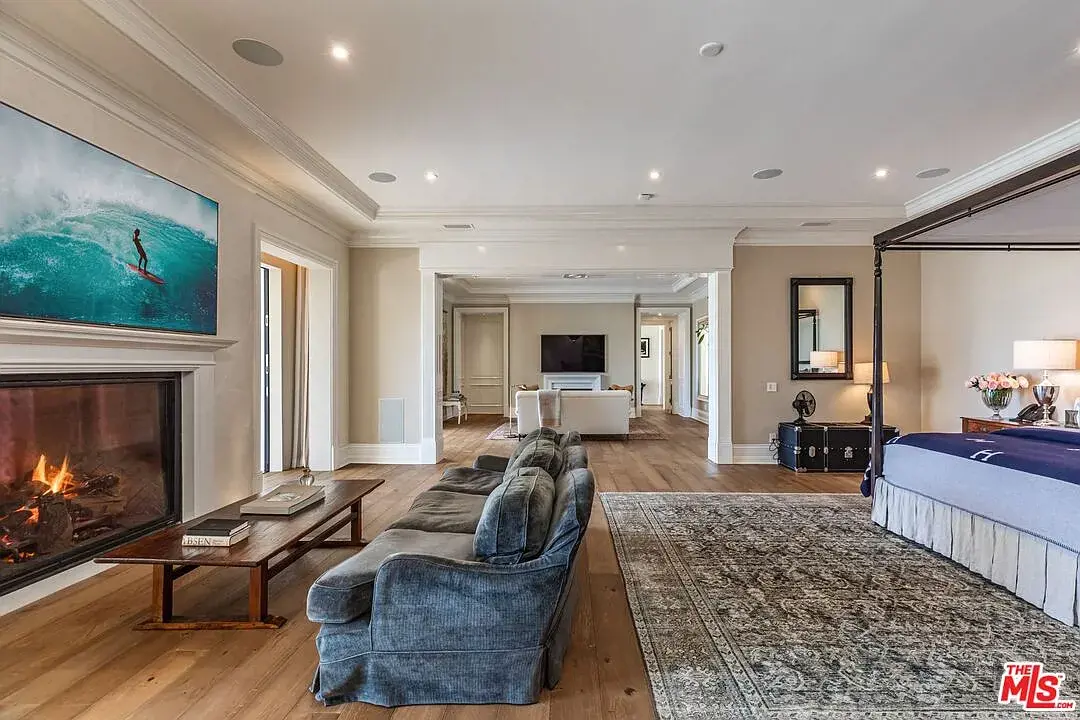
You're sitting on your couch, scrolling through your phone, and you decide to check your "Zestimate." We’ve all done it. It’s basically the modern equivalent of checking your credit score, except it feels way more personal because it's your house. Suddenly, you see it. The number jumped $20,000 since last month. You feel rich. Or, worse, it dropped $15,000 for no apparent reason, and now you’re side-eyeing your neighbor's new fence, wondering if that somehow ruined your curb appeal.
But here’s the reality: Zillow estimates of home values are just math. They aren't an appraisal. They aren't a guarantee. Honestly, they’re a sophisticated guess based on data that might be totally outdated or just plain wrong.
If you’re planning to sell your home or buy a new one in 2026, relying solely on that little number on the screen is a massive gamble. Understanding how the algorithm actually thinks—and where it falls flat on its face—is the difference between a smart financial move and a total disaster.
The Secret Sauce (That Sometimes Tastes Like Vinegar)
Zillow is pretty transparent about how they do this, yet most people ignore the fine print. They use a proprietary "neural network-based model." Sounds fancy, right? In plain English, it means a computer program looks at millions of data points—tax records, prior sales, square footage, and even how many people are clicking on your listing—to spit out a number.
The Zestimate was a game-changer when it launched in 2006. Back then, the median error rate was nearly 14%. Today, Zillow claims a nationwide median error rate for on-market homes of around 2.4%. That sounds impressive until you do the math on a $500,000 house. A 2.4% error is $12,000. For off-market homes, that error rate can balloon to 7% or higher. That’s a $35,000 swing.
That’s a lot of money to "lose" because an algorithm didn't know you just spent $40,000 on a custom chef's kitchen.
Why the algorithm misses the "Vibe"
Computers are great at counting bedrooms. They suck at judging aesthetics.
A computer knows your house is 2,200 square feet. It doesn't know that your neighbor's 2,200-square-foot house smells like twenty years of cigarette smoke and has lime-green shag carpet from 1974. To Zillow, those two houses might look nearly identical on paper. If the "smelly" house sells for a low price, it drags your value down. This is the "comparable sales" trap.
Algorithms also struggle with:
- View Value: A house facing a brick wall vs. a house facing a pristine lake.
- Recent Upgrades: Unless a permit was filed that Zillow can scrape, it has no idea you replaced the HVAC or added quartz countertops.
- Hyper-local Nuance: In many cities, being one block over can mean a $50,000 difference because of school district boundaries or neighborhood "prestige."
How Zillow Estimates of Home Values Actually Work in 2026
By now, Zillow has integrated some pretty wild tech. They use computer vision to "read" your photos. If you upload high-res shots of a renovated bathroom, the AI tries to recognize the high-end finishes and adjust your value upward. It’s clever. But it’s still limited. It can't feel the floorboards creak or notice the foundation crack hidden behind a strategically placed potted plant.
It’s basically a massive game of "Follow the Leader."
When your neighbor lists their house for an aggressive price, your Zestimate might tick up. Why? Because the market sentiment in your micro-zip code just shifted. Zillow’s Chief Economist, Skylar Olsen, has often pointed out that the model is meant to be a starting point, not a final answer. It’s an "automated valuation model" (AVM).
Real estate pros like Ryan Serhant or local top-producers often scoff at Zestimates because they see the human element every day. They see the bidding wars triggered by "emotional" features that a spreadsheet simply can't quantify.
The "Zillow Failed" Moment: A Cautionary Tale
Remember Zillow Offers? That was their big "iBuying" experiment where they used their own Zestimates to buy thousands of homes. They thought their data was so good they could flip houses for a profit at scale.
They lost nearly $900 million.
The algorithm couldn't predict the volatility of labor costs or the subtle shifts in neighborhood desirability that a local human agent would have spotted in a heartbeat. If Zillow couldn't even trust its own Zillow estimates of home values to run a profitable business, why should you treat it as gospel for your net worth?
Making the Zestimate Work for You
Look, I'm not saying you should ignore Zillow. It’s a tool. A hammer is great for driving nails; it’s terrible for performing surgery.
- Check the "Price History" section. If the home sold three times in five years, the Zestimate is likely more accurate because there are more recent "hard" data points. If it hasn't sold since 1998? The estimate is basically a wild guess.
- Claim your home. You can actually go onto Zillow, verify you own the place, and update the facts. Did you add a bathroom? Correct the square footage? Doing this can literally move your Zestimate in real-time.
- Compare the "Big Three." Check Zillow, Redfin, and Realtor.com. If Zillow says $600k and Redfin says $540k, the truth is probably somewhere in the middle—or the data is messy.
The Appraisal Gap
If you’re buying, be careful. A high Zestimate doesn't mean a bank will lend you that much money. Appraisers are much more conservative. They use a strict set of guidelines (like the Uniform Standards of Professional Appraisal Practice) that an AI doesn't follow. If your Zestimate is $500k but the appraisal comes in at $470k, you’re on the hook for that $30,000 difference if you didn't have an appraisal contingency.
That is a very expensive lesson to learn.
Beyond the Screen: What Really Drives Value
The market is currently weird. With interest rates fluctuating and inventory levels all over the place, the "historical data" Zillow uses is often lagging.
Real value is driven by:
- Inventory: If you’re the only house for sale in a 5-mile radius, the Zestimate is irrelevant. You hold the power.
- Mortgage Rates: When rates drop, buying power surges. Zillow’s algorithm tries to keep up, but it’s often 30 to 60 days behind the actual "street" price.
- School Rankings: A shift in a GreatSchools rating can impact values faster than the Zestimate can recalculate.
Practical Steps for Homeowners and Buyers
Stop obsessing over the daily fluctuations. It’s like checking your 401k during a market crash—it just leads to anxiety.
If you actually need to know what your house is worth, get a Comparative Market Analysis (CMA) from a human agent who has physically walked through houses in your area. They know if the "comp" down the street sold for less because it smelled like cats. Zillow doesn't.
Actionable Checklist for 2026:
- Verify your data: Log into Zillow and ensure your bedroom/bathroom count is 100% accurate. Even a half-bath error can swing the value by thousands.
- Document your Reno: Keep a folder of receipts and "before/after" photos. If you sell, these are your evidence to challenge a low valuation.
- Watch the "Days on Market": If homes in your area are sitting for 60+ days but the Zestimate keeps rising, the algorithm is likely overestimating the current heat of the market.
- Ignore the "Forecast": Zillow often predicts if a home will go up or down in the next year. These are educated guesses at best. Treat them like a weather forecast—useful, but keep an umbrella handy.
Ultimately, your home is worth exactly what one specific person is willing to pay for it on a Tuesday afternoon. No more, no less. Zillow is just trying to predict that person's behavior using a giant calculator. It’s a great starting point for a conversation, but it should never be the final word in your financial planning.
Next Steps for Accuracy
To get the most out of your home's digital profile, start by claiming your home on Zillow and Redfin to ensure the baseline facts are correct. Next, reach out to a local real estate professional for a "Broker Price Opinion" (BPO). This provides a nuanced look at your property's value that includes non-quantifiable factors like neighborhood trends and interior condition, giving you a realistic number to use for refinancing or selling.