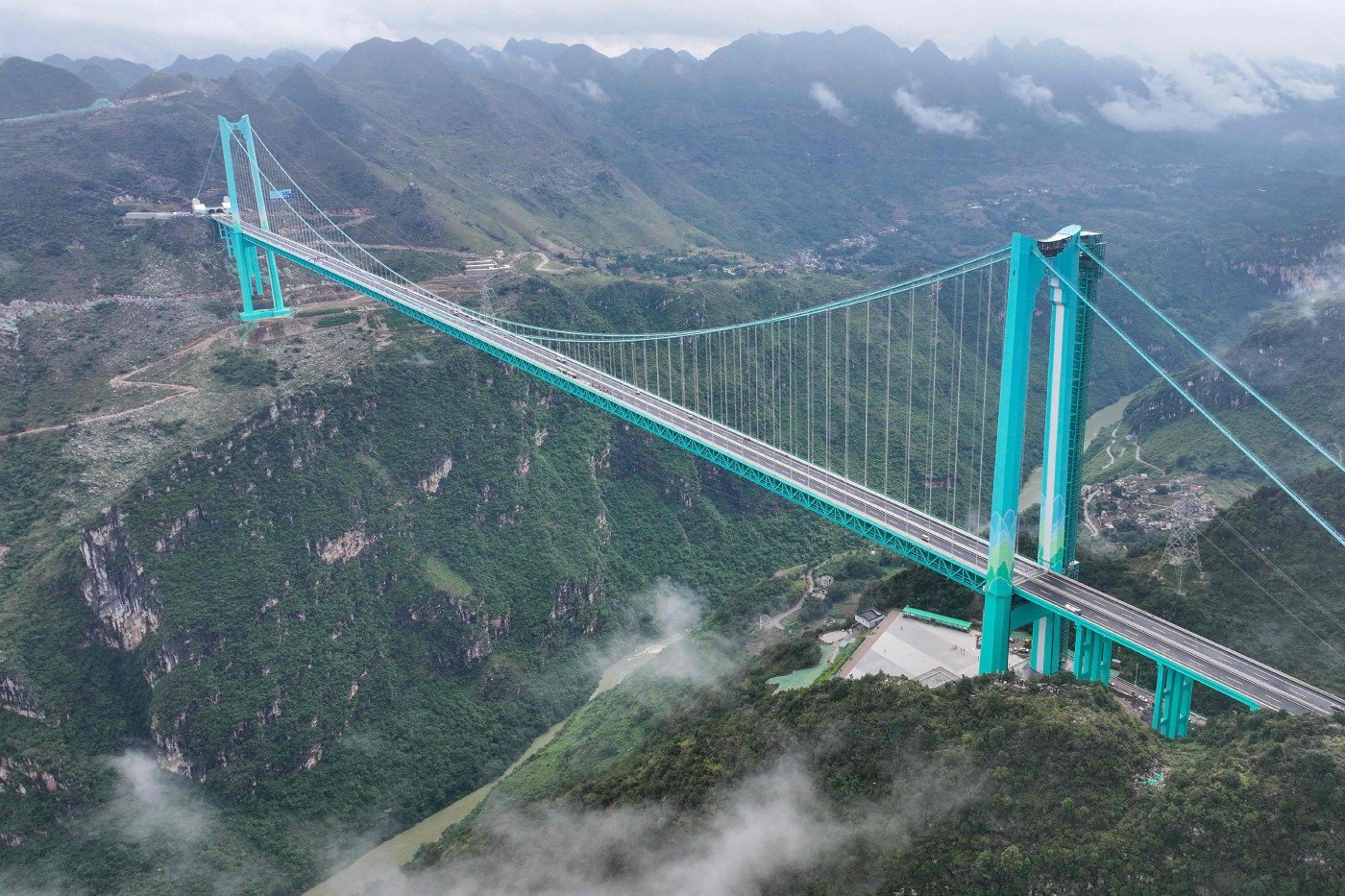
Walk out onto a pane of glass suspended 980 feet above a jagged limestone abyss and your lizard brain starts screaming. It doesn’t matter that you know the math. It doesn’t matter that engineers drove a Volvo over it to prove its strength. Your knees will shake anyway. This is the Zhangjiajie Glass Bridge, often called the China Grand Canyon bridge by international tourists, and it is easily one of the most polarizing pieces of infrastructure on the planet.
It’s huge. It’s scary. Honestly, it’s a bit over the top.
Located in the Wulingyuan Scenic Area of Hunan Province, this structure isn't just a way to get from Point A to Point B. It’s a statement. When it opened in 2016, it smashed basically every world record for glass-bottomed bridges, stretching 1,410 feet across the canyon. But beyond the Instagram photos and the viral videos of people crawling across the glass in total terror, there is a massive amount of complex engineering and high-stakes tourism management that most people never think about.
The Architecture of Vertigo
Haim Dotan, the Israeli architect behind the design, didn't want something bulky. He wanted a "white bridge" that would disappear into the clouds and the mist of Zhangjiajie—the same landscape that famously inspired the floating mountains in James Cameron’s Avatar.
The bridge uses 99 panes of three-layered transparent glass. Each pane is about two inches thick. If you look closely at the frames, you’ll see the tension cables are anchored deep into the sandstone cliffs. These aren't just any cliffs; they are part of a UNESCO World Heritage site known for unique quartz-sandstone pillars.
Is it safe? People ask that constantly.
To prove it wasn't a death trap, the management team at Zhangjiajie Grand Canyon performed some pretty wild stunts. They invited people to smash the glass panels with sledgehammers. After the top layer shattered, they drove a 2-ton SUV over it. The bridge held. This is because the structural integrity is distributed across the steel frame and the multiple layers of tempered glass. Even if one layer cracks, the others remain solid.
The wind is actually the bigger enemy here. In a deep canyon, wind gusts can create a "galloping" effect that snaps bridges—think of the Tacoma Narrows disaster. To stop this, the China Grand Canyon bridge uses specialized "damping" swing balls underneath the walkway. These act like counterweights to cancel out the vibrations caused by wind or thousands of tourists walking at the same time.
Why Everyone Gets the Location Wrong
There is a huge amount of confusion about where this bridge actually is. Most people search for "China Grand Canyon bridge" and assume it’s at Tianmen Mountain. It isn't.
Tianmen Mountain is nearby and has its own famous "Coiling Dragon Cliff" glass skywalk, which is a narrow path attached to the side of a cliff. The Zhangjiajie Glass Bridge is in the Zhangjiajie Grand Canyon, which is about a 40-minute drive away from the main Wulingyuan entrance. If you go to the wrong park, you’re going to be very disappointed and potentially stuck in a four-hour traffic jam trying to fix your mistake.
Hunan weather is also a major factor that people ignore. You can book your tickets months in advance, show up, and see... nothing. Absolute white-out fog. It happens all the time. But when the mist clears just enough to see the canyon floor nearly 300 meters below? That’s when the terror—and the beauty—really hits.
The Logistics of Visiting (It’s Not Just Showing Up)
You can't just walk up to the gate and buy a ticket. Not anymore.
Since the bridge went viral, the crowds became unmanageable. On the first day it opened, it was designed to handle 8,000 people daily, but over 80,000 showed up. They had to shut it down for two weeks just to upgrade the ticketing systems and the surrounding infrastructure.
Now, you have to book a specific time slot via your passport or ID.
- You aren't allowed to wear high heels (for obvious reasons).
- You can't bring cameras or GoPro poles on the bridge itself; usually, only phones and small wallets are allowed in your pockets.
- They provide special cloth shoe covers to prevent the glass from getting scratched or scuffed.
The bridge also features the world's highest bungee jump. If walking across glass isn't enough of a rush, you can literally hurl yourself off the side. It’s a 260-meter drop. For comparison, the famous AJ Hackett bungee at the Macau Tower is 233 meters. It’s not for the faint of heart, and it’s definitely not cheap.
The Economic Impact on Hunan
The construction of the China Grand Canyon bridge changed the local economy almost overnight. Before the bridge, the "Grand Canyon" area was a distant second to the main National Forest Park. Now, it's a primary driver of revenue.
But this "glass bridge craze" has led to a bit of a bubble. After Zhangjiajie’s success, dozens of other provinces in China started building their own glass bridges to lure in tourists. Some were built poorly. In 2019, Hebei province actually shut down all 32 of its glass attractions for safety checks.
The Zhangjiajie bridge remains the gold standard because of the sheer scale and the rigorous maintenance schedules. They have a team that inspects the glass daily. If there’s even a hint of a structural issue or a hairline fracture in a top layer from a dropped object, that panel is swapped out during the night.
Dealing With the "Fear Factor"
It’s interesting to watch people at the start of the bridge. Some people sprint across, looking only at the horizon. Others are literally dragged by their friends.
The psychological trick is the transparency. Your brain interprets the glass as empty space. To get across without a panic attack, experts suggest walking on the steel support beams that frame the glass panels. It gives your eyes a solid "anchor" to focus on. Or, honestly, just don't look down until you’re halfway across and have found your "sea legs."
One thing that doesn't get mentioned much is the noise. When thousands of people are on the bridge, the wind is whistling through the canyon, and the shoe covers are shuffling across the glass, it creates a very specific, high-pitched hum. It’s eerie. It adds to the feeling that you are somewhere humans aren't really supposed to be.
Practical Steps for Travelers
If you are actually planning to visit the Zhangjiajie Glass Bridge, you need to be strategic. This isn't a "wing it" kind of trip.
- Book through an official OTA or agency. The official website is notoriously difficult to navigate for non-Mandarin speakers and often requires a local phone number for verification.
- Check the weather 48 hours out. If heavy rain or extreme wind is forecast, the bridge will close for safety. They don't mess around with wind speeds.
- Go early. The first time slot of the morning is the best. By 2:00 PM, the glass is covered in smudges from thousands of shoe covers, and the "transparency" isn't as crystal clear as it is at 8:00 AM.
- Combine the trip. Don't just do the bridge. The walk down into the canyon after crossing the bridge involves a series of elevators, slides, and boat rides that are actually quite fun and much less stressful than the bridge itself.
- Dress for a hike. Even though the bridge is flat, getting to and from the area involves a lot of stairs. Leave the fashion shoes at the hotel.
The China Grand Canyon bridge is a feat of modern engineering that proves how far structural glass has come. It’s terrifying, expensive, and crowded—but standing in the middle of that span, looking down at a forest that existed millions of years before humans, is an experience that stays with you. It’s a literal bridge between human ambition and the raw, untouched power of nature.
Ensure you have your passport on your person at the entrance gate, as the facial recognition scanners are linked directly to your booking data. If the bridge is closed due to high winds, your ticket can usually be refunded or moved to the next day, but you have to proactively ask at the ticket office near the main canyon entrance.