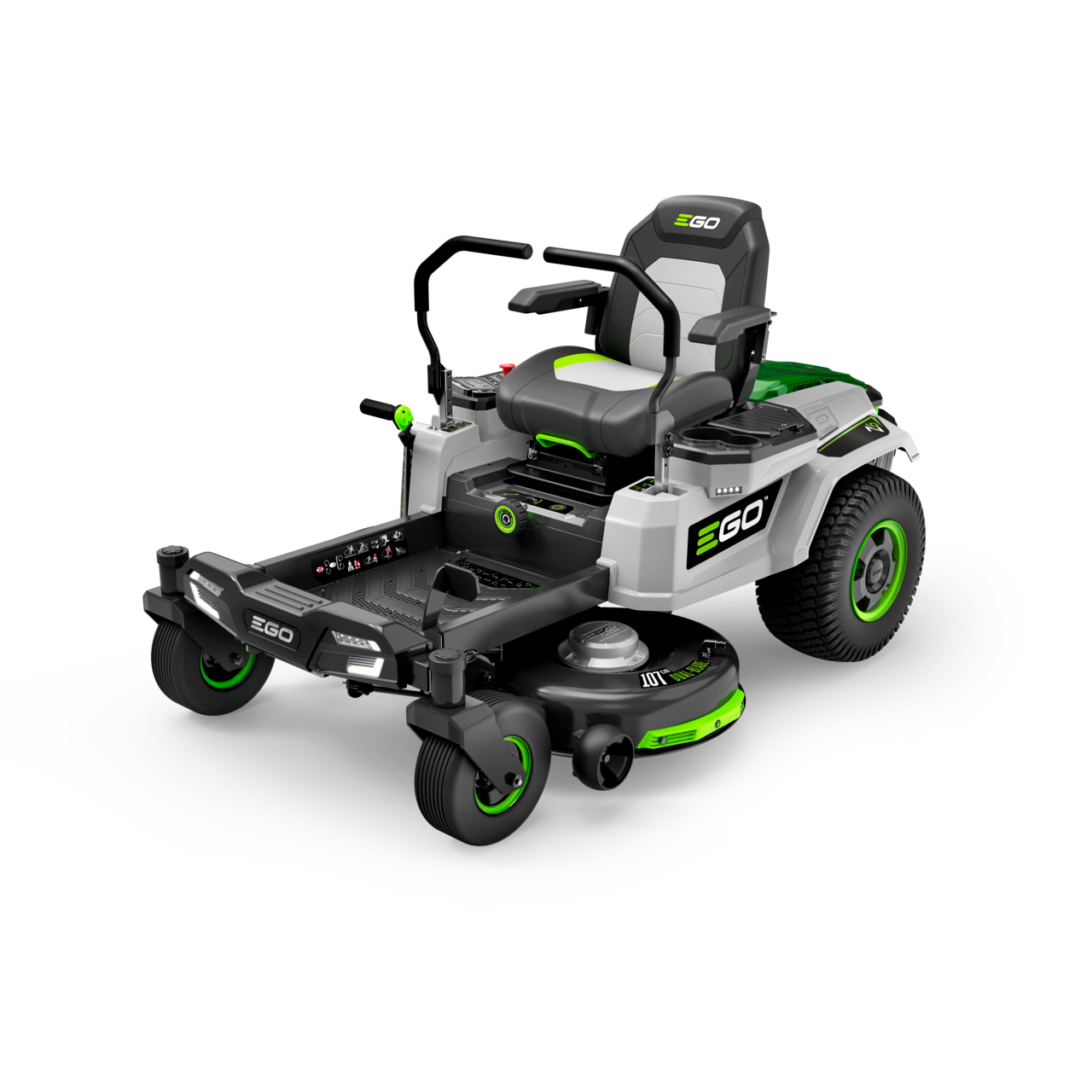
You turn the key. Nothing happens. Maybe a clicking sound if you’re lucky, but mostly just silence and the smell of fresh-cut grass that belongs to your neighbor because your machine is a heavy, expensive paperweight. It’s frustrating. Honestly, the zero turn lawn mower battery is the most neglected part of any landscaping setup until the exact moment it fails. People spend thousands on Kawasaki engines and fabricated decks but buy the cheapest lead-acid slab they can find at a big-box store. That’s a mistake.
Most riders use a 12-volt system. It’s the standard. But there is a massive difference between a battery that just "fits" and one that actually handles the vibration of a zero-turn. These machines aren't like cars. They bounce. They jar. They sit in unheated sheds for six months. If you don't understand the Cold Cranking Amps (CCA) requirements or how parasitic draw kills your cells over winter, you’re going to be buying a new one every two years.
The Brutal Reality of Vibration and Lead Plates
Zero-turn mowers are violent. Unlike a standard tractor, the dual hydrostatic transmissions and high-speed blades create a constant high-frequency vibration. Inside a standard zero turn lawn mower battery, you have lead plates submerged in acid. In cheap models, these plates are thin. Constant shaking causes "shedding," where bits of lead break off and settle at the bottom. Once that sludge touches the bottom of the plates, you get a short. The battery dies. Just like that.
This is why Group U1 batteries—the standard size for most residential mowers like the John Deere Z300 series or the Cub Cadet Ultima—come in different "grades." You’ll see a 230 CCA version and a 300+ CCA version. Always go higher. More lead usually means more weight and better internal bracing. If you’re running a commercial rig, like an Exmark Lazer Z or a Scag Cheetah, you might even be stepping up to a larger Group 22NF or Group 24 battery. These are beasts. They have to be because they’re powering electric clutches (PTOs) that pull a significant amount of current every time you engage the blades.
AGM vs. Flooded Lead Acid
If you’re tired of checking water levels or dealing with terminal corrosion, Absorbed Glass Mat (AGM) is the play. It’s more expensive. Sometimes double the price. But the acid is trapped in fiberglass mats, making them spill-proof and way more resistant to that vibration I mentioned earlier. Brands like Odyssey or Optima make "extreme" versions that can sit for longer without self-discharging.
Flooded batteries are old school. They work fine, but they "gas." That white crusty powder you see on your terminals? That’s acid vapor reacting with the metal. It eats your cables. If you stick with flooded, you better be cleaning those terminals with baking soda and water every season or you’ll lose voltage through high resistance.
The Winter Kill: Why Your Battery Dies in February
Batteries don't usually die in the winter; they die in the summer and just wait until it's cold to show you. Heat is the real killer. It accelerates the internal chemical reactions that lead to plate sulfation. By the time November rolls around and the temperature drops, the weakened battery can't push the chemical reaction fast enough to turn the starter.
Then comes the "parasitic draw." Modern zero-turns often have digital hour meters, control modules, or even GPS trackers. These tiny draws suck the life out of the zero turn lawn mower battery over weeks of sitting. A lead-acid battery that sits at a low state of charge will undergo sulfation—where sulfur crystals harden on the plates. Once that happens, the battery won't take a charge anymore. You can jump-start it, but it won't hold. It's toast.
The Myth of the Concrete Floor
You’ve probably heard your grandpa say, "Don't leave that battery on the concrete floor, it’ll drain it!"
That was true in 1950. Back then, battery cases were made of porous hard rubber. Moisture from the concrete could create a path for electricity to leak out. Modern batteries use polypropylene (plastic) cases. They don't care about concrete. What they do care about is temperature stratification. If you leave a battery on a freezing floor in a warm garage, it creates a temperature gradient inside the cells that isn't ideal, but it won't kill it. What kills it is simply not being charged.
Real World Specs: What You Actually Need
Let’s look at some specifics. If you own a Toro TimeCutter, you’re likely looking for a U1 battery. Most manuals suggest a minimum of 230-300 CCA.
- Residential Use: A 300 CCA U1 battery is the "Goldilocks" zone. It’s enough to kick over a 22HP V-twin even when the oil is thick on a chilly morning.
- Commercial Use: You’re often looking at 350+ CCA. Machines with large EFI (Electronic Fuel Injection) engines need a stable voltage floor to keep the computer happy while the starter is cranking. If the voltage drops below 9V during cranking, the EFI might not even fire the injectors.
Don't just look at the CCA. Look at the Reserve Capacity (RC). This tells you how long the battery can run the machine if the charging system (the stator) fails. It matters more than you think, especially if you have high-draw accessories like LED light bars for late-evening mows.
Maintenance Steps That Actually Save Money
Stop ignoring the battery until it fails. If you want a zero turn lawn mower battery to last five years instead of two, you have to be proactive.
- Buy a Smart Charger: Not a "trickle" charger. A smart charger (like a NOCO Genius or a Battery Tender) has a microprocessor that monitors the voltage. It won't cook the battery. It goes into a "float" mode. Plug it in the moment the mowing season ends.
- Dielectric Grease is Your Friend: After cleaning your terminals, slather them in dielectric grease or a dedicated terminal protector spray. It blocks oxygen and moisture. No oxygen, no corrosion.
- Check the Hold-Down: If the battery can wiggle in its tray, it's dying faster. Tighten the bracket. If the bracket is rusted out, use a heavy-duty bungee cord at the very least.
- Voltage Testing: A fully charged 12V battery should read about 12.6V to 12.8V. If it’s reading 12.2V, it’s actually half discharged. If it’s at 10.5V, it’s effectively dead and likely has a shorted cell.
The Lithium Shift: Is It Worth It?
LiFePO4 (Lithium Iron Phosphate) batteries are hitting the mower market. They weigh about a third of a lead battery. They charge faster. They don't sulfate. You could theoretically leave one in your mower all winter without a charger, and it would likely fire right up in the spring because the self-discharge rate is so low.
But there’s a catch.
Lithium batteries usually don't like being charged below freezing. If you're someone who uses your zero-turn with a snow blade attachment in the winter, a lithium zero turn lawn mower battery might give you headaches unless it has an internal heating element. Also, your mower’s charging system was designed for lead-acid. While most lithium "drop-in" replacements work fine, some older stators might not put out the constant voltage a lithium BMS (Battery Management System) prefers. If you have the cash, it’s a great upgrade for a purely summer machine. If not, a high-quality AGM is still the king of reliability.
Diagnosis: Is It the Battery or the Starter?
Before you go drop $100 on a new battery, make sure it’s actually the problem.
Take a multimeter. Put it on the battery terminals. Hit the key. If the voltage stays at 12.6V but nothing happens, your battery is fine—your starter solenoid, ignition switch, or a safety sensor (like the one under your seat) is the culprit. If the voltage plunges to 4V or 5V the moment you turn the key, that battery has no "meat" left in it. It's gone.
Also, check your ground wire. The black cable usually bolts directly to the frame or the engine block. Because mowers live in dirty, wet environments, that connection point can rust. A bad ground will mimic a dead battery every single time. Unbolt it, sand the metal to a shine, and bolt it back down. You’d be surprised how many "dead" batteries were just victim to a rusty bolt.
Actionable Next Steps for Longevity
To keep your machine running without the "will-it-start" anxiety, follow this specific regimen:
- Immediate Action: Pop the hood or seat and check the "date code" on your current battery. It’s usually a small round sticker or a heat-stamp. If it’s older than four years, you are on borrowed time. Buy your replacement now before the mid-summer rush when prices spike.
- The "Off-Season" Rule: If the mower sits for more than three weeks, it goes on a smart maintainer. Period. This single act will double the life of a standard lead-acid cell.
- Terminal Cleaning: Use a wire brush to get the contact points down to bare, shiny lead. Tighten the bolts with a wrench, not just a screwdriver. A loose terminal can arc and actually melt the lead post right off the battery.
- Buy Quality: Skip the "economy" tier at the hardware store. Look for brands like Interstate, Duracell (often made by East Penn), or specialized powersports brands like Yuasa. The extra $20 spent now saves you a $150 towing fee or a wasted Saturday.
A zero-turn is a precision tool. It deserves a power source that can handle the vibration and the workload. Treat the battery as a wear item, maintain the chemistry, and you won't be the guy jumping his mower with a truck every time the grass gets too tall.