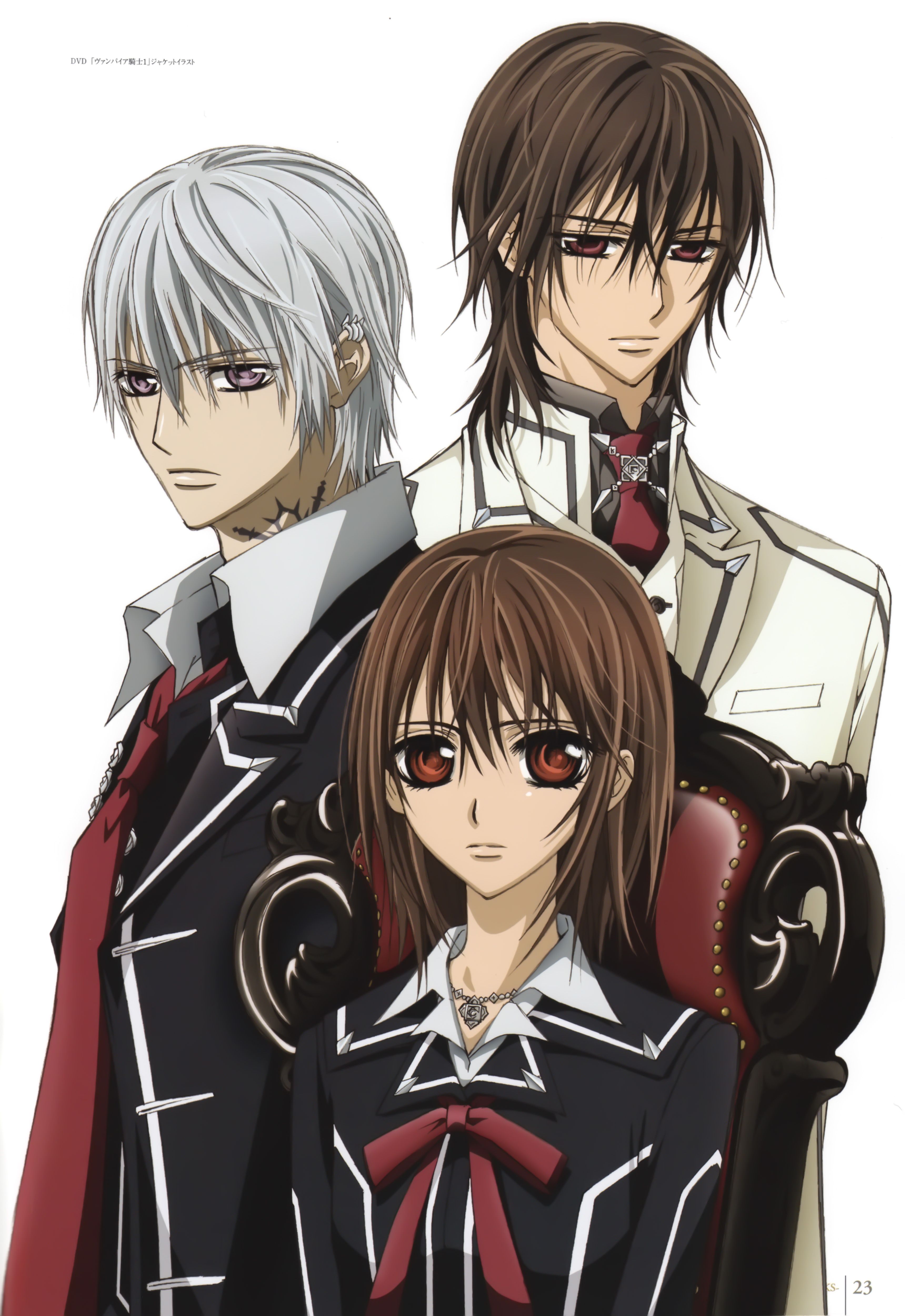
He’s the guy with the silver hair, the Bloody Rose, and a chip on his shoulder the size of Cross Academy. If you were online in the late 2000s, you couldn't escape him. Zero Kiryu from Vampire Knight wasn't just another brooding love interest in a sea of supernatural romance; he was a walking, talking subversion of the "bad boy" trope that dominated the era.
Most people remember the love triangle. They remember the constant tension between him, Yuki, and Kaname Kuran. But if you look back at Matsuri Hino’s original manga—rather than just the 2008 anime adaptation—Zero is actually a deeply tragic case study in trauma and self-loathing. He’s basically the heart of the series.
The Hunter Who Became the Prey
The backstory is brutal. Zero was born into a prestigious family of Vampire Hunters. Then, Shizuka Hio happened. A pureblood vampire murdered his parents, turned him into a vampire, and took his twin brother, Ichiru. It’s a lot for a kid to handle.
Honestly, the "vampire who hates vampires" thing is a bit of a cliché now, but Zero Kiryu makes it feel visceral. He doesn’t just dislike his condition. He finds his own existence physically repulsive. This creates a fascinating dynamic because he’s tasked with guarding the Day Class from the very creatures he’s becoming. He is a literal ticking time bomb.
In the world of Vampire Knight, becoming a vampire isn't a sexy upgrade. For a Hunter, it’s a death sentence. Specifically, it’s a slow descent into a Level E—a mindless, bloodthirsty beast. Zero’s struggle isn't just about "will he bite Yuki?" It's about a man trying to maintain his humanity while his biology is screaming at him to give up. He carries the Bloody Rose, a gun that kills vampires but won't harm humans, as a constant reminder that he is supposed to be the weapon, not the target.
The Twin Factor: Ichiru and the Fragmented Soul
We have to talk about Ichiru. The relationship between the Kiryu twins is arguably more complex than any of the romantic plotlines. In the manga, it's revealed that Zero "consumed" part of Ichiru in the womb—a common Hunter legend known as the "Curse of Twins." This guilt defines Zero. He spent his whole life trying to protect a brother who secretly hated him for being the "stronger" one.
When they finally reunite, it isn't some happy family moment. It’s messy. It’s full of resentment. Ichiru’s eventual death and Zero’s consumption of him to gain the power to defeat Rido Kuran isn't a power-up in the traditional shonen sense. It’s a tragedy. Zero becomes a "perfected" hunter by essentially erasing the last piece of his family. It's dark stuff.
Why Zero Kiryu Still Dominates Fan Polls Over Kaname
Ask any long-term fan and they'll likely have a strong opinion on the Zero vs. Kaname debate. Kaname Kuran is the "Prince." He’s calculating, old-world, and manipulative. Zero, on the other hand, is raw.
You’ve probably noticed that Zero is way more relatable to a modern audience. He’s reactive. He makes mistakes. He loses his temper. While Kaname plays 4D chess with everyone’s lives, Zero is just trying to survive the next ten minutes without losing his mind. People gravitate toward that vulnerability.
- The Power Dynamic: Kaname treats Yuki like a pawn or a precious doll. Zero treats her like a person, even when he’s being a jerk.
- The Struggle: We see Zero’s pain. We see him digging his nails into his palms to stop the hunger. That visceral struggle makes his small moments of kindness—like taking care of the horses at the academy—hit much harder.
- The Redemption: Zero doesn't really want power. He wants peace.
There's a specific scene where Zero tells Yuki to kill him before he falls to Level E. It’s one of the most iconic moments in Vampire Knight because it’s the ultimate act of trust. He’s giving her the power to end his suffering. In a genre that often romanticizes toxic obsession, Zero’s willingness to die to protect Yuki from himself is actually quite profound.
Breaking Down the Bloody Rose and Zero’s Combat Evolution
Zero isn't just a guy with a gun. The Bloody Rose is a sentient weapon that reacts to the wielder’s soul. As Zero becomes more "vampiric," the gun actually changes.
Eventually, the weapon transforms into a mass of organic vines and thorns that sprout from his arm. It’s a visual metaphor for his loss of humanity. He’s no longer just holding a tool; he is becoming the weapon itself. This evolution is key to his role as the "Ultimate Hunter." By the end of the manga, Zero is effectively the only being capable of standing against the Pureblood hierarchy because he exists in the gray space between both worlds.
He’s a hybrid in the truest sense. He has the strength of a vampire and the equipment of a hunter. But this strength comes at a massive psychological cost. He’s an outcast among humans and a freak among vampires.
The Controversy of the Ending: Memories of Knight
If you only watched the anime, you missed the real ending. And boy, is it a doozy.
The Vampire Knight Memories manga continues the story after the main series concludes. It addresses the "thousand-year" gap. For years, fans argued over who Yuki "chose." The reality is... both. But not at the same time. After Kaname sacrifices his heart to the furnace to create new Hunter weapons, he becomes human but enters a long sleep.
Zero and Yuki spend their lives together. They have a son. They live a relatively quiet life while Zero continues his work as a Hunter. This is a huge deal for his character. After years of thinking he was a monster who deserved nothing, Zero finally allows himself to be happy.
But it’s bittersweet. Zero eventually dies of old age (well, vampire old age), leaving Yuki to eventually sacrifice her life to wake Kaname. It’s a cyclical tragedy. Some fans hate this. They think it cheapens Zero’s relationship with Yuki. Others see it as the most realistic outcome for a world where immortals and mortals try to love each other. Zero got the life he wanted, even if it wasn't "forever."
What Most People Get Wrong About Zero’s "Coldness"
He’s not actually a tsundere. Not really.
A tsundere acts mean to hide a crush. Zero acts mean as a defense mechanism to keep people away so he doesn't accidentally kill them. There’s a massive difference. If you pay attention to his body language in the manga, he’s constantly pulling away, not out of annoyance, but out of fear. He is terrified of his own thirst.
When he tells Yuki to "stay away," he isn't playing hard to get. He’s issuing a warning. It’s only when Yuki refuses to listen that he starts to let his guard down. His "jerk" persona is a literal life-saving measure.
Zero's Legacy in Modern Anime
You can see Zero's DNA in a lot of modern "tortured protagonist" characters. From Tokyo Ghoul’s Kaneki to certain aspects of Jujutsu Kaisen, the trope of the hero who must use the power of the enemy to save people started with characters like Zero Kiryu.
He represents the internal conflict of the "other." He’s a minority within his own society, someone who is feared by the people he protects and hated by the people he resembles. That’s a heavy burden for a teenager in a shojo manga.
How to Appreciate Zero's Arc Today
If you're revisiting the series, keep these things in mind:
- Read the Manga: The anime cuts out so much of Zero’s internal monologue. The manga artwork by Hino is also much more effective at conveying his isolation.
- Watch the Background: Zero is rarely the center of attention in group scenes. He’s usually in the shadows or at the edge of the frame. This is intentional.
- Focus on the Hands: Hino uses hand gestures a lot with Zero. Whether he’s gripping his arm to hide his tattoo or reaching out to Yuki and stopping halfway, it’s all there.
Zero Kiryu is a masterclass in how to write a character who is "edgy" but has the emotional depth to back it up. He isn't just cool because he has a gun and a tattoo; he’s compelling because he’s a broken person trying to do the right thing in a world that wants him dead.
To truly understand Zero, you have to look past the silver hair and the cool weapons. You have to see the scared kid who lost everything in a single night and spent the rest of his life trying to make sure nobody else suffered the same fate. Whether you're Team Zero or Team Kaname, there's no denying that the series wouldn't work without the Hunter who couldn't help but become what he hated most.
Take Action: If you want to see the full scope of Zero's journey, pick up the Vampire Knight: Memories volumes. They provide the closure that the original series—and certainly the anime—left hanging. Seeing Zero as a father and a seasoned veteran offers a perspective on his character that completely changes how you view his early "moody" years at Cross Academy.