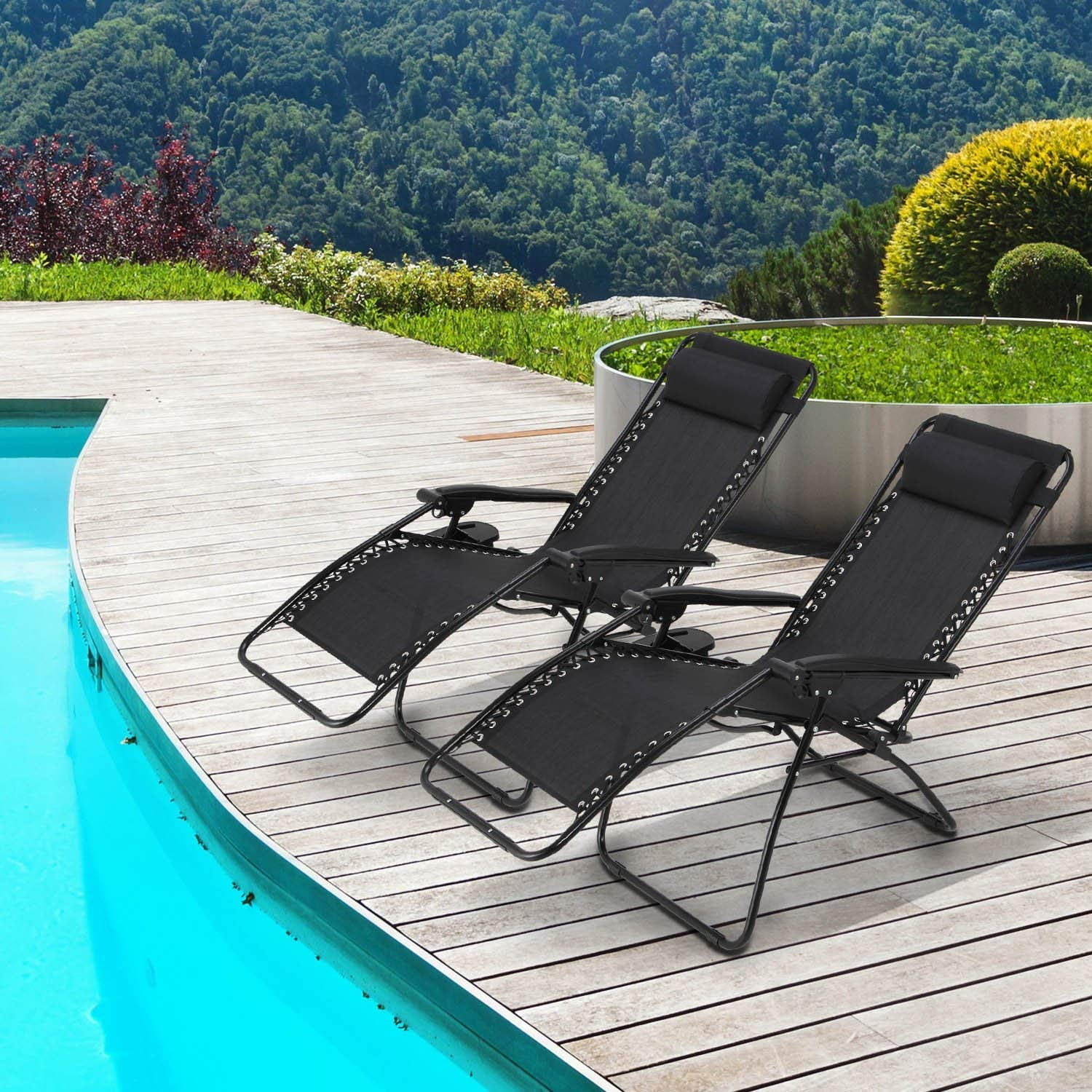
You’re sitting in a cheap plastic lawn chair, and your lower back is screaming. We've all been there. It’s that familiar, nagging ache that happens when your spine is forced into a shape it wasn't meant to hold for three hours during a backyard barbecue. Then you see it—that oversized, mesh-covered contraption tucked in the corner of the deck. You lean back, the world tilts, and suddenly, you feel like you’re floating. It’s not magic. It’s physics. But honestly, most of the marketing around zero gravity outdoor patio chairs is a bit of a stretch, and if you buy the wrong one, you’re basically just buying a more expensive way to be uncomfortable.
Let’s get one thing straight: you aren't actually weightless. NASA didn't invent a chair that defies the laws of Newtonian physics while you sip a LaCroix. The term "zero gravity" refers to the specific posture developed by NASA researchers to help astronauts handle the intense G-forces during launch. By reclining into a position where the feet are elevated slightly above the heart level, the body distributes weight more evenly across the chair's surface. This reduces pressure on the spine and helps the heart pump blood more efficiently. It’s about neutral body posture, not levitation.
The Science of Why Your Back Actually Stops Hurting
When you’re standing or sitting upright, gravity is constantly compressing your intervertebral discs. It’s relentless. Over time, this leads to that compressed, "heavy" feeling in the lumbar region.
A high-quality zero gravity outdoor patio chair works by mimicking the "Neutral Body Posture" (NBP). According to NASA's Anthropometry and Biomechanics Guideline, this is the natural position the human body assumes in microgravity. When the musculoskeletal system isn't fighting against the 1G environment of Earth, it settles into a specific angle—roughly 128 degrees between the torso and the thighs.
When you find that "sweet spot" in a patio chair, several things happen simultaneously. First, the tension in your hip flexors evaporates. Most of us spend our days with tight hips from sitting at desks, which pulls on the lower back. Elevating the legs releases that pull. Second, the venous return to your heart improves. Because your legs are above your heart, gravity helps the blood flow back up, which can significantly reduce swelling in the ankles and feet after a long day of standing. It’s basically a recovery tool disguised as lawn furniture.
Materials Matter More Than You Think
Don't just look at the color. Seriously.
If you buy a chair with a cheap powder-coated steel frame and leave it out in a Florida humidity spike or a Seattle drizzle, it will rust from the inside out within a single season. Look for high-gauge steel or, if you have the budget, aluminum frames. Aluminum is lighter and naturally more resistant to corrosion, though it lacks the sheer heft that makes steel feel "solid" when you're rocking back.
The fabric is the next failure point. Most of these chairs use Textilene, which is a polyester yarn coated with PVC. It’s breathable, which is crucial unless you want a sweaty back five minutes into your nap. However, the "bungee" cords—the elastic laces that attach the fabric to the frame—are the unsung heroes. They act as the suspension system. If they’re too thin, they’ll lose their elasticity within months, and you’ll end up sagging like you’re in a hammock that’s seen better days. Look for double-looted bungee systems for better weight distribution and longevity.
Why Some "Zero Gravity" Chairs Are Total Junk
The market is flooded with $40 knockoffs. You’ve seen them at big-box stores in those giant cardboard bins. Here’s the problem: a lot of them don't actually recline far enough to achieve the true neutral posture. If your feet aren't above your heart, it’s just a recliner with a fancy name.
Check the locking mechanism. This is where the cheap ones fail first. You want a lever-lock system, usually found under the armrests. The cheap twist-knobs are a nightmare to use while you're actually sitting in the chair, and they tend to slip, causing you to suddenly jerk backward or forward. It’s the opposite of relaxing. It’s startling.
Another huge misconception is that these chairs are "one size fits all." They really aren't. If you’re over 6'2", your feet are going to hang off the bottom bar, which creates a pressure point on your Achilles tendon. If you’re on the shorter side, the built-in headrest—which is usually just a sliding pillow—might not go low enough to support your neck properly. Companies like Lafuma have spent decades refining these ergonomics, and while they cost three times as much as a generic version, the difference in the pivot point geometry is massive. A well-engineered chair pivots smoothly without you having to "muscle" it into position.
Real World Durability: Sun, Rain, and Salt
Let’s talk about UV degradation. It’s the silent killer of outdoor furniture. Even the best PVC-coated mesh will eventually become brittle if left in direct sunlight for 300 days a year. If you want your zero gravity outdoor patio chairs to last more than two summers, you have to be proactive.
- The "Hose Down" Rule: Salt air is brutal. If you live within ten miles of the coast, salt crystals will settle in the crevices of the folding joints and eat the metal. Rinse the chairs with fresh water once a month.
- Lubrication: Use a dry silicone spray on the joints. Avoid WD-40 for long-term lubrication; it actually attracts dust and grit over time, which acts like sandpaper in the hinges.
- Storage: If you aren't using them in the winter, fold them up. These chairs are designed to be portable, so take advantage of that. Store them in a garage or shed.
Comparing the High-End vs. The Budget Tier
You’ve got the $50 specials and the $300+ "professional" loungers. Is there a middle ground? Sort of.
The budget chairs are fine for occasional use—maybe a few camping trips or a couple of weekend BBQs. But they usually have a weight capacity that's a bit optimistic. If a chair says it supports 250 lbs, and you’re 240, you’re going to feel the frame flex. It’s not a great feeling.
High-end brands like Lafuma or even the "XL" versions from Timber Ridge use thicker tubing and more robust locking teeth. The fabric on a premium chair feels less like plastic and more like a heavy-duty textile. More importantly, the replacement parts market is real for high-end chairs. If a bungee breaks on a $50 chair, you throw the chair away. If it breaks on a premium model, you buy a $20 replacement lace kit and the chair is as good as new. It’s less wasteful and cheaper in the long run.
What Most People Forget: The "Accessories"
A tray is not a luxury; it’s a necessity. Because of the way these chairs tilt, you can’t easily reach the ground to grab your drink or phone. Most zero gravity outdoor patio chairs now come with a clip-on side table. Check the reviews for these—some are flimsy and will dump your beer in your lap the moment you shift your weight.
Also, consider the "XL" or "Oversized" models even if you aren't a large person. The extra four to six inches of width makes a world of difference in the "elbow room" department. It allows your arms to rest naturally on the armrests without feeling like you’re pinned in a cockpit.
The Nuance of Comfort: Is it for Everyone?
Look, these chairs aren't perfect. For people with certain types of vertigo or inner ear issues, the reclining motion can be disorienting. Additionally, if you have severe mobility issues, getting out of a zero gravity chair can be a bit of a workout. You have to sit up, find your footing, and push off the armrests, which can be low to the ground. It’s something to keep in mind if you’re buying one for an elderly relative.
Actionable Steps for Your Next Purchase
Stop looking at the stock photos and start looking at the specs. If you're ready to upgrade your outdoor setup, here is how you should actually shop:
- Measure your space: These chairs have a surprisingly large footprint when fully reclined. You’ll need about 6 feet of clearance from front to back to avoid hitting a wall or a railing.
- Check the "True Recline": Ensure the chair can actually hit that 125-130 degree angle. If the footrest stays below the seat level, move on.
- Weight Matters: If you plan on moving these to the beach, check the weight of the chair itself. Steel chairs can be heavy—often 15-20 lbs. Aluminum is your friend for portability.
- The "Squeeze Test": If you're in a store, squeeze the armrests. If they feel thin and flex easily, the rest of the frame likely follows suit. You want rigidity in the base.
Investing in a proper zero gravity outdoor patio chair is really about investing in your downtime. We spend so much time in "forward-leaning" postures—hunched over keyboards, steering wheels, and kitchen counters. Intentionally reversing that posture for even 20 minutes a day can do wonders for your stress levels and your spine. Just make sure you aren't settling for a chair that just looks the part without doing the actual mechanical work of supporting your body. Take the time to find a frame that fits your height, a fabric that breathes, and a locking mechanism that actually holds. Your back will thank you when you’re still feeling refreshed after a long afternoon in the sun.