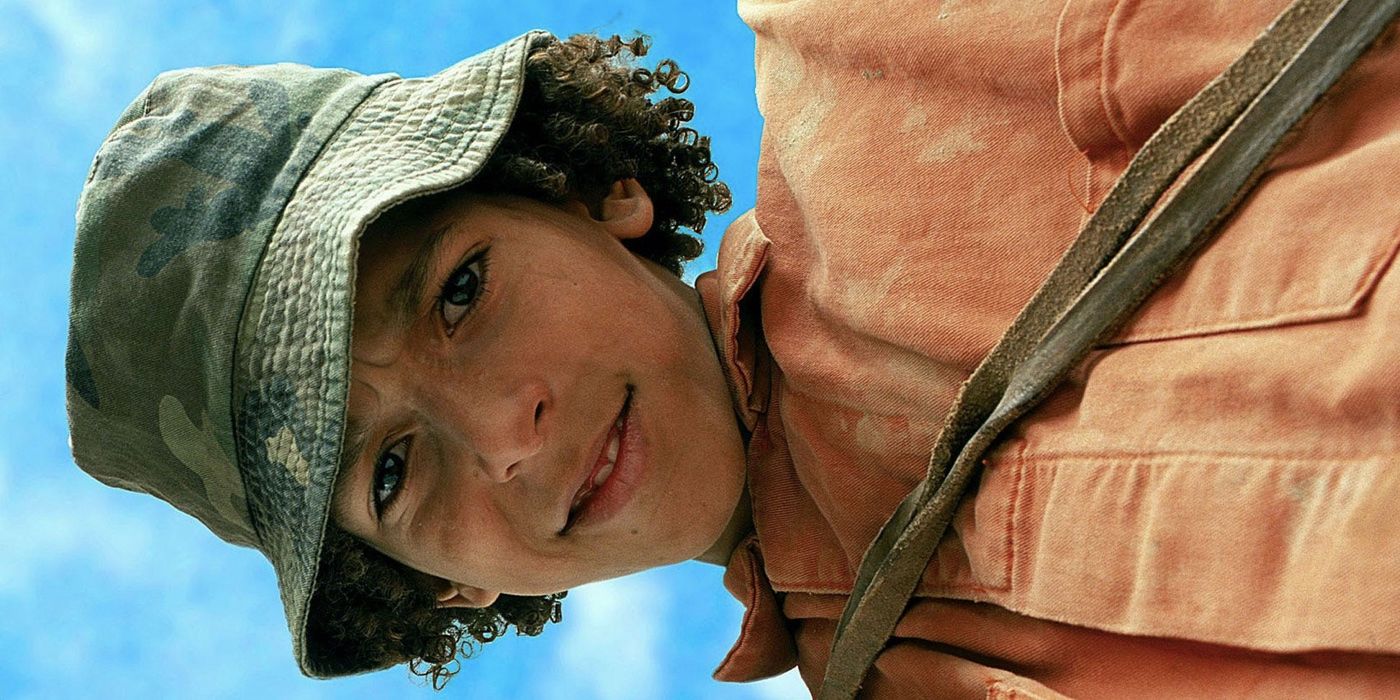
He didn't talk. For a huge chunk of the movie, Hector Zeroni—better known as Zero from Holes—is just background noise. He’s the "fastest digger" at Camp Green Lake, a kid the counselors treat like a literal nothing. Mr. Pendanski actually tells him to his face that he has nothing inside his head. It’s brutal. But if you watch the 2003 Disney adaptation of Louis Sachar’s novel today, you realize the entire plot actually orbits around him. Stanley Yelnats might be the POV character, but Zero is the engine.
Most people remember the yellow-spotted lizards or the "dig a hole a day" rule. What stays with you, though, is Khleo Thomas’s performance. He captured this specific kind of guardedness. Zero wasn't "slow" or "stupid." He was a kid who had been failed by every single social system in America before he even hit puberty.
The Zero From Holes Backstory That Actually Breaks Your Heart
Zero’s life wasn't just "tough." It was a systemic collapse. In the film, we get these flashes of his past—memories of his mother leaving him in a park. He explains to Stanley that she told him to wait on a specific bench and she just... never came back. It wasn't because she didn't love him. The movie hints at the crushing reality of homelessness and poverty. Zero lived in a "shelter" that was basically just a park.
When you look at the crime that sent him to Camp Green Lake, it’s peak irony. Stanley is there because he "stole" Clyde "Sweet Feet" Livingston’s shoes. But Zero actually did it. He didn't do it for profit. He didn't even know they were famous. He was a kid who needed shoes. He walked out of a shelter, saw a pair of sneakers, and put them on because his feet were bare.
Think about that. The "curse" of the Yelnats family—the one involving Madame Zeroni—is only broken because the great-great-grandson of the woman who cursed them is the one who helps Stanley survive.
Literacy as Power at Camp Green Lake
One of the best arcs in any early 2000s movie is the deal between Stanley and Zero from Holes. Stanley teaches Zero to read; Zero digs part of Stanley’s hole. It’s a transaction that turns into a brotherhood.
The scene where Zero finally snaps is iconic. He’s tired of being called "Zero." He’s tired of being told he’s a cipher. When he hits Mr. Pendanski with the shovel and walks off into the desert, it’s a suicide mission. He knows it. The camp knows it. They don't even go after him because they assume the heat will do the job.
But Zero is a survivor. He finds the "Sploosh"—those jars of 100-year-old spiced peaches left behind from Katherine Barlow’s boat. Honestly, the fact that he survived on fermented peach nectar in the middle of a dried-up lake bed is the most metal thing in a PG movie.
Why Khleo Thomas Was Perfect for the Role
Khleo Thomas brought a stillness to Zero. In a movie filled with loud characters like Shia LaBeouf’s Stanley or the over-the-top villainy of Jon Voight’s Mr. Sir, Zero had to be the emotional anchor.
Thomas has talked in interviews about how he stayed in character on set. He wanted to feel that isolation. It worked. When he finally smiles at the end of the film—when he’s wearing fancy clothes and finally finds his mother—it feels earned. It doesn't feel like a cheap Disney ending. It feels like justice for a kid who had been treated like a hole in the ground for fifteen years.
The Connection to Madame Zeroni
The movie does a great job of weaving the Sam/Kate Barlow era with the modern-day Camp Green Lake, but the link between Stanley and Zero is the real "destiny" play.
- Elya Yelnats (the great-great-grandfather) forgets to carry Madame Zeroni up the mountain.
- The Yelnats family is cursed with bad luck for generations.
- Stanley carries Hector Zeroni (Zero) up God’s Thumb.
- The curse is broken.
It’s a perfect circle. Zero isn't just a sidekick. He is the personification of the debt the Yelnats family owed. Without Zero, Stanley would have just been another kid digging holes until his spirit broke. Zero provided the catalyst for the escape. He was the one who survived the desert first.
What Most People Miss About Zero’s Intelligence
There’s a misconception that Zero was uneducated because he was "slow." He was actually a math genius. He tells Stanley he likes to count. He knows exactly how many holes he’s dug. He calculates the math of their survival better than anyone.
His illiteracy was a lack of access, not a lack of capability. This is a huge theme in the story. It’s a critique of how the American school system and the juvenile justice system write off kids who don't fit a specific mold. If you don't talk, you're "nothing." If you can't read, you're "Zero."
The Legacy of the Character
Twenty years later, Zero from Holes remains one of the most empathetic portrayals of a foster child/homeless youth in cinema. He wasn't a "troubled kid" in the way the Warden wanted him to be. He was a kid who was hungry—for food, for a home, and for a name.
When they find the treasure chest at the end, and it has the name "Stanley Yelnats" on it, it’s a win for Stanley. But the real win is the legal loophole that gets Zero out. Since the camp "lost" his files (because they thought he’d die in the desert), they had no legal right to hold him.
The system tried to delete him, and that deletion is exactly what set him free.
Key Takeaways for Fans of the Movie
If you’re revisiting the story or writing about it, keep these nuances in mind:
- Zero’s real name matters: Hector Zeroni is the link to the past. Calling him "Zero" was the counselors' way of dehumanizing him, which he eventually rejects with a shovel to the face.
- The "Sploosh" wasn't just food: It was a literal connection to Sam the Onion Man and Katherine Barlow. It was the only thing that could have kept him alive because of its high sugar content and moisture, despite being a century old.
- The survival on God's Thumb: The onions they ate were the same onions Sam used to grow. This isn't just a coincidence; it’s the narrative's way of showing that the land itself was providing for the descendants of those who were wronged.
- Actionable Step: Watch the 2003 film again, but pay attention to Zero's eyes in the first 30 minutes. He’s observing everything. He knows where the cameras are, he knows the guards' patterns, and he knows exactly who Stanley is before Stanley knows himself.
To truly understand the depth of the character, look into the "holes" in his own life—the missing pieces of his family history that he finally fills in when he finds his mother in the final scene. It’s a rare example of a character getting exactly what they deserve after a lifetime of getting nothing.