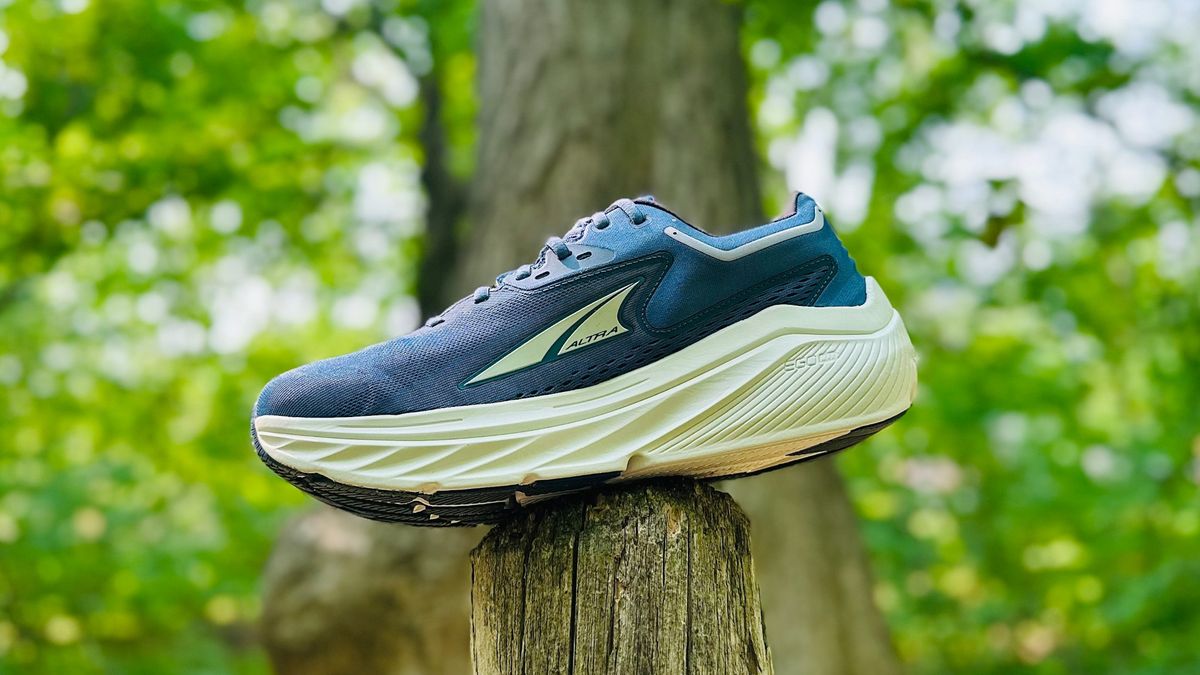
You’ve probably seen them at the local trailhead or on the feet of that one guy in your run club who refuses to stop talking about "natural movement." They look a little weird. Maybe the toes are extra wide, or the sole looks suspiciously flat, like a pancake slapped onto a sneaker. We're talking about zero drop running shoes, and honestly, they are probably the most polarizing piece of gear in the modern fitness world.
For decades, the big players—Nike, Brooks, ASICS—built shoes with a "drop." This is just the height difference between the heel and the forefoot. Most traditional trainers have a 10mm to 12mm drop, meaning your heel sits significantly higher than your toes. It’s like wearing a tiny, sporty wedge. Zero drop shoes, popularized by brands like Altra and Vivobarefoot, scrap that entirely. Your heel and your forefoot sit at the exact same height off the ground.
It sounds simple. It sounds "natural." But if you just go out and buy a pair tomorrow and try to smash out a 10k, you’re likely going to end up in a physical therapist's office with a shredded Achilles.
The Biomechanics of Flatness
Why does this even matter? Well, when you raise the heel, you’re essentially shortening the calf muscle and the Achilles tendon. Over years of wearing traditional shoes, your body adapts to that shortened state. When you suddenly switch to zero drop running shoes, you are forcing those tissues to stretch further than they have in years. Every single stride becomes a massive eccentric load on your lower legs.
Harvard paleoanthropologist Daniel Lieberman really kicked this whole hornets' nest off with his 2010 study in Nature. He looked at barefoot runners in Kenya and realized that people who run without shoes tend to land on their midfoot or forefoot. This creates way less impact transient—that "jolt" of force—than the heavy heel-striking most of us do in cushioned sneakers. Zero drop shoes are designed to mimic that barefoot geometry while still giving you some rubber so you don't step on a rusty nail or a sharp rock.
But here is the catch: your foot is probably weak. Most of us have "shoe-shaped feet" rather than "foot-shaped shoes." Modern footwear often features a narrow toe box that squishes your big toe inward (hallux valgus). A true zero drop shoe almost always comes with a wide toe box. This lets your toes splay out. When your toes splay, your arch actually has a chance to function like the spring it was meant to be. It’s a total system reset.
It’s Not Just About "Barefoot" Vibes
People get confused and think zero drop always means "minimalist" or "thin." That’s just not true anymore. You can get a maximalist shoe—something like the Altra Olympus—that has 33mm of foam under your foot but still maintains a 0mm drop. You get the cushion of a marshmallow but the geometry of a flat surface.
Then you have the true minimalist stuff. Xero Shoes or Vivobarefoot. These have maybe 4mm to 6mm of total stack height. You feel every pebble. You feel the texture of the asphalt. It’s tactile. It’s intense. And for some people, it’s the only thing that fixed their chronic knee pain. Because when you stop landing on your heel, the impact doesn't shoot straight up into your knee joint; it gets absorbed by your calves and ankles.
Of course, that just moves the "problem" down the chain. Instead of "runner's knee," you get "Achilles tendinitis" if you aren't careful. It’s a trade-off.
The Transition: How Not to Break Your Feet
If you want to try zero drop running shoes, you have to be patient. I mean annoyingly patient.
Most experts, including podiatrists who specialize in sports medicine like Dr. Ray McClanahan, suggest a "weaning" process. You don't just swap. You wear them for an hour around the house. Then you go for a walk. Then maybe—maybe—you run half a mile in them at the end of a regular workout.
- Start by wearing them as everyday "walking around" shoes.
- Use a lacrosse ball to roll out your plantar fascia every night. It’s going to be tight.
- Strengthen your feet. Try picking up marbles with your toes. Sounds stupid? It works.
- Gradually decrease the drop of your shoes. If you’re at 12mm, try an 8mm or 4mm shoe (like certain Hoka or Saucony models) before going to full zero.
Real World Winners and Losers
Let's look at the actual shoes on the market right now.
Altra is the king of the "cushioned zero drop" world. Their Lone Peak is a cult classic in the thru-hiking community. Why? Because when you’re walking 2,000 miles on the Appalachian Trail, your feet swell. The wide toe box and flat platform allow for that swelling without causing blisters.
On the other side, you have the "barefoot" purists. Brands like Softstar or the aforementioned Vivobarefoot. These are for the people who want to feel the earth. It's a niche, but it's growing. Even mainstream brands are starting to lower their drops. The industry standard is shifting from 12mm down to 8mm or 6mm because runners are realizing that a massive heel is basically a braking mechanism. It slows you down.
Is it for everyone? No. Honestly, some people have bone structures or pre-existing injuries that make zero drop a nightmare. If you have severe osteoarthritis in your ankle, you might actually need that heel lift to function. If you have a fused big toe joint, the "natural" flex of a zero drop shoe might be physically impossible for you.
The Science of the "Pop"
There is a specific feeling when you get it right. When your foot lands directly under your center of mass, rather than out in front of you. It feels light. You aren't fighting the shoe.
A study published in the Journal of Science and Medicine in Sport found that running in zero drop footwear can increase the work done by the ankle by about 15% to 20%. That’s a lot of extra work for your lower leg. But the same study showed a decrease in the load on the patellofemoral joint (the knee).
So, it's basically a choice of where you want to put the stress. Do you want it in your joints or your muscles? Muscles can get stronger. Joints mostly just wear out. That’s the logic, anyway.
What Most People Get Wrong
People think zero drop running shoes are a "fix." They aren't. They are a tool.
If your running form is garbage, a flat shoe isn't going to magically make you Eliud Kipchoge. In fact, if you have a heavy heel strike and you move into a zero drop shoe without changing your gait, you are going to put an astronomical amount of pressure on your calcaneus (heel bone). You’ll feel it instantly. It hurts.
The shoe is a teacher. It provides biofeedback. If you land "wrong," the shoe tells you immediately because there isn't two inches of foam to hide the impact. You learn to soften your landing. You learn to quicken your cadence. Most zero drop runners naturally gravitate toward a higher step rate—around 170 to 180 steps per minute—because it’s much harder to "overstride" when your heel isn't propped up.
Actionable Steps for the Curious
If you're sitting there thinking your knees have had enough and you want to give this a shot, here is the roadmap. Don't skip steps.
Assess your current closet. Check the specs on your current shoes. Are you in a 12mm drop? A 10mm? Knowing your baseline helps you understand how big of a jump zero drop will be.
Buy a transition pair. Don't go straight to a thin minimalist sole. Look at something with a "low drop" (4mm) first. This allows your Achilles to lengthen slowly over a few months rather than snapping like a rubber band on day one.
Integrate foot exercises. Spend at least five minutes a day barefoot. Walk on grass. Walk on sand. Do calf raises. Build the "intrinsic" muscles of the foot that have been turned off by supportive shoes for the last twenty years.
The "10% Rule" is too fast. Usually, people say increase mileage by 10% a week. For zero drop, make it 5%. If you run 20 miles a week, do 1 mile in the new shoes. That’s it. It feels like nothing, but your calves will thank you the next morning.
Listen to the "Good" Pain vs "Bad" Pain. Muscle soreness in your calves is expected. It’s the "good" kind of pain—growth. Sharp, stabbing pain in the bottom of your foot or a burning sensation in your Achilles is the "bad" kind. If you feel that, stop. Immediately. Go back to your old shoes for a week and let things settle.
Zero drop isn't a religion, even if some people treat it like one. It’s just geometry. By bringing your foot back to a level plane, you're asking your body to move the way it evolved to move. It's harder. It takes more work. But for the runner who wants to stay on the road for the next thirty years instead of the next three, it might be the most important gear shift you ever make.
Invest in your feet, not just the foam. The goal is a stronger body, not just a faster mile. Once you stop leaning on the "crutch" of a high-heeled running shoe, you might find that you were a better runner all along; you just needed to get out of your own way. Or at least, get your heels out of the way.
The transition is long, and the path is littered with sore calves, but the payoff of a more resilient, natural stride is worth every boring mile of the "break-in" period. Just remember: it's a marathon, not a sprint. Literally.