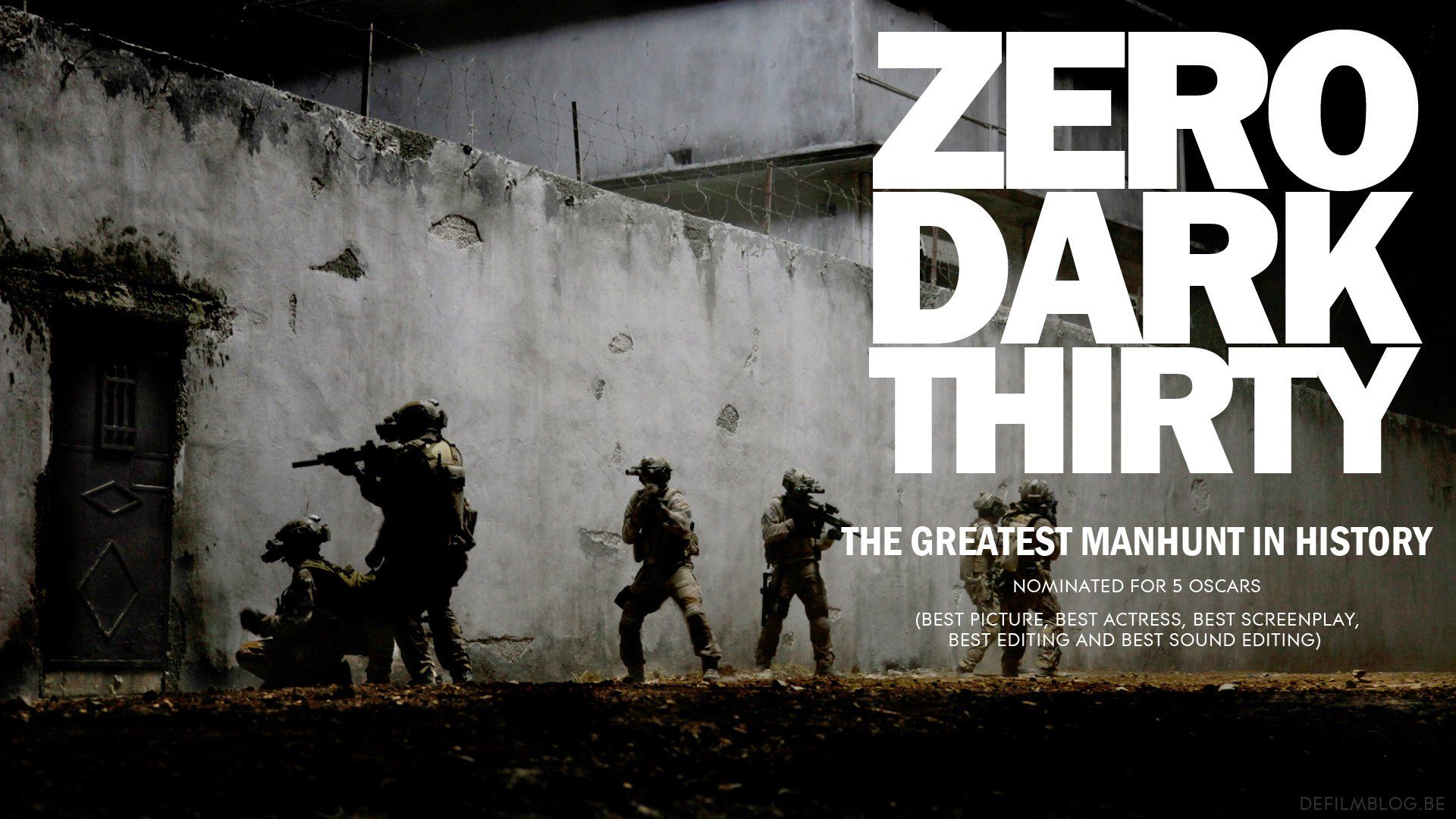
It’s been over a decade since Maya walked onto that transport plane, sat down in the cavernous silence of a C-130, and stared into nothing. She’d spent twelve years chasing one man. Then, he was dead. The movie Zero Dark Thirty doesn't end with a parade or a "Mission Accomplished" banner. It ends with a hollow, gut-wrenching question: "Where do you want to go?" Maya doesn't have an answer. Neither did we.
Honestly, the film is a brutal watch. It’s cold. It’s clinical. Director Kathryn Bigelow and writer Mark Boal didn't set out to make a flag-waving recruitment video. They made a procedural about obsession. People still argue about this movie in 2026 because it refuses to apologize for showing the moral rot that comes with a decade-long manhunt. If you think this is just another action flick about SEAL Team Six, you’ve basically missed the entire point. It’s a movie about the price of "getting the job done."
The Maya Factor: Fact vs. Hollywood Friction
Jessica Chastain’s character, Maya, is the engine of the entire plot. Most people know she's based on a real person, often referred to in reporting as "Jen." But the film condenses a massive, sprawling intelligence apparatus into one woman’s singular focus. It makes for great cinema, but it’s sort of a half-truth.
In reality, the search for Osama bin Laden was a grinding, multi-generational effort by the CIA’s Alec Station and the Bin Laden Issue Station. The real "Maya" was indeed a central figure—a targeter who pushed for the Abbottabad raid when others were hesitant—but she wasn't a lone wolf. She was part of a team. However, the film uses her to represent the collective trauma of the Agency. When she yells at her boss that she’s the "motherf***er who found this place," it’s a release of years of bureaucratic frustration that real analysts certainly felt.
The nuance matters. The real analyst was reportedly passed over for a promotion and became a somewhat controversial figure within the CIA for her abrasive style. By focusing on her, Zero Dark Thirty highlights the personal toll of high-stakes intelligence work. You see her age. You see her lose friends in the Camp Chapman attack. By the time the helicopters take off, she’s less a person and more a ghost haunting her own life.
The Torture Controversy That Won't Die
You can't talk about Zero Dark Thirty without talking about "Enhanced Interrogation Techniques." This is where the film got into hot water with the Senate Intelligence Committee. Critics like Frank Franken and John McCain famously slammed the movie for implying that torture led directly to the courier, Abu Ahmed al-Kuwaiti.
Here’s the thing: the movie is more ambiguous than people remember. It shows that the "enhanced" sessions often produced lies or dead ends. It’s only when they use bribery—buying a guy a Lamborghini, essentially—and traditional, patient detective work that the puzzle pieces start fitting together. But Bigelow doesn't look away from the waterboarding. She puts it in your face in the first twenty minutes.
The discomfort is intentional.
Whether the film "endorses" torture is a debate that could go on forever. What it definitely does is show that the US government used it. It documents the era. It shows the shift from the brutal, dark-site early 2000s to the tech-heavy, drone-strike era of the 2010s. The movie acts as a mirror to the American psyche during the War on Terror. It’s messy. It’s ugly. It’s probably a bit inaccurate regarding the specific utility of the torture, but as a piece of visceral history, it hits like a sledgehammer.
The Raid: 24 Minutes of Pure Tension
The final act of Zero Dark Thirty is a masterclass in filmmaking. It’s almost real-time. There’s no pulsing Hans Zimmer-style score over the raid. Just the sound of heavy breathing, the crunch of gravel, and the eerie green glow of night-vision goggles.
- The Silence: Most war movies use explosions to create tension. Bigelow uses the absence of sound.
- The Chaos: It’s not a clean operation. A Black Hawk crashes. Kids are screaming in the background. It feels claustrophobic and terrifying.
- The Identity: When they finally kill the target, they don't even use his name for a long time. He's just "Third Floor."
It’s interesting to compare this to Act of Valor or other "macho" military movies. In those, the raid is the reward. In this movie, the raid is a grim necessity. When the SEALs return to base and start zipping up the body bag, there’s no cheering. There’s just a sense of "okay, what’s next?"
Accuracy Check: What They Got Right (and Wrong)
If you're looking for total historical fidelity, you won't find it in a two-hour Hollywood script. But they got the "vibe" right. The depiction of the Islamabad Marriott Hotel bombing in 2008? Terrifyingly accurate. The tension of living in the "Red Zone"? Spot on.
- The Courier: The hunt for Abu Ahmed al-Kuwaiti was indeed the "golden thread."
- The Stealth Hawks: The film correctly identified that modified, stealth-capable Black Hawks were used, a detail that surprised many when the tail rotor of a crashed bird was seen in real-life photos of the compound.
- The Timeline: The movie speeds things up. In reality, the gap between identifying the courier and the raid was a long, agonizing period of surveillance and doubt.
One major point of contention is the portrayal of the CIA's internal politics. The film suggests a near-constant battle between the "believers" and the "skeptics." While there was certainly debate, the real-world process was much more bogged down in committees than the cinematic version suggests.
Why We Are Still Obsessed With It
Why do we keep coming back to this? Maybe because we're still living in the aftermath. The "Zero Dark Thirty" era defined the 21st century. It changed how we fly, how we vote, and how we view our place in the world.
The movie is a time capsule. It captures a specific moment when the "end" of a conflict felt possible. But as we know now, the death of one man didn't end the ideology or the wars. It just closed one chapter. Maya’s tears at the end of the film aren't tears of joy. They’re tears of someone who realized they've spent their entire youth building a monument to a ghost.
Taking the Next Steps: Deepening Your Knowledge
If you want to move beyond the movie and understand what actually happened during Operation Neptune Spear, you have to look at the primary sources. The film is a dramatization; the reality is often weirder and more complex.
- Read "No Easy Day": Written by Matt Bissonnette (under the pen name Mark Owen), this is a first-hand account of the raid from one of the SEALs who was actually there. It provides a technical perspective that the movie mirrors but can't fully replicate.
- Check the Senate Intelligence Committee Report: If the torture debate interests you, the declassified executive summary of the CIA's detention and interrogation program is the definitive (and harrowing) document to read.
- Watch "The Spymasters": This documentary features interviews with every living CIA director. It gives context to the "Maya" archetype and explains the institutional pressure the Agency was under during those years.
- Verify the Geography: Look up the satellite imagery of the Abbottabad compound. Seeing how close it was to the Pakistan Military Academy makes you realize just how ballsy the raid actually was.
Ultimately, watching Zero Dark Thirty is about more than just entertainment. It's an exercise in grappling with the morality of the modern world. It doesn't give you the answers because, frankly, there aren't many clean ones to be found.
Actionable Insight: To truly appreciate the film's technical achievement, watch the raid sequence again, but focus entirely on the sound design. Notice how the ambient noise of the Pakistani night—dogs barking, distant fans—creates more tension than any musical score could. This "verite" style is what separates the movie from standard action cinema and is the key to its lasting impact on the genre.