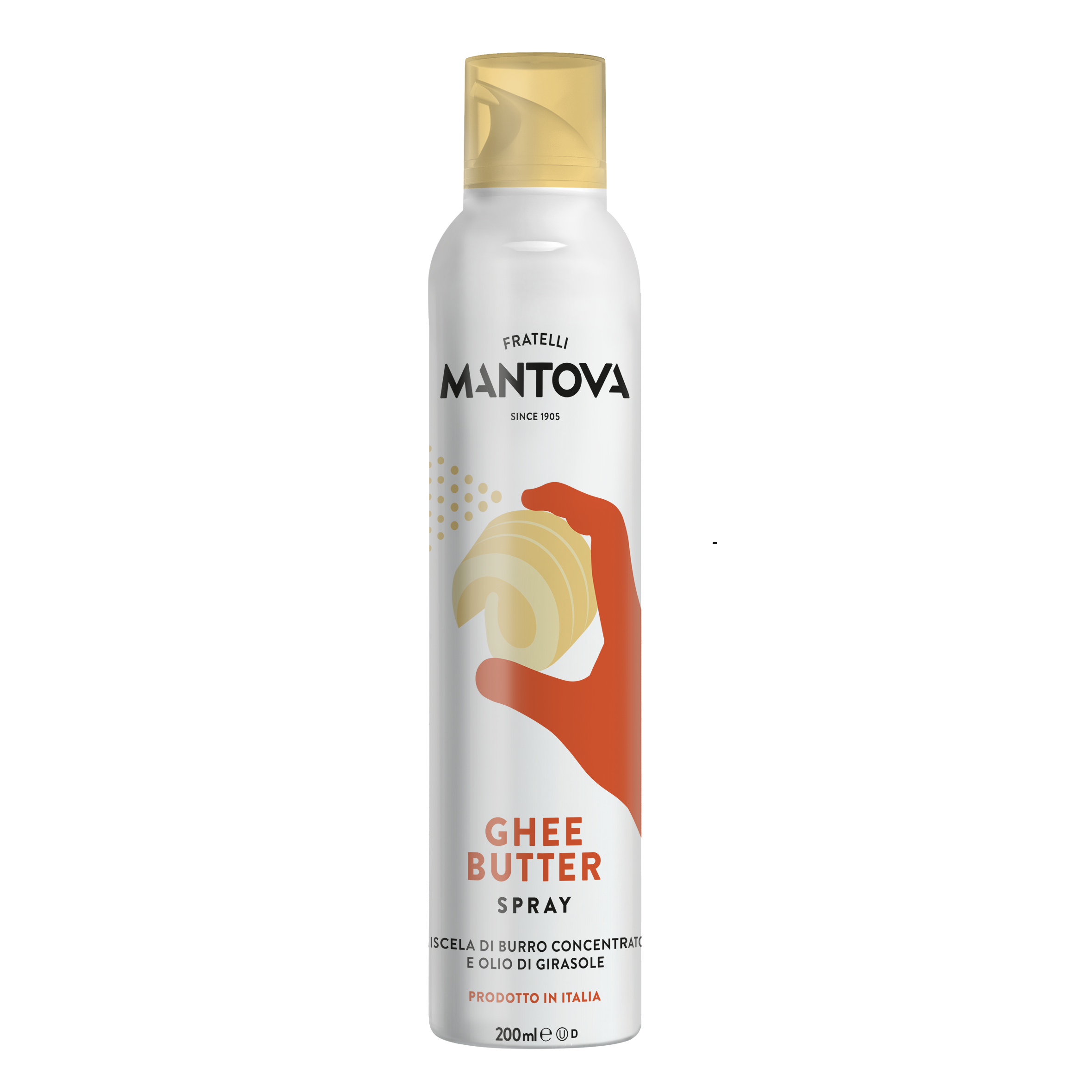
You’re standing in the grocery aisle. You’ve got a head of steamed broccoli in your mind and a bottle of yellow liquid in your hand. The label on that zero calorie butter spray looks like a miracle. Zero calories? Zero fat? It feels like you’ve found a glitch in the simulation. But then you look at the ingredients and see soybean oil or actual butter listed right there. Oil is pure fat. Fat has nine calories per gram. How does that math even work?
Honestly, it doesn’t. Not really.
The FDA has this quirky rule. If a serving size has fewer than five calories, a company can legally round down to zero. For spray oils, a "serving" is often a tiny, fractional-second squirt. It’s a loophole big enough to drive a butter-flavored truck through. If you’re just misting a piece of toast for a split second, sure, you’re looking at maybe one or two calories. But nobody actually sprays for a quarter of a second. Most of us are coating the pan or drenching the popcorn. Suddenly, your "free" food has 40, 80, or 100 calories. It adds up fast.
The Chemistry of the Squirt
Ever wonder why the liquid in the bottle looks so thin compared to a stick of Kerrygold? It’s basically a science experiment designed to mimic the mouthfeel of dairy without the density. Most brands, like Parkay or I Can't Believe It's Not Butter!, use a base of water. Water is the secret. By emulsifying a tiny amount of vegetable oil or buttermilk into a large volume of water, they create a sprayable liquid.
Then come the extras. You’ve got lecithin—usually from soy—to keep the oil and water from separating. You’ve got preservatives like sodium benzoate or potassium sorbate to keep it shelf-stable for months. And of course, the "natural flavors." These are chemicals derived from biological sources that trick your brain into thinking you’re tasting diacetyl, the compound that gives real butter its signature aroma.
It’s clever engineering. But it’s also a bit of a trick. When you spray that bottle, you’re mostly misting your food with flavored water and a hint of oil. That’s why it never quite browns a grilled cheese the same way real butter does. There isn't enough fat to trigger the Maillard reaction properly. You get the smell, sort of the taste, but none of the crispy, golden-brown soul of actual fat.
Why the Servings Are So Small
Let's talk about the 0.2-gram serving size. That is a laughably small amount. It’s a "short burst." If you hold the trigger down for three seconds, you’ve likely consumed 25 to 30 servings. If the "real" calorie count is 4 calories per serving, that three-second spray just cost you 120 calories.
People get frustrated when they plateau on a diet while using zero calorie butter spray liberally. They think they’re eating clean, but they might be adding 300 calories a day in "invisible" spray fat. It’s a common trap in the fitness community.
Health Implications and the Diacetyl Debate
For years, the "buttery" flavoring used in popcorn and sprays—diacetyl—was under intense scrutiny. It was linked to "popcorn lung" (bronchiolitis obliterans) in factory workers who inhaled massive amounts of the stuff. Nowadays, most major consumer brands have removed diacetyl. They use safer alternatives, but "safe" is a relative term in the world of food additives.
If you have a soy allergy, you have to be incredibly careful. Most of these sprays use soybean oil as the primary fat source. Even if the label says "Butter Spray," the fine print often reveals it's a vegetable oil blend.
The Saturated Fat Trade-Off
One reason people pivot to these sprays is to avoid saturated fat. Real butter is high in it. If you’re managing high cholesterol or heart disease, swapping a tablespoon of butter (approx. 100 calories and 7g saturated fat) for a quick spray of a heart-healthy oil blend makes sense.
- Real Butter: High satiety, high calorie, natural.
- Spray: Low satiety, hidden calories, processed.
- Olive Oil Spray: A middle ground with better fats but still has the "rounding down" label issue.
How to Actually Use It Without Ruining Your Progress
If you want to use zero calorie butter spray effectively, you have to change your mindset. Stop treating it like a free topping. Treat it like a concentrated seasoning.
First, spray the food after it’s cooked. If you spray a hot pan, half the flavor evaporates before the food even hits the surface. Spraying a bowl of air-popped popcorn right before eating ensures the flavor hits your tongue directly. You use less and taste more.
Second, count the seconds. A good rule of thumb is to assume every second of spraying is about 10 to 15 calories. It’s not much, but it’s honest. If you’re doing a 10-second pass over a tray of roasted veggies, log it as 100 calories. This keeps your data accurate and prevents those "why am I not losing weight" headaches.
Third, look for "propellant-free" versions. Some cheaper sprays use butane or propane as propellants. While the FDA says it’s fine in tiny amounts, many people find it leaves a weird metallic aftertaste. Brands that use bag-on-valve technology just use compressed air to push the liquid out. It tastes way better.
Is It Better Than Real Butter?
That’s the million-dollar question. It depends on your relationship with food.
If you’re someone who can’t stop at one teaspoon of butter and ends up eating half a stick, a spray bottle provides a "barrier to entry" that can save your diet. It's much harder to overeat when you have to pump a trigger 50 times to get the same amount of fat.
However, if you value whole foods and minimal processing, these sprays are a nightmare. They are the definition of ultra-processed. They contain gums, stabilizers, and lab-created aromas. For some, the psychological satisfaction of a small pat of real, salty butter is worth more than a bottle of flavored water. Satiety matters. If the spray leaves you feeling deprived, you’ll probably just binge on something else later.
Surprising Uses You Haven't Tried
It's not just for toast.
I’ve seen people use zero calorie butter spray to get seasonings to stick to kale chips. It works wonders for air frying. If you’re air frying potatoes, a quick spray halfway through the cycle helps the heat distribute more evenly across the surface of the skin. It gives you that "fried" crunch with a fraction of the oil.
Another trick? Corn on the cob. Instead of rolling the ear in a tub of butter, a three-second spray gives you that classic summer flavor. You save hundreds of calories across a whole barbecue.
Actionable Steps for Your Kitchen
Stop trusting the "0" on the front of the bottle. It's marketing, not math. If you want to use these products to actually lose weight or stay healthy, follow these steps:
- Test your spray: Spray into a measuring spoon for 5 seconds. Look at how much oil is actually there. That's your "real" serving.
- Check for propellants: Flip the bottle. If you see butane or propane, consider switching to a brand like Chosen Foods or Evo that uses mechanical pumps.
- The "Salt First" Rule: Often, what we crave in butter is the salt. Try seasoning your food with a high-quality sea salt first. You might find you need much less "butter" flavor than you thought.
- Log it reasonably: Don't enter it as 0 calories in your tracking app. Enter 20-50 calories depending on how heavy-handed you are. This small adjustment accounts for the "rounding error" and keeps your metabolism estimates on track.
- Watch the heat: These sprays have low smoke points because of the water and emulsifiers. Don't use them for high-heat searing; they’ll just burn and taste bitter. Save them for finishing or low-temp cooking.
The reality of zero calorie butter spray is that it's a tool, not a free pass. Use it as a way to enhance flavor, but respect the fact that physics still applies. Oil has calories, even if the label says it doesn't.