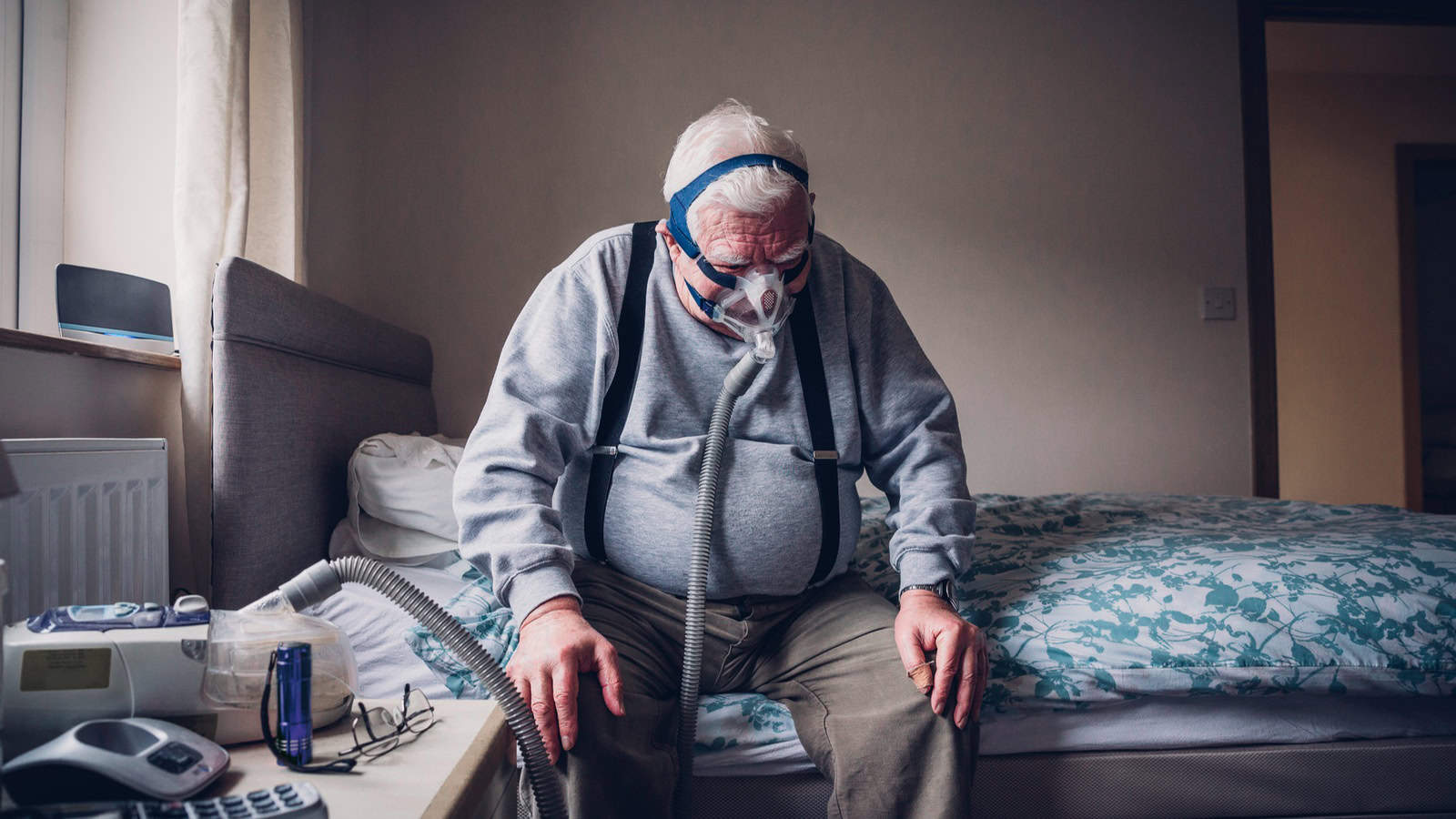
For years, the "gold standard" for treating Obstructive Sleep Apnea (OSA) has basically been a plastic mask that blows air up your nose all night. If you’ve ever tried to sleep with a CPAP machine, you know it’s... a lot. It’s bulky, it’s loud, and honestly, a huge chunk of people just end up shoving it in a closet after a month. But things are shifting. Fast. There is a new conversation happening in doctor's offices because a specific sleep apnea weight loss drug—tirzepatide, sold under the brand name Zepbound—is showing it can do more than just drop pounds. It might actually be the first real pharmaceutical "cure" for the underlying cause of the disorder for millions of people.
It’s about time.
The SURMOUNT-OSA Breakthrough
We need to talk about the data because it’s kind of wild. In 2024, Eli Lilly released results from their SURMOUNT-OSA clinical trials. They weren't just looking at how much weight people lost; they were measuring the Apnea-Hypopnea Index (AHI). That’s the metric doctors use to see how many times you stop breathing per hour.
In these trials, participants who took tirzepatide saw an average reduction in their AHI of up to 62.8%. Think about that. That is roughly 30 fewer "events" per hour. For many people in the study, their sleep apnea essentially resolved. It moved from "severe" to "mild" or even "subclinical." This isn't just some marginal improvement. It’s a total shift in how we think about the disease.
The study wasn't small, either. It involved 469 participants across two different groups—those who couldn't or wouldn't use CPAP therapy and those who were already using it. The results were consistent across both.
It’s Not Just About Thin Necks
The old-school logic was simple: You have a thick neck, the weight presses on your airway, you stop breathing. Lose the weight, fix the breathing. But it turns out the relationship between a sleep apnea weight loss drug and the respiratory system is a bit more complex than just mechanical pressure.
Obesity causes systemic inflammation. This inflammation can affect the tissues in your upper airway, making them floppier and more prone to collapse. GLP-1 and GIP receptor agonists (the classes of drugs Zepbound falls into) seem to have anti-inflammatory effects that go beyond just burning fat.
There's also the tongue. People don't usually think about "tongue fat," but it's a real thing. Dr. Richard Schwab at the University of Pennsylvania has done fascinating work showing that reducing fat in the tongue is one of the primary reasons weight loss improves sleep apnea. When you take a drug like tirzepatide, you aren't just losing a pant size; you're literally shrinking the obstructions inside your throat.
Why This Isn't Just "The Easy Way Out"
You’ll hear some critics say that using a drug to treat sleep apnea is just avoiding the hard work of "lifestyle changes." Honestly? That’s a pretty narrow-minded view of how chronic disease works.
Sleep apnea is a vicious cycle. You stop breathing at night, so your cortisol spikes. You wake up exhausted. Your "hunger hormones," ghrelin and leptin, get completely out of whack. You crave sugar and carbs because your brain is desperate for energy it didn't get from sleep. You’re too tired to exercise. So, you gain more weight, which makes the apnea worse.
Breaking that cycle with a sleep apnea weight loss drug isn't "cheating." It's medical intervention. It levels the playing field so that lifestyle changes actually become possible.
The FDA and the Insurance Battle
In late 2024, the FDA officially expanded the potential use cases for these medications, and the medical community is pushing for "OSA" to be a primary diagnostic indicator for Zepbound. This matters for your wallet.
Insurance companies are notoriously stingy with weight loss drugs. They often see them as "cosmetic" (which is ridiculous, but that’s the reality). However, insurance companies do cover sleep apnea treatments because they know untreated OSA leads to heart failure, strokes, and expensive car accidents caused by drowsy driving. By framing tirzepatide as a sleep apnea weight loss drug, it becomes a life-saving respiratory treatment rather than just a weight management tool.
What Most People Get Wrong About the "Ozempic" Connection
You see the headlines grouping everything together. Ozempic, Wegovy, Mounjaro, Zepbound. They aren't all the same.
Semaglutide (Ozempic/Wegovy) is a single-hormone agonist (GLP-1). Tirzepatide (Mounjaro/Zepbound) is a dual-hormone agonist (GLP-1 and GIP). While semaglutide definitely helps with sleep apnea through weight loss, the dual-action of tirzepatide has shown slightly more aggressive results in the specific context of AHI reduction in recent trials.
If you're talking to a doctor, don't just ask for "the weight loss shot." Mention the SURMOUNT-OSA findings.
The Side Effects Nobody Likes Talking About
We have to be real here. These drugs aren't magic beans without consequences.
Nausea is the big one. Some people feel like they have a mild stomach flu for the first two days after their weekly injection. There's also the "sulfur burps"—if you know, you know.
More importantly, there is the risk of muscle loss. If you lose 50 pounds on a sleep apnea weight loss drug and 20 of those pounds are muscle, you haven't necessarily become "healthier." You’ve just become smaller and weaker. This is why doctors like Dr. Peter Attia emphasize high protein intake and resistance training while on these meds. You want to lose the airway fat, not the leg muscle.
The CPAP Paradox
Does this mean the CPAP is dead? No.
Actually, the SURMOUNT-OSA trial showed that the best results often came from a combination of the drug and the machine. As people lost weight, their CPAP machines didn't have to work as hard. The "pressure" settings could be turned down, making the machine much more comfortable to wear.
Eventually, many people can ditch the machine, but it’s not an overnight switch. You don't just take one shot and throw your ResMed out the window. It’s a transition.
The Real-World Impact: More Than Just Numbers
Let's look at what this actually looks like in practice. Imagine a 45-year-old guy, let's call him Mike. Mike has a BMI of 34 and an AHI of 45 (severe apnea). He’s tired, his blood pressure is creeping up, and he hates his CPAP.
He starts on a sleep apnea weight loss drug.
- Month 3: He’s down 20 pounds. He notices he isn't waking up with a headache anymore.
- Month 6: He’s down 40 pounds. His wife notices he’s stopped snoring even when he forgets his mask.
- Month 12: He’s down 60 pounds. A follow-up sleep study shows his AHI is now 8.
That is a life-changing trajectory. He’s no longer at high risk for a midnight heart attack. He has the energy to play with his kids. This is the "why" behind the hype.
Practical Steps for Navigating This
If you are struggling with sleep apnea and think a weight loss medication might be the answer, you can't just wing it.
- Get a baseline sleep study. You need a recent AHI score. Insurance won't even look at your claim without proof of "Moderate to Severe" OSA. Many companies now offer at-home kits that are way less annoying than going to a sleep lab.
- Consult a sleep specialist, not just a GP. General practitioners are great, but sleep specialists understand the nuances of airway collapse. They can help you titrate the medication while monitoring your respiratory health.
- Prioritize protein. To avoid the "gaunt" look and maintain the muscles that keep your airway open, you need to eat significantly more protein than you think. Aim for roughly 0.8 to 1 gram of protein per pound of target body weight.
- Check your formulary. Call your insurance provider. Specifically ask if they cover Zepbound for the treatment of Obstructive Sleep Apnea. Use that phrasing.
- Manage expectations. The "miracle" takes a year. The first few months are often about side effect management and slow progress.
The Limitations to Keep in Mind
It is worth noting that not all sleep apnea is caused by weight. There is "Central Sleep Apnea," which is a brain-to-muscle signaling issue. A weight loss drug won't fix that. There's also "Complex Sleep Apnea."
Also, these drugs are expensive if not covered by insurance. We’re talking $1,000+ a month. While Eli Lilly has a savings card program, it’s still a significant financial commitment. And for many, these are "forever drugs." If you stop taking them, the weight—and the apnea—often comes roaring back because the underlying metabolic dysfunction hasn't been "cured," only managed.
The landscape is changing, though. With more competitors entering the market and more clinical data linking respiratory health to metabolic health, the "plastic mask" might eventually become the secondary treatment rather than the first.
Essential Actionable Next Steps
Stop guessing about your sleep quality. If you find yourself nodding off during meetings or feeling like you've been hit by a truck every morning, your first move is a diagnostic one. Download an app like SnoreLab to get a rough idea of your nighttime breathing, then book a telehealth appointment with a sleep-focused clinic.
If you are already on a CPAP but hate it, ask your doctor for a referral to an endocrinologist or a weight management specialist who understands the SURMOUNT-OSA data. Specifically ask about the "tirzepatide for OSA" protocol.
Lastly, start a strength training routine today. Whether you end up on a sleep apnea weight loss drug or not, increasing your lean muscle mass is the single best way to support your metabolism and long-term respiratory health. The drug is a tool, but you are the one who has to use it effectively.